
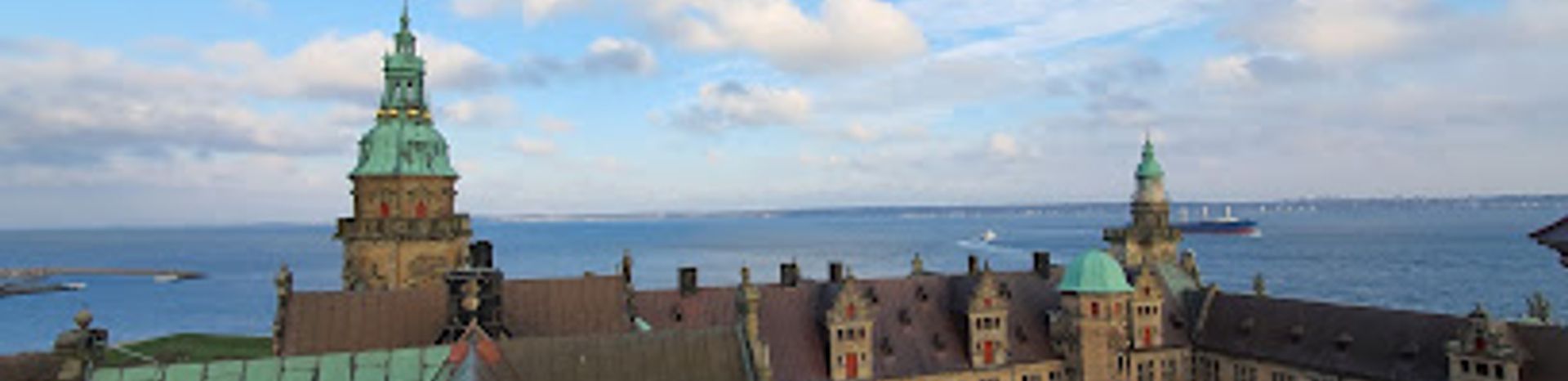
Kronborg Castle: A Hamlet Haunt and Renaissance Marvel
Explore Kronborg Castle, the legendary Elsinore of Hamlet, a UNESCO site where history, drama, and Renaissance grandeur converge on the shores of the Øresund Sound.
Kronborg Castle, perched on the northeastern tip of Zealand in Helsingør, Denmark, stands as a testament to the country's rich history and cultural significance. More than just a picturesque landmark, Kronborg is a UNESCO World Heritage site, immortalized as Elsinore in William Shakespeare's *Hamlet*, drawing visitors from across the globe to experience its dramatic atmosphere and explore its storied past. The castle's origins trace back to the 1420s when King Eric of Pomerania constructed Krogen, a formidable fortress designed to control access to the Baltic Sea through the narrow Øresund Sound. This strategic location allowed Denmark to collect Sound Dues from passing ships, a lucrative practice that fueled the kingdom's wealth for centuries. Helsingør flourished as a result, becoming a vital hub for trade and diplomacy in Northern Europe. In the late 16th century, King Frederick II transformed the aging fortress into the magnificent Renaissance castle we see today. Between 1574 and 1585, the castle was rebuilt with separated buildings of Krogen being extended to three coherent wings. The north wing was equipped with chambers for the king, queen and her ladies-in-waiting as well as for the chancellery. The rebuilt castle, renamed Kronborg (Crown Castle), became a symbol of Danish power and prestige, boasting opulent royal chambers, a grand ballroom, and imposing fortifications. Kronborg's grandeur was short-lived. In 1629, a devastating fire swept through the castle, leaving only the chapel intact. King Christian IV, known for his ambitious building projects, oversaw the castle's reconstruction, incorporating Baroque elements into its design. However, further misfortune struck in 1658 when Swedish forces bombarded and occupied Kronborg, looting many of its valuable art treasures. Despite these setbacks, Kronborg remained a strategically important fortress. In the late 17th century, its defenses were strengthened with the addition of the Crownwork, an advanced line of fortifications that made Kronborg one of the most formidable fortresses in Europe. From 1785 to 1923, the castle served as a military barracks and prison, before undergoing extensive restoration in the 20th century to restore its former glory. Today, Kronborg Castle welcomes visitors to explore its many facets. The Royal Apartments showcase the lavish lifestyle of Danish monarchs, while the Great Hall, once the largest in Northern Europe, evokes the splendor of Renaissance court life. The Chapel, miraculously spared from the fire of 1629, stands as a testament to the castle's enduring spirit, its intricate carvings and painted panels a masterpiece of Renaissance art. One of Kronborg's most captivating features is its casemates, a network of dark and atmospheric underground passages where soldiers once lived and prisoners were held. Here, visitors can encounter the legendary Holger the Dane, a mythical figure who slumbers deep within the castle, ready to awaken and defend Denmark in its hour of need. The statue of Holger Danske in the casemates adds to the mystique and allure of Kronborg. Kronborg's connection to Shakespeare's *Hamlet* is perhaps its most enduring legacy. Although it is uncertain whether Shakespeare ever visited Kronborg, he set his famous tragedy in Elsinore, drawing inspiration from the castle's imposing presence and dramatic history. Each summer, the castle hosts the Shakespeare Festival, where audiences can experience live performances of *Hamlet* and other Shakespearean plays against the backdrop of this iconic landmark. Beyond its historical and cultural significance, Kronborg offers stunning views of the Øresund Sound and the Swedish coastline. Visitors can stroll along the ramparts, imagining the ships that once passed through these waters, and soak in the atmosphere that has captivated visitors for centuries. The castle grounds also provide a pleasant setting for picnics and leisurely walks. A visit to Kronborg Castle is an immersive experience that combines history, legend, and architectural grandeur. Whether you are a Shakespeare enthusiast, a history buff, or simply seeking a unique and memorable destination, Kronborg Castle is sure to leave a lasting impression. From the opulent royal chambers to the dark and mysterious casemates, every corner of this magnificent castle tells a story, inviting visitors to step back in time and discover the secrets of Elsinore.
Local tips
- Wear comfortable shoes, as exploring the castle involves a lot of walking, including on uneven surfaces in the casemates.
- Check the schedule for guided tours, which offer valuable insights into the castle's history and architecture. Some tours are free with admission.
- Visit during the summer to experience the Shakespeare Festival, a unique cultural event held annually at the castle.
- Allow at least 3-4 hours to fully explore the castle, including the royal apartments, chapel, casemates, and ramparts.
- Consider purchasing the Copenhagen Card for free admission to Kronborg and other attractions in the Copenhagen area, as well as free public transportation.

A brief summary to Kronborg Castle
- Kronborg, Helsingør, 3000, DK
- +4549213078
Getting There
-
Public Transport
From Helsingør Station, Kronborg Castle is approximately a 10-15 minute walk. Exit the station and follow the harborfront promenade north, with the sea on your right. You'll pass the M/S Maritime Museum of Denmark. Continue along the waterfront, and Kronborg Castle will come into view. There are clear signs pointing the way. A single ticket from Copenhagen to Helsingør costs approximately 36 DKK.
-
Driving
If driving, follow signs to Helsingør and then to Kronborg Castle. There is a designated parking area on the corner of Nordhavnsvej and Kronborgvej, a 10-minute walk from the castle entrance. Parking fees apply and can be paid at the pay stations or via mobile apps. Parking costs vary, but expect to pay around 15-25 DKK per hour.
-
Ferry
If arriving from Sweden via the Helsingborg-Helsingør ferry, exit the ferry terminal and follow the signs towards Kronborg Castle. The walk is approximately 15-20 minutes along the harbor. The Helsingborg-Helsingør ferry typically costs around 45 DKK for a foot passenger.


