Hjerting Strand Travel Guide
Free Guide: A gently shelving Wadden Sea beach north of Esbjerg, where a long wooden promenade, shallow waters and wide skies create a relaxed slice of everyday coastal life.


A brief summary of Hjerting Strand
A gently shelving Wadden Sea beach north of Esbjerg, where a long wooden promenade, shallow waters and wide skies create a relaxed slice of everyday coastal life.
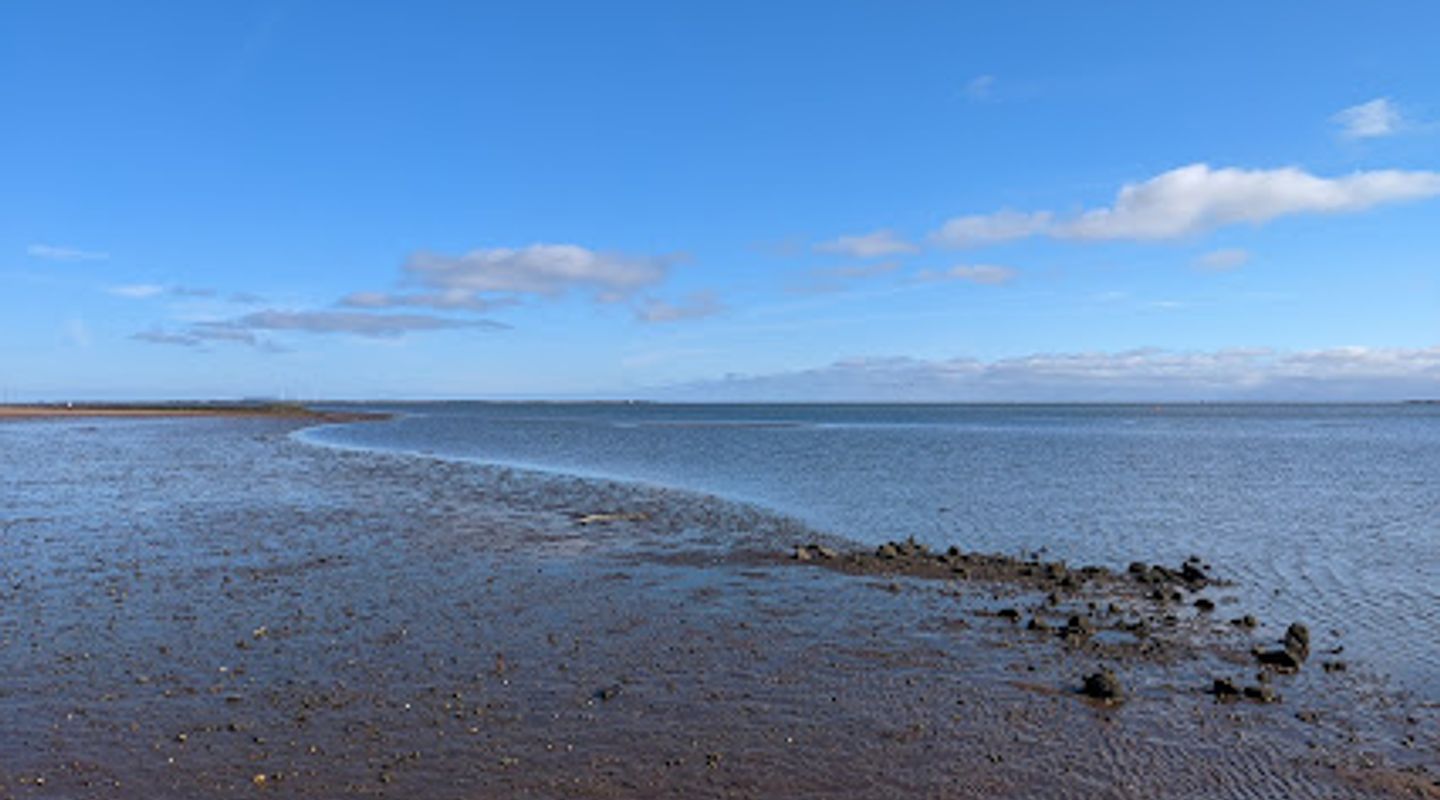
Hjerting Strand is a gently shelving, family-friendly beach on Ho Bay, just north of Esbjerg, with a 660‑metre wooden promenade, broad sands and big West Jutland skies. Shallow waters make it ideal for paddling and swimming, while a distinctive offshore sea platform, hammocks and play areas turn the foreshore into a relaxed open‑air living room. On windier days the bay fills with colourful kites, as surfers and beach walkers share the Wadden Sea light and wide horizons.
On-site amenities
 Restrooms
 Drink options
 Drinking water
 Food options
 Seating areas
 Sheltered areas
 Trash bins
 Information boards
- Address
- Hjerting Strand
Getting there
Car from Esbjerg city centre
City bus within Esbjerg
Bicycle from Esbjerg
Discover more about Hjerting Strand
Where Esbjerg Meets the Wadden Sea
Hjerting Strand curves along Ho Bay on Denmark’s North Sea coast, where the urban edge of Esbjerg softens into sand, dunes and salt‑tinged air. The beach sits inside the Wadden Sea landscape, a UNESCO‑listed tidal area known for its huge skies and constantly shifting waterline. Here the sea never looks the same twice: at high tide it laps close to the promenade, while at low tide the water retreats to reveal broad, rippled flats.Because the seabed slopes so gently, the shoreline feels approachable rather than dramatic. It is a place for paddling feet, kite strings and slow contemplation rather than crashing surf. Fishing villages once dotted this coast, and Hjerting’s roots as a harbour community still colour the atmosphere, even as the district has grown into one of Esbjerg’s most desirable seaside neighbourhoods.
A Promenade Designed for Lingering
Running parallel to the sand, the 660‑metre wooden promenade is the heart of Hjerting Strand. It is more than a simple boardwalk: steps, ramps, viewing decks and low platforms invite you to pause, sit or lie almost at beach level. Benches face the bay like rows of theatre seats, letting you watch the tides, the distant island of Fanø and the changing light without getting sand in your shoes.Subtle details make the promenade feel playful and inclusive. Slopes connect different levels so prams and wheelchairs can roll smoothly between street, boardwalk and sand, while wide landings become informal meeting points. In summer the wood warms under the sun; on cooler days it offers a dry, firm surface for a brisk coastal walk, even when the beach itself is damp.
Sea Platforms, Shallow Waters and Playful Shores
One of Hjerting Strand’s most distinctive features is its sea platform: a broad, low structure that sits on the sand at low tide and becomes an island‑like stage when the water rises. Children race across it, teens sprawl with headphones, and photographers use it as a foreground frame for sunsets over Ho Bay. Nearby you may find hammocks strung above the beach and simple play equipment woven into the sandscape.The shallow, usually calm water makes this a reassuring spot for families. Young swimmers can splash near the shore, build dams in the wet sand and hunt for small crabs in the shallows. When the weather warms, the bay turns into an enormous paddling pool. Even outside high summer, the flat beach is perfect for kite‑flying, beach games and long, looping walks parallel to the waterline.
Wind, Waves and Active Beach Life
Although Hjerting’s waters are gentle, the area can be wonderfully breezy. Those same winds that tousle your hair also power a low‑key but energetic water‑sports scene. Kitesurfers take advantage of the wide, shallow bay, skimming across the surface with bright sails that add splashes of colour to grey or blue horizons. Beach volleyball courts in the sand host informal games, and in the permitted season fast craft sometimes churn up the water further offshore.This active side never fully overwhelms the beach’s calm character. There is room for both exertion and ease: one part of the foreshore might be buzzing with boards and balls, while a few minutes’ stroll away you can sit alone with the sound of small waves kissing the sand. On cooler days locals use the promenade as an outdoor gym, striding past in windbreakers as gulls circle overhead.
Everyday Coastal Life in Hjerting
What sets Hjerting Strand apart is how seamlessly it meshes with the life of the surrounding district. Behind the beach, residential streets, a classic seaside hotel and small eateries give the area a lived‑in feel rather than that of a remote holiday resort. People come here with dogs, strollers, fishing rods, sketchbooks and takeaway coffee, using the shore as an extended front room.Light and weather shape the mood. On bright summer evenings, the low sun gilds the wooden promenade and turns the wet sand to a mirror, reflecting pastel skies. In autumn and winter, westerly winds whip across the bay, making a short, bracing walk feel like a full reset. Year‑round, Hjerting Strand offers something very West Jutland: understated, spacious and quietly rewarding for those who take the time to stroll and watch the sea breathe in and out.
Evendo Review Centre
 Google
Guest reviews
Best time to go
Quietest: Jan, Feb & Mar · before 6am or from 10pm
Busy times are Evendo estimates for a typical year, to help you plan. Actual crowds vary with events, school holidays and the weather.
Explore Hjerting Strand on the map
A handpicked selection of must-see spots near Hjerting Strand, mapped for you.
Get your free copy of our complete guide to Hjerting Strand, delivered straight to you.
Everything on this page, from opening hours and how to get there to Eve’s tips and the best time to go, in one PDF you can read offline, print or share.
Already have an account? Sign in
Your Hjerting Strand guide is ready.
We'll send it to · Not you? Sign out

Getting your guide ready…
We are putting together a fresh copy of the Hjerting Strand guide. This can take up to a minute.
This can take a few moments. If your browser asks, choose Allow so the download can start. You'll find the guide in your Downloads folder.
Nothing happened? Download it again
Sorry, the guide is taking longer than usual. Please try again in a minute, or get it by email instead.
Other nearby places you may find interesting
The closest places of the same kind, if this one is not quite what you had in mind.
-
-
-
-
-


Swipe for more places
More to explore near Hjerting Strand

 Best experiences near Hjerting Strand
 Best hotels near Hjerting Strand
 Best landmarks near Hjerting Strand
 Best attractions near Hjerting Strand
 Best shops near Hjerting Strand
 Best restaurants near Hjerting Strand
 Best bars near Hjerting Strand
Do you manage this location?
Take control to get all the benefits, like improved information, better appearance, and stronger visibility across AI-powered discovery.
Explore more

Explore more of The North Sea Islands
Discover the North Sea Islands of Denmark: idyllic sandy beaches, vibrant local culture, and unique natural landscapes await you on Fanø, Rømø, and Mandø.
Explore The North Sea Islands
Explore more of Denmark
Discover Denmark: A perfect blend of history, modern design, and the cozy concept of hygge. Explore vibrant cities, serene landscapes, and world-class cuisine.
Explore Denmark