Background

Saltholm: An Island Sanctuary

Discover Saltholm Island: A serene Danish island in the Øresund strait, offering untouched nature, diverse birdlife, and a unique historical landscape, perfect for mindful exploration.

4.1

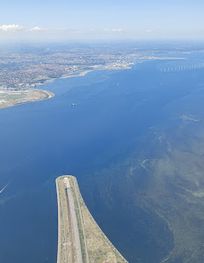
Saltholm, meaning "Salt Islet," is a Danish island nestled in the Øresund strait, the body of water separating Denmark and Sweden. Located east of Amager and west of the maritime border, this island presents a unique blend of natural serenity and historical significance. Measuring approximately 7 km long and 3 km wide, with an area of 16 km², Saltholm ranks as the 21st largest island in Denmark. Its defining characteristic is its remarkably flat terrain; the highest point barely reaches 2 meters above sea level, rendering it susceptible to flooding during strong easterly winds. Geologically, Saltholm is a relatively young landmass, emerging from the sea around 4,000 years ago due to post-glacial rebound. The island is surrounded by shallow waters, no more than 2 meters deep, extending over 28 km². At its southern end, a collection of islets, inlets, and glacial rock deposits create a distinctive landscape. The island's vegetation primarily consists of grasses, with flat chalk meadows and coastal meadows dominating the terrain. Trees are scarce, mainly found in the northern and southwestern parts of the island. Saltholm's history is rich and varied. First documented in 1230, when King Valdemar II gifted it to the Bishop Niels Stigsen of Roskilde, the island has served numerous purposes over the centuries. Limestone quarrying was a major activity, providing materials for construction in nearby Copenhagen until 1935. The island also served as pastureland for cattle from Amager. During plague and cholera outbreaks in Copenhagen (1709-1711), Saltholm was a quarantine station, requiring travelers to stay for 40 days before entering the city. In 1873, the Saltholmlaug, a private company, acquired the island and remains its owner today. Its strategic location in the Øresund gave Saltholm military importance during both World Wars. In 1912, the Danish government constructed Flakfort, a fort on an artificial island just north of Saltholm, equipped with cannons. Though old, these guns were considered a deterrent at the start of World War II. Saltholm was also the site where the British submarine HMS E13 ran aground in 1915 due to a faulty compass. The island's history is also captured in art; Danish painter Theodor Philipsen frequently visited Saltholm in the late 19th century to depict its cattle and treeless landscapes. Today, Saltholm is a protected nature reserve, crucial for nesting wild birds. The southern part of the island, a vast salt marsh, is protected under the Ramsar Convention. The entire island and surrounding sea are designated a nature reserve by the European Union and recognized as an Important Bird Area (IBA) by BirdLife International. The shallow waters teem with mussels, eelgrass, snails, crustaceans, and fish, providing essential food for water birds. Access to Saltholm is strictly controlled to preserve its wildlife sanctuary status. Saltholm hosts Denmark's largest grazing area for geese, with around 7,000 visiting in the summer. Approximately 3,500 juvenile swans reside on the island during the summer, with about 2,000 wintering there. 10,000–12,000 ducks breed and graze on Saltholm in the autumn and late winter/spring. It is also home to Europe's largest breeding colony of eiders; 15,000 live on the island during the spring, with 7,000–8,000 hatched there annually. Visiting Saltholm offers a unique opportunity to experience unspoiled nature and observe diverse birdlife. The island's flat landscape is ideal for walking and exploring its unique flora and fauna. The harbor at Barakkebro, on the northern end of the island, serves as the primary access point. The island has few trees, mainly concentrated in the north and southwest. Saltholm's vegetation includes motherwort, henbane, blue iris, and chickweed. While on the island, respect for the environment is paramount. Access to the southernmost part of the island is prohibited year-round, and access to the central part is restricted during the bird breeding season (April 1 to July 15). Visitors should bring all necessary supplies and remove all waste to protect the island's delicate ecosystem. Saltholm invites those seeking tranquility, natural beauty, and a glimpse into a unique historical landscape.

Local tips

  • Bring binoculars for optimal birdwatching; Saltholm is a haven for diverse avian species.
  • Pack a picnic to enjoy amidst the island's scenic spots, as facilities are limited.
  • Wear comfortable shoes suitable for walking and exploring the island's trails.
  • Check the weather forecast before your visit, as conditions on the island can change rapidly.
  • Consider visiting during spring or fall for the best opportunities to observe migratory wildlife.
widget icon

Buy tickets

    No tickets available

Book tours with entry

    No tours available

Book tours without entry

    No tours available

A brief summary to Saltholm

  • Kastrup, DK

Getting There

  • Ferry

    The primary access to Saltholm is via ferry from Kastrup Havn (Kastrup Harbor) near Copenhagen Airport. From Copenhagen Central Station, take a train to Københavns Lufthavn Station. From there, it's a short bus ride or walk to Kastrup Havn. The Eco(ride) ferry operates services to Saltholm, but schedules are limited, so check in advance. A round-trip ferry ticket costs approximately 200 DKK. Ensure you confirm the return schedule upon arrival at Saltholm's harbor (Barakkebro) to avoid being stranded.

  • Private Boat

    Alternatively, access Saltholm via private boat, docking at Barakkebro harbor on the northwest side of the island. Be aware that the channel to the harbor is narrow with a depth of approximately 1.5 meters at normal water levels. Harbor fees may apply. Ensure you adhere to all regulations regarding navigation and docking in the area. Note that Saltholm can only be called at during the day. It is not advisable to call at Saltholm in the event of onshore winds or strong currents.

Popular Experiences near Saltholm

Popular Hotels near Saltholm

Select Currency