Ambrosius's Oak Travel Guide
Free Guide: A 400‑year‑old oak in Tåsinge’s Nørreskov forest, where poetry, castle history, and quiet woodland atmosphere meet beneath one vast crown.


A brief summary of Ambrosius's Oak
A 400‑year‑old oak in Tåsinge’s Nørreskov forest, where poetry, castle history, and quiet woodland atmosphere meet beneath one vast crown.
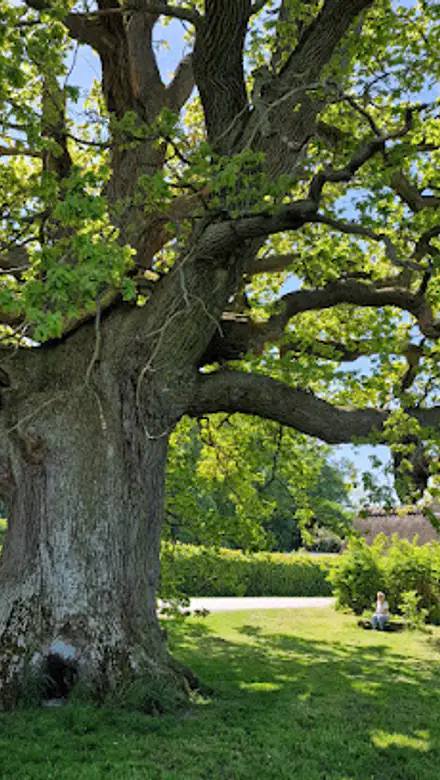
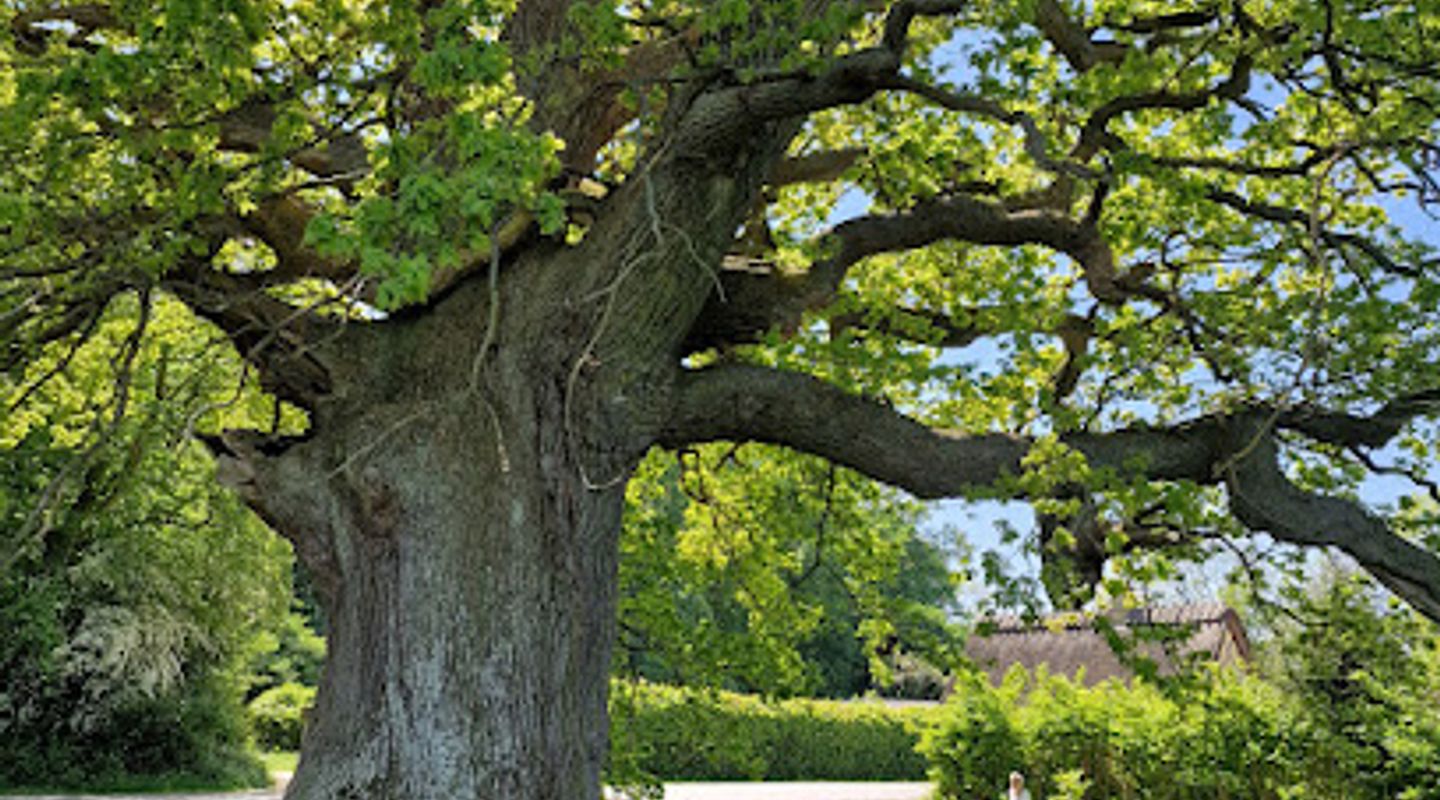
Ambrosius’s Oak is a monumental, 400‑year‑old oak tree standing on the island of Tåsinge near Valdemars Castle, just south of Svendborg on South Funen. Named after the 18th‑century Danish poet Ambrosius Stub, who is said to have written beneath its branches, this gnarled giant with a trunk circumference of about 7.5 meters offers a powerful blend of literary lore, local history, and peaceful woodland atmosphere in the Nørreskov forest.
On-site amenities
 Trash bins
 Information boards
 Seating areas
Opening hours
- Every dayOpen 24 hours
Opening hours as listed on the venue’s Google Business Profile. Hours can change for services and special events, so check with the venue before you go.
- Address
- Nørreskovvej 1, 5700 Svendborg
- Website
Getting there
Car from Svendborg
Local bus and short walk
Bicycle from Svendborg and surroundings
Discover more about Ambrosius's Oak
An ancient oak in the forests of Tåsinge
Ambrosius’s Oak rises from the edge of the Nørreskov forest on Tåsinge like a living sculpture, its deeply furrowed bark and twisted limbs hinting at centuries of storms and seasons. Estimated at around 400 years old, the tree dates back to the early modern era, long before the nearby Valdemars Castle took on its current rococo form. Its mighty trunk, with a circumference of roughly 7.5 meters, makes it one of the most striking individual trees in the South Funen archipelago.The oak stands just west of Valdemars Castle, slightly apart from the main estate buildings yet clearly linked to their history. Around it, gently sloping woodland and estate landscapes create a secluded pocket of nature, where birdsong, rustling leaves, and glimpses of the surrounding countryside frame the tree as a quiet, natural landmark.
The poet beneath the branches
The tree owes its name to Ambrosius Stub, an 18th‑century Danish rococo poet whose life was closely tied to Valdemars Castle. For more than a decade he served the baron there as secretary and factotum, and local tradition has him retreating to this very oak to read, reflect, and write. In a region long associated with fruit orchards and cultivated landscapes, the idea of a poet taking shelter under a wild, ancient tree adds a delicate layer of romance.Whether or not every verse was truly composed here matters less than the enduring image of a solitary writer beneath the crown of this oak, looking out over the estate and the strait beyond. Standing under the same canopy, it is easy to imagine the rhythm of his poetry echoing the slow sway of the branches overhead.
Roots in the story of Valdemars Castle and Tåsinge
Ambrosius’s Oak is part of a wider historical tapestry woven around Valdemars Castle and the island of Tåsinge. The castle, built in the 17th century and later reshaped in rococo style, anchored an estate that dominated much of the island’s life for centuries. Fields, orchards, and forests like Nørreskov were carefully managed, yet this oak was allowed to grow into old age, becoming a natural witness to changes in agriculture, ownership, and social conditions.Today, the tree forms a quiet counterpoint to the more formal architecture of the castle and the picturesque half‑timbered houses of nearby Troense. Where the village and palace tell stories of seafaring wealth and noble privilege, the oak offers a more elemental narrative of endurance and slow growth, reminding visitors that the landscape itself has its own, longer memory.
A calm woodland stop for walkers and day‑trippers
Visiting Ambrosius’s Oak is a simple, low‑key experience. Paths lead through mixed woodland and open estate land, with soft forest floors, dappled light, and occasional muddy patches after rain. As you approach, the oak gradually fills your view, its broad crown spreading over a small clearing that naturally invites a pause. There are no grand installations or elaborate facilities around the tree; the focus is entirely on the living giant at the center of the scene.Most travellers fold a stop at the oak into a wider exploration of Valdemars Castle, Troense, or the coastal scenery of Tåsinge. It works well as a short break during a day trip from Svendborg or a longer tour of the South Funen archipelago, offering a chance to step away from harbours and streets into a sheltered woodland pocket.
Seasons, atmosphere, and gentle photography
The character of Ambrosius’s Oak shifts with the seasons. In spring, fresh leaves soften its rugged lines and the surrounding forest feels bright and hopeful. Summer brings dense shade under the crown and a more intimate, green enclosure. Autumn dresses the tree in golds and browns, while fallen leaves emphasize the massive base of the trunk. In winter, the bare framework of branches becomes sharply visible, giving photographers a clear view of its silhouette against grey skies.Light filtering through the canopy creates subtle plays of shadow on the bark, rewarding close observation and careful framing. The clearing around the oak provides room to step back for full‑tree shots, while details of bark, roots, and cavities invite more abstract images.
Respecting a fragile living monument
Despite its size and age, Ambrosius’s Oak remains a living organism that depends on a delicate balance of soil, roots, and surrounding vegetation. The area around it is intentionally simple, and informal barriers or guidance may be present to keep footfall from compacting the ground near the trunk. Treating the tree as a natural monument—avoiding climbing, carving, or damaging roots—helps extend its life for future generations.As you leave the clearing, the oak quickly disappears behind younger trees, returning to its role as a quiet guardian of the forest. For many visitors, that brief encounter with such an old, storied tree becomes one of the most memorable, understated moments of a visit to Tåsinge.
Evendo Review Centre
 Google
Guest reviews
Best time to go
Quietest: Jan, Feb & Dec · before 7am or from 9pm
Busy times are Evendo estimates for a typical year, to help you plan. Actual crowds vary with events, school holidays and the weather.
Explore Ambrosius's Oak on the map
A handpicked selection of must-see spots near Ambrosius's Oak, mapped for you.
Get your free copy of our complete guide to Ambrosius's Oak, delivered straight to you.
Everything on this page, from opening hours and how to get there to Eve’s tips and the best time to go, in one PDF you can read offline, print or share.
Already have an account? Sign in
Your Ambrosius's Oak guide is ready.
We'll send it to · Not you? Sign out

Getting your guide ready…
We are putting together a fresh copy of the Ambrosius's Oak guide. This can take up to a minute.
This can take a few moments. If your browser asks, choose Allow so the download can start. You'll find the guide in your Downloads folder.
Nothing happened? Download it again
Sorry, the guide is taking longer than usual. Please try again in a minute, or get it by email instead.
Other nearby places you may find interesting
The closest places of the same kind, if this one is not quite what you had in mind.
-
-
-
-
-


Swipe for more places
More to explore near Ambrosius's Oak

 Best experiences near Ambrosius's Oak
 Best hotels near Ambrosius's Oak
 Best landmarks near Ambrosius's Oak
 Best attractions near Ambrosius's Oak
 Best shops near Ambrosius's Oak
 Best restaurants near Ambrosius's Oak
 Best bars near Ambrosius's Oak
Do you manage this location?
Take control to get all the benefits, like improved information, better appearance, and stronger visibility across AI-powered discovery.
Explore more

Explore more of The South Funen Archipelago
Discover the South Funen Archipelago: A tranquil haven of over 55 islands with lush landscapes, serene beaches, and rich cultural heritage in the Baltic Sea.
Explore The South Funen Archipelago
Explore more of Denmark
Discover Denmark: A perfect blend of history, modern design, and the cozy concept of hygge. Explore vibrant cities, serene landscapes, and world-class cuisine.
Explore Denmark