De Fem Halder, Viborg Travel Guide
Free Guide: A lakeside cultural landscape where moats, ruins, ramparts and a manor house compress 800 years of Danish power and landscape history into a single scenic walk.


A brief summary of De Fem Halder
A lakeside cultural landscape where moats, ruins, ramparts and a manor house compress 800 years of Danish power and landscape history into a single scenic walk.
De Fem Halder, just south of Viborg by Hald Lake, is a uniquely layered cultural landscape where five successive castles and manor houses have stood within a compact, hilly lakeside setting. Here, moats, ramparts, ruins and a reconstructed tower tell an 800‑year story of bishops, kings and landowners. Trails weave through the protected Dollerup Hills, while the beautifully restored Haldladen barn explains the site’s history with clear displays, making this a rewarding mix of nature walk and open‑air history lesson.
On-site amenities
 Restrooms
 Drinking water
 Seating areas
 Sheltered areas
 Picnic areas
 Trash bins
 Information boards
 Visitor centre
- Address
- Ravnsbjergvej 71, 8800 Viborg
- Phone
- Website
Getting there
Car from Viborg city centre
Local bus from Viborg
Bicycle from Viborg
On foot from Dollerup Hills area
Discover more about De Fem Halder
Centuries of Power Gathered Around One Lake
De Fem Halder is less a single building and more a concentrated slice of Danish history wrapped around the shores of Hald Sø. Within a short walk you pass traces of five different strongholds and manor houses, each representing a phase of power in Jutland, from medieval fortresses to Enlightenment‑era estates. Earthworks, moats, foundations and ruins sit almost shoulder to shoulder in the rolling landscape, framed by the steep hills and calm waters of the Dollerup Bakker area.What makes this place remarkable is how close everything lies. Instead of visiting scattered sites across the region, you wander through centuries simply by following well‑kept paths. The result feels like an outdoor textbook in stone and turf, where every bend in the trail reveals another layer of the story.
Gammel Hald and the Unfinished Castle Dream
One of the most intriguing features is Gammel Hald, the castle that never quite materialised. From the top of its broad ring you can trace the circular outline of the moat, around 80 metres across, hinting at the grand complex once envisioned here. Archaeologists date this ambitious project to the late 13th century, when fortified residences were symbols of status as much as military necessity.Walking the grassy banks today, you sense both scale and absence. The wide ditch and raised platform are unmistakably man‑made, yet there are no standing walls, only the geometry of the earth itself. It is a rare chance to read a medieval blueprint etched into the landscape, showing how much effort went into reshaping terrain long before a single tower stone was laid.
Siege Lines of a Determined King
Not far away, the contours change again at Valdemar’s fortification, a siege site created in 1372 by King Valdemar Atterdag. From here the king’s forces tightened their grip on Hald, using earthen ramparts as a platform for heavy siege machinery. The twin banks and ditches may look like natural ridges at first glance, but a closer look reveals the deliberate, linear forms of a prepared military position.Standing on these ramparts, you can imagine wooden structures creaking under the strain of catapults, soldiers moving along the banks, and the lake acting as both barrier and mirror. It is a rare example of preserved siege works in Denmark, underscoring how fiercely this strategic site has been contested.
Ruins of Hald Castle and the Bishop’s View
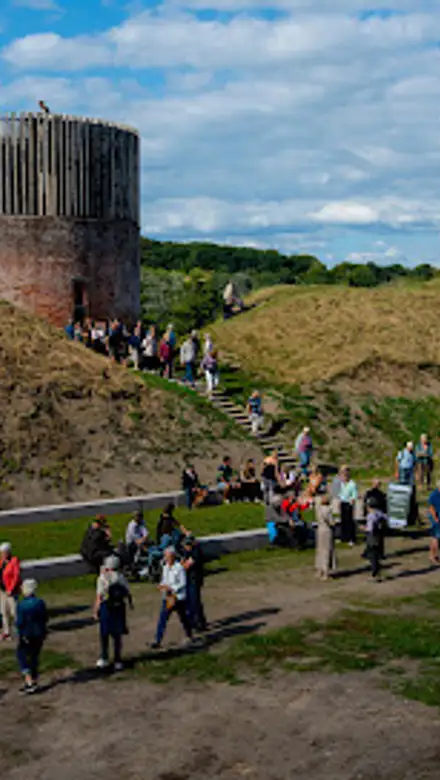
Further along the lakeside path the landscape narrows and suddenly the stone remains of Hald Castle appear, built in the 1520s by Bishop Jørgen Friis. This was a modern defensive residence for its time, combining comfortable living quarters with robust walls and a commanding position at the edge of the water. Today, fragments of walls, vaults and foundations shape a compact ruin that invites exploration.A reconstructed tower rises from the old footprint and offers a superb panorama over Hald Sø and the surrounding hills. From the viewing platform you grasp why this spot was so coveted: wide sightlines, natural protection from the lake, and gently sloping approaches that could be defended. The interplay of ruin, new tower and landscape gives a vivid sense of the bishop’s world on the eve of the Reformation.
From Timber‑Framed Estate to Manor Landscape
The story continues with Daas Manor, established in the early 1700s by Major General Gregers Daa. Using stone from the ruined castle, he created a timber‑framed manor complex with barns and stables around a cobbled courtyard. The main house no longer stands, but its former location is marked by two white pavilions near the present Hald Manor House, allowing you to visualise the shift from fortress to country estate.The current Hald Manor House dates from around 1787, built by Judge Frederich Schinkel as a gatehouse structure in front of the older manor. Its elegant proportions and setting at the edge of meadows and woodland reflects changing tastes, when display, agriculture and landscaped surroundings mattered more than battlements. Together, the remnants of Daas Manor and the standing manor house show how Hald evolved into a cultivated, ordered landscape.
Haldladen, Nature Trails and Quiet Moments
Next to the manor complex, the large half‑timbered barn known as Haldladen serves as an informal visitor hub. Inside, well‑designed exhibits tell the story of De Fem Halder through models, illustrations and short texts, introducing the families, conflicts and building phases that shaped the area. It is an ideal starting point before you head out onto the trails.Outside, paths lead through mixed woodland, open grassland and lakeside stretches, with gentle but sometimes steep sections typical of the Dollerup Hills. Benches, picnic spots and simple shelters provide places to pause, listen to birdsong and watch light move across the lake. Whether you come for a focused dive into medieval and early modern history or simply for a scenic walk with a narrative woven into the terrain, De Fem Halder offers both substance and serenity in one compact landscape.
Evendo Review Centre
 Google
Guest reviews
Best time to go
Quietest: Jan, Feb & Dec · before 7am or from 9pm
Busy times are Evendo estimates for a typical year, to help you plan. Actual crowds vary with events, school holidays and the weather.
Explore De Fem Halder on the map
A handpicked selection of must-see spots near De Fem Halder, mapped for you.
Get your free copy of our complete guide to De Fem Halder, delivered straight to you.
Everything on this page, from opening hours and how to get there to Eve’s tips and the best time to go, in one PDF you can read offline, print or share.
Already have an account? Sign in
Your De Fem Halder guide is ready.
We'll send it to · Not you? Sign out

Getting your guide ready…
We are putting together a fresh copy of the De Fem Halder guide. This can take up to a minute.
This can take a few moments. If your browser asks, choose Allow so the download can start. You'll find the guide in your Downloads folder.
Nothing happened? Download it again
Sorry, the guide is taking longer than usual. Please try again in a minute, or get it by email instead.
Other nearby places you may find interesting
The closest places of the same kind, if this one is not quite what you had in mind.
-
-
-
-
-


Swipe for more places
More to explore near De Fem Halder

 Best experiences near De Fem Halder
 Best hotels near De Fem Halder
 Best landmarks near De Fem Halder
 Best attractions near De Fem Halder
 Best shops near De Fem Halder
 Best restaurants near De Fem Halder
 Best bars near De Fem Halder
Do you manage this location?
Take control to get all the benefits, like improved information, better appearance, and stronger visibility across AI-powered discovery.
Explore more

Explore more of Viborg
Discover Viborg, Denmark's hidden gem where medieval history, stunning nature, and vibrant culture converge for an unforgettable travel experience.
Explore Viborg
Explore more of Denmark
Discover Denmark: A perfect blend of history, modern design, and the cozy concept of hygge. Explore vibrant cities, serene landscapes, and world-class cuisine.
Explore Denmark