

SMK – Statens Museum for Kunst Travel Guide
Free Guide: Denmark’s national gallery, where historic grandeur and modern architecture frame seven centuries of Danish and international art beside Copenhagen’s Østre Anlæg park.


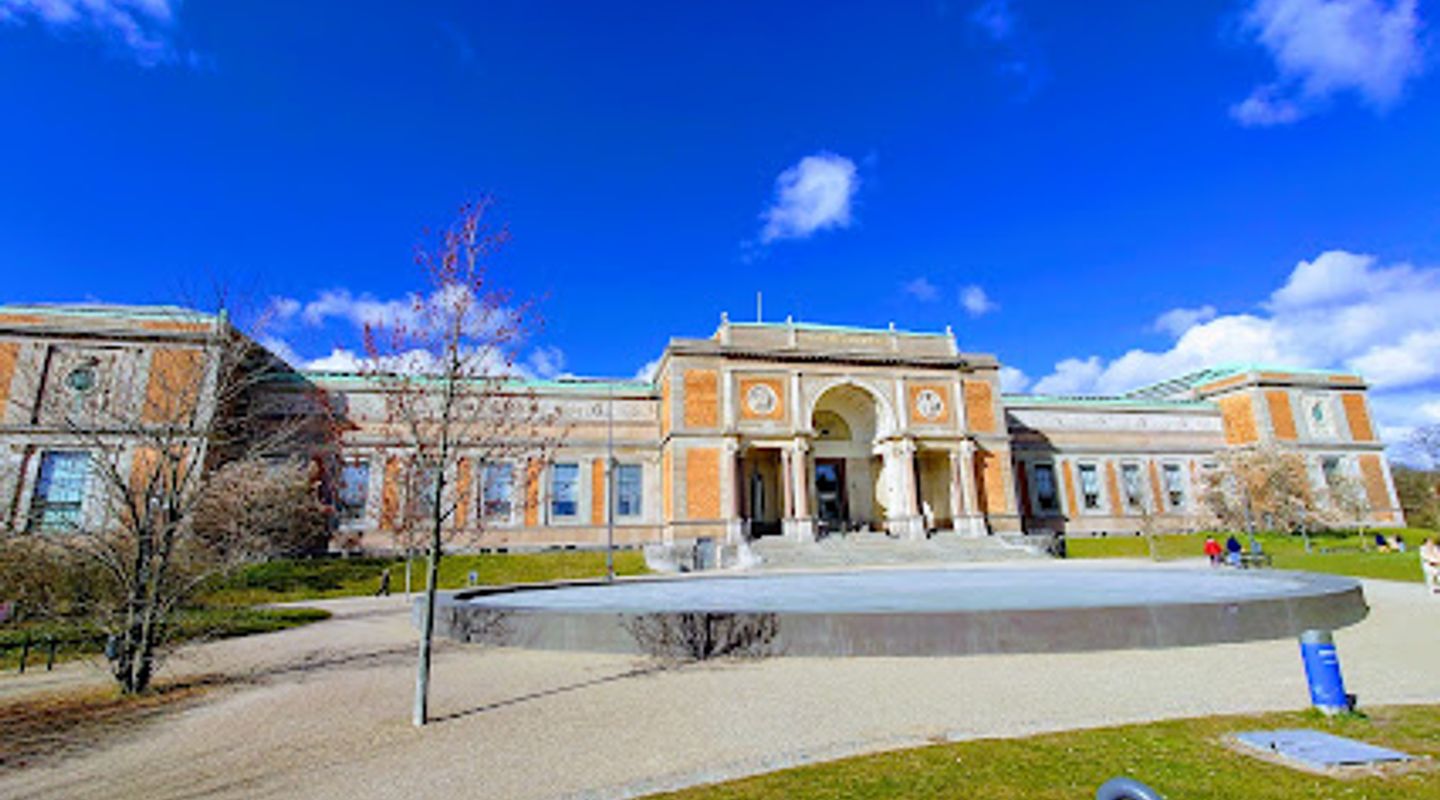
A brief summary of SMK – Statens Museum for Kunst
Denmark’s national gallery, where historic grandeur and modern architecture frame seven centuries of Danish and international art beside Copenhagen’s Østre Anlæg park.
SMK – Statens Museum for Kunst is Denmark’s national gallery and largest art museum, set beside the green expanse of Østre Anlæg in central Copenhagen. Inside its mix of historic grandeur and sleek modern architecture, you can trace more than 700 years of Danish and international art, from Renaissance masters and Danish Golden Age painters to one of the world’s strongest Matisse collections and bold contemporary installations. Expect spacious galleries, a light-filled sculpture street, and a relaxed café with park views.
On-site amenities
 Restrooms
 Drink options
 Drinking water
 Food options
 Seating areas
 Sheltered areas
 Trash bins
 Information boards
 Visitor centre
Opening hours
- MonClosed
- Tue10 am–6 pm
- Wed10 am–8 pm
- Thu10 am–6 pm
- Fri10 am–6 pm
- Sat10 am–6 pm
- Sun10 am–6 pm
Opening hours as listed on the venue’s Google Business Profile. Hours can change for services and special events, so check with the venue before you go.
- Address
- Sølvgade 48-50, 1307 København K
- Phone
- Website
Getting there
Metro and S-train
S-train to Østerport
City bus
Bicycle
Discover more about SMK – Statens Museum for Kunst
A national gallery at the heart of Copenhagen’s art story
SMK – Statens Museum for Kunst is Denmark’s national gallery, occupying a commanding position on Sølvgade right where the city centre blends into the leafy Østre Anlæg park. Here, seven centuries of art are gathered under one roof, telling both the story of Danish painting and its dialogue with the wider European canon. The museum grew out of royal collections that were opened to the public in the 19th century, and today it serves as the country’s key institution for collecting, researching, and presenting art from the 1300s to the present.From the moment you arrive, SMK feels purpose-built for lingering. Wide staircases, generous foyers and long sightlines make it easy to orient yourself, while the presence of students, families and art professionals gives the building a quietly studious energy. Temporary exhibitions and an active programme of talks, performances and workshops ensure there is almost always something new in dialogue with the permanent collections.
From Renaissance treasures to Danish Golden Age masterpieces
The historic heart of SMK lies in its galleries devoted to European art and the celebrated Danish Golden Age. Rooms of warm-toned walls and high ceilings showcase works by artists such as Rubens, Mantegna and Derain, placing them alongside Danish painters who helped define the nation’s visual identity in the 18th and 19th centuries. The museum is especially renowned for its deep holdings of Danish art, including luminous interiors and atmospheric cityscapes by artists like Vilhelm Hammershøi.This is also where you sense the former royal collection behind the institution: portraits, altarpieces and large-scale historical paintings reveal how art was once used to communicate power, piety and prestige. Labels and wall texts tend to be concise but informative, making it easy to follow shifts in style, technique and subject matter even if you are not an art historian.
Modern visions and a world-class Matisse collection
A striking strength of SMK is its modern and contemporary collection, housed mainly in the museum’s newer wing. Here you encounter one of the world’s finest collections of works by Henri Matisse, built on an early 20th-century donation of French modern art that now forms a cornerstone of the gallery. Paintings by Matisse, Picasso, Braque and others are presented in airy rooms that allow their colours and compositions to breathe.Elsewhere, Scandinavian and international modernists share space with experimental contemporary pieces, from conceptual installations to video works and performance-related art. The juxtaposition of older and newer works encourages you to trace recurring themes—landscape, the human figure, abstraction—across centuries. It is a part of the museum that rewards curiosity and slow looking, even if avant‑garde art is not usually your main interest.
Architecture bridging past and present
Architecturally, SMK is a study in contrasts that somehow feel harmonious. The original late 19th‑century building, clad in stone with an Italian Renaissance revival façade, was designed to project seriousness and stability. To the rear, a glass-and-steel extension from the 1990s introduces a crisp contemporary language, opening the museum towards the park with large windows and generous terraces.Connecting old and new is an internal "street of sculptures"—a long, light-filled passage that doubles as a gallery and social space. Here, classical and modern sculptures share the stage with views out to the greenery of Østre Anlæg. It is one of the best places in the building to pause, people‑watch, and get a sense of how the museum weaves art into everyday urban life.
Experiencing SMK: atmosphere, amenities and practical comforts
For visitors, SMK is designed to be as functional as it is inspiring. The museum is fully accessible, with lifts, step-free routes and wheelchair-friendly galleries. Benches and seating areas are scattered throughout the exhibitions, making it easy to take breaks. In the foyer, you will find information desks and a shop with art books, prints and design objects that extend the experience beyond the galleries.On the ground floor, the museum café looks out towards Østre Anlæg and its old magnolia trees, offering breakfast, lunch, coffee, wine and snacks in a relaxed setting. The combination of park views, natural light and the hum of conversation makes it an inviting stop whether you are midway through your visit or simply dropping in for a quiet moment. With full-day opening on most days and late hours midweek, SMK fits comfortably into a city itinerary, but it also rewards dedicating several unhurried hours to explore its collections in depth.
Events, learning and the living museum
Beyond static displays, SMK positions itself as a living museum with a strong focus on learning and cultural exchange. Regular guided tours, lectures, concerts and performance events activate the spaces in new ways, while workshops and family activities introduce younger visitors to art through making and play. The museum also serves as an official tourist information point, with multilingual staff able to answer questions about both the gallery and Copenhagen more broadly.Even outside exhibition halls, the building’s relationship with the surrounding park encourages you to move between art and nature. Stepping out after viewing centuries of paintings, you emerge into lawns, trees and lakes that have inspired many of the Danish landscapes hanging inside. In this way SMK functions not only as a repository of national heritage, but as a hinge between the cultural and the everyday life of the city.
Evendo Review Centre
 Google
Guest reviews
Best time to go
Quietest: Jan, Feb & Mar · before 8am or at 9pm
Busy times are Evendo estimates for a typical year, to help you plan. Actual crowds vary with events, school holidays and the weather.
Explore SMK – Statens Museum for Kunst on the map
A handpicked selection of must-see spots near SMK – Statens Museum for Kunst, mapped for you.
Get your free copy of our complete guide to SMK – Statens Museum for Kunst, delivered straight to you.
Everything on this page, from opening hours and how to get there to Eve’s tips and the best time to go, in one PDF you can read offline, print or share.
Already have an account? Sign in
Your SMK – Statens Museum for Kunst guide is ready.
We'll send it to · Not you? Sign out

Getting your guide ready…
We are putting together a fresh copy of the SMK – Statens Museum for Kunst guide. This can take up to a minute.
This can take a few moments. If your browser asks, choose Allow so the download can start. You'll find the guide in your Downloads folder.
Nothing happened? Download it again
Sorry, the guide is taking longer than usual. Please try again in a minute, or get it by email instead.
Unlock the best of SMK – Statens Museum for Kunst
Skip-the-line tickets, guided tours with entry, and walking tours of the area, booked in a few clicks.


Other nearby places you may find interesting
The closest places of the same kind, if this one is not quite what you had in mind.
-
-
-
-
-


Swipe for more places
More to explore near SMK – Statens Museum for Kunst
-
 Best experiences near SMK – Statens Museum for Kunst
-
 Best hotels near SMK – Statens Museum for Kunst
-
 Best landmarks near SMK – Statens Museum for Kunst
-
 Best attractions near SMK – Statens Museum for Kunst
-
 Best shops near SMK – Statens Museum for Kunst
-
 Best restaurants near SMK – Statens Museum for Kunst
-
 Best bars near SMK – Statens Museum for Kunst


Do you manage this location?
Take control to get all the benefits, like improved information, better appearance, and stronger visibility across AI-powered discovery.
Explore more
Explore more of Zealand
Discover the charm of Zealand, Denmark's largest island, blending vibrant city life in Copenhagen with serene coastal beauty and rich cultural heritage.
Explore Zealand
Explore more of Denmark
Discover Denmark: A perfect blend of history, modern design, and the cozy concept of hygge. Explore vibrant cities, serene landscapes, and world-class cuisine.
Explore Denmark
