

Statue of Andersen Travel Guide
Free Guide: A larger-than-life Hans Christian Andersen sits in bronze on Copenhagen’s City Hall Square, book in hand, gazing toward Tivoli Gardens in the city’s vibrant heart.


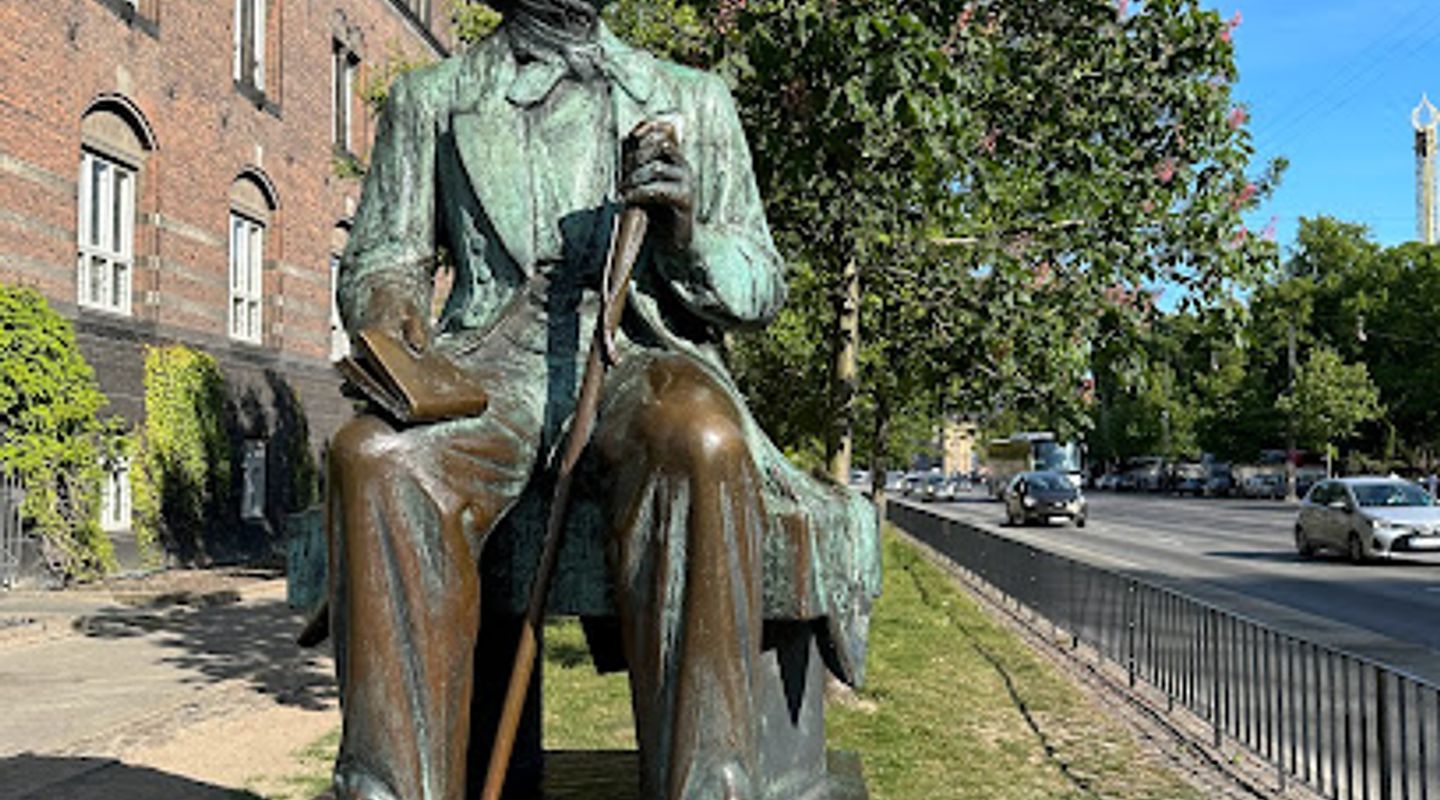
A brief summary of Statue of Andersen
A larger-than-life Hans Christian Andersen sits in bronze on Copenhagen’s City Hall Square, book in hand, gazing toward Tivoli Gardens in the city’s vibrant heart.
Seated in bronze on Copenhagen’s busy Rådhuspladsen, the Hans Christian Andersen statue pays tribute to Denmark’s beloved fairytale writer. Created by sculptor Henry Luckow-Nielsen and unveiled in 1965, Andersen sits with a book in his lap, top hat on, gazing across H.C. Andersens Boulevard toward Tivoli Gardens. Flanked by City Hall and the city’s main shopping streets, the statue is both a cultural landmark and a classic photo stop in the heart of Copenhagen.
On-site amenities
 Restrooms
 Drink options
 Drinking water
 Food options
 Seating areas
 Trash bins
 Information boards
Opening hours
- Every dayOpen 24 hours
Opening hours as listed on the venue’s Google Business Profile. Hours can change for services and special events, so check with the venue before you go.
- Address
- Rådhuspladsen, 1553 København V
- Website
Getting there
Metro
City Bus
Bicycle
On Foot from Copenhagen Central Station
Discover more about Statue of Andersen
A literary icon in the heart of Copenhagen
Hans Christian Andersen’s bronze likeness sits at the edge of City Hall Square, right where Copenhagen’s civic heart meets its busiest thoroughfares. Here, surrounded by trams of cyclists, buses, and the hum of Rådhuspladsen, the author is captured mid-pause, as if he has looked up from his book to watch the city writing its own stories. This central setting underlines how deeply woven Andersen is into Denmark’s cultural fabric.From his seat, the statue faces H.C. Andersens Boulevard and looks across to Tivoli Gardens, the historic amusement park that has long been linked with the fairytale atmosphere often associated with his work. The pairing of the square, City Hall’s grand facade, and this contemplative figure makes the corner feel like a small open-air tribute to storytelling amid the rush of modern life.
Design details and sculptor’s vision
The statue was created by sculptor Henry Luckow-Nielsen and erected in 1965, more than a century after Andersen first found fame. Cast in bronze, the figure is larger than life, emphasizing his status as a national cultural hero. The writer sits upright yet relaxed, legs slightly apart, one hand resting on his cane while the other holds an open book, suggesting both movement and stillness.His clothing is carefully rendered: the long coat, waistcoat, and unmistakable top hat evoke the 19th century, while the open posture invites visitors to draw close. The smooth surfaces of his knees and coat edges bear witness to countless photographs and playful climbs, signs that this is a monument meant to be encountered rather than kept at a distance.
Fairytales woven into the cityscape
Although this particular monument does not feature decorative reliefs, its power lies in how it connects the physical city with Andersen’s imaginative worlds. The statue’s sightline toward Tivoli Gardens hints at the blend of reality and fantasy that Copenhagen so often embodies: a functioning, modern capital that still allows room for whimsy and wonder.City Hall Square itself is lined with other sculptures and features, from the Dragon Fountain to the Weather Girl, creating an urban open-air gallery in which Andersen feels perfectly at home. Seen from the surrounding pavements, the statue stands out as a human-scale counterpoint to the tall clock tower of City Hall behind it.
Experiencing the statue up close
Meeting Andersen here is as much about the atmosphere as the sculpture. The square is a constant swirl of pedestrians, cyclists, and public transport, with the start of the Strøget shopping street just steps away. Many visitors choose to sit briefly beside the statue, using his plinth as an impromptu bench, while others take quick photos before heading on to Tivoli or deeper into the old town.Despite the bustle, there are quieter moments—especially in the early morning or late evening—when you can walk around the figure, notice the patina of the bronze, and appreciate the craft of Luckow-Nielsen’s work. The play of light across the metal, from grey northern daylight to the warmer glow of street lamps, subtly changes the statue’s mood throughout the day.
A stop on any Hans Christian Andersen trail
For those following Andersen’s legacy across Denmark, this monument at Rådhuspladsen complements the author’s other statues in Copenhagen and his birthplace city of Odense. Here, however, he is firmly anchored in the capital’s everyday rhythm, watching locals hurry past and visitors pausing with guidebooks and cameras.The location makes it easy to combine a brief visit with other key sights around the square, but even a short stop conveys why Andersen is still considered a cornerstone of Danish identity. In a single glance, you see the storyteller, the civic buildings that frame the nation’s public life, and the amusement park that symbolizes joy and imagination—a compact portrait of Copenhagen itself.
Symbol of a city of stories
Ultimately, the statue functions as both monument and meeting point. Children recognize the creator of tales like The Little Mermaid, adults recall stories from their own childhoods, and many simply enjoy the approachable pose of a writer who seems content to share the square with everyone. In an urban space devoted to gatherings, celebrations, and everyday routines, this calm seated figure offers a quiet reminder that stories are at the heart of how cities remember themselves.
Evendo Review Centre
 Google
Guest reviews
Best time to go
Quietest: Jan, Feb & Mar · before 7am
Busy times are Evendo estimates for a typical year, to help you plan. Actual crowds vary with events, school holidays and the weather.
Explore Statue of Andersen on the map
A handpicked selection of must-see spots near Statue of Andersen, mapped for you.
Get your free copy of our complete guide to Statue of Andersen, delivered straight to you.
Everything on this page, from opening hours and how to get there to Eve’s tips and the best time to go, in one PDF you can read offline, print or share.
Already have an account? Sign in
Your Statue of Andersen guide is ready.
We'll send it to · Not you? Sign out

Getting your guide ready…
We are putting together a fresh copy of the Statue of Andersen guide. This can take up to a minute.
This can take a few moments. If your browser asks, choose Allow so the download can start. You'll find the guide in your Downloads folder.
Nothing happened? Download it again
Sorry, the guide is taking longer than usual. Please try again in a minute, or get it by email instead.
Unlock the best of Statue of Andersen
Skip-the-line tickets, guided tours with entry, and walking tours of the area, booked in a few clicks.
 Tour with entry
Copenhagen History and Folklore Self Guided Audio Walking Tour
from $9.26 Tour with entry
Copenhagen: H.C. Andersen Walking Tour with Local Guide
from $49.79 Tour with entry
Historical Walking Tour On the Route of Danish Happiness
from $198.91 Tour with entry
Snaps, Hygge and Nightlife Tour in Copenhagen Nyhavn Bars
from $583.75
Other nearby places you may find interesting
The closest places of the same kind, if this one is not quite what you had in mind.
-
Springvandet i Amaliehaven af Arnaldo Pomodoro A dramatic bronze fountain at the heart of Amaliehaven, where modern sculpture, royal views and harbor breezes meet in a tranquil geometric garden.
-
Ripley's Believe It or Not! Scandinavia's only museum of genuine oddities, curiosities, and human extremes.
-
Naturpark Åmosen Zealand’s last wilderness: a vast lowland of bogs, lakes and forests where rare wildlife, ancient rituals and Viking power echo across the mists of Åmosen.
-
Little Tilde by Thomas Dambo - Troll #16 A recycled-wood troll with a heart for birds, Little Tilde watches over Vallensbæk Mose and invites you into a gentle treasure hunt through Copenhagen’s wild marshland.
-
Copenhagen Zoo Meet 4,000+ animals across 250 species in Europe's most innovative zoo, open year-round.
Swipe for more places
More to explore near Statue of Andersen

 Best experiences near Statue of Andersen
 Best hotels near Statue of Andersen
 Best landmarks near Statue of Andersen
 Best attractions near Statue of Andersen
 Best shops near Statue of Andersen
 Best restaurants near Statue of Andersen
 Best bars near Statue of Andersen
Do you manage this location?
Take control to get all the benefits, like improved information, better appearance, and stronger visibility across AI-powered discovery.
Explore more
Explore more of Zealand
Discover the charm of Zealand, Denmark's largest island, blending vibrant city life in Copenhagen with serene coastal beauty and rich cultural heritage.
Explore Zealand
Explore more of Denmark
Discover Denmark: A perfect blend of history, modern design, and the cozy concept of hygge. Explore vibrant cities, serene landscapes, and world-class cuisine.
Explore Denmark
