Rytterstatuen Travel Guide
Free Guide: An 18th‑century royal equestrian statue anchoring Amalienborg’s palace square, where art, monarchy and cityscape meet in one iconic Copenhagen vista.


A brief summary of Rytterstatuen
An 18th‑century royal equestrian statue anchoring Amalienborg’s palace square, where art, monarchy and cityscape meet in one iconic Copenhagen vista.
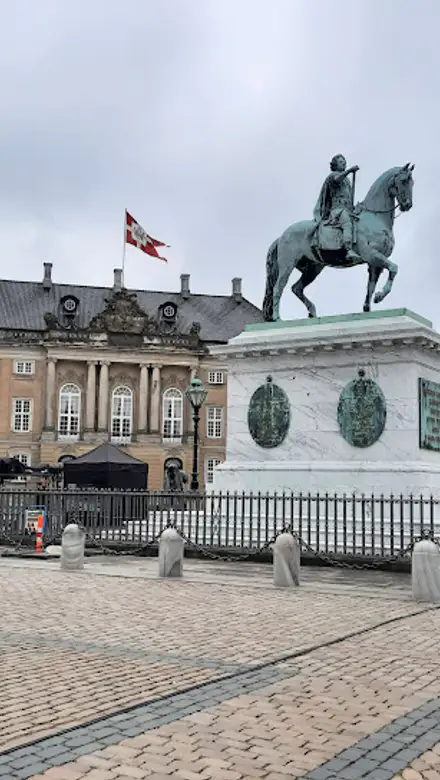
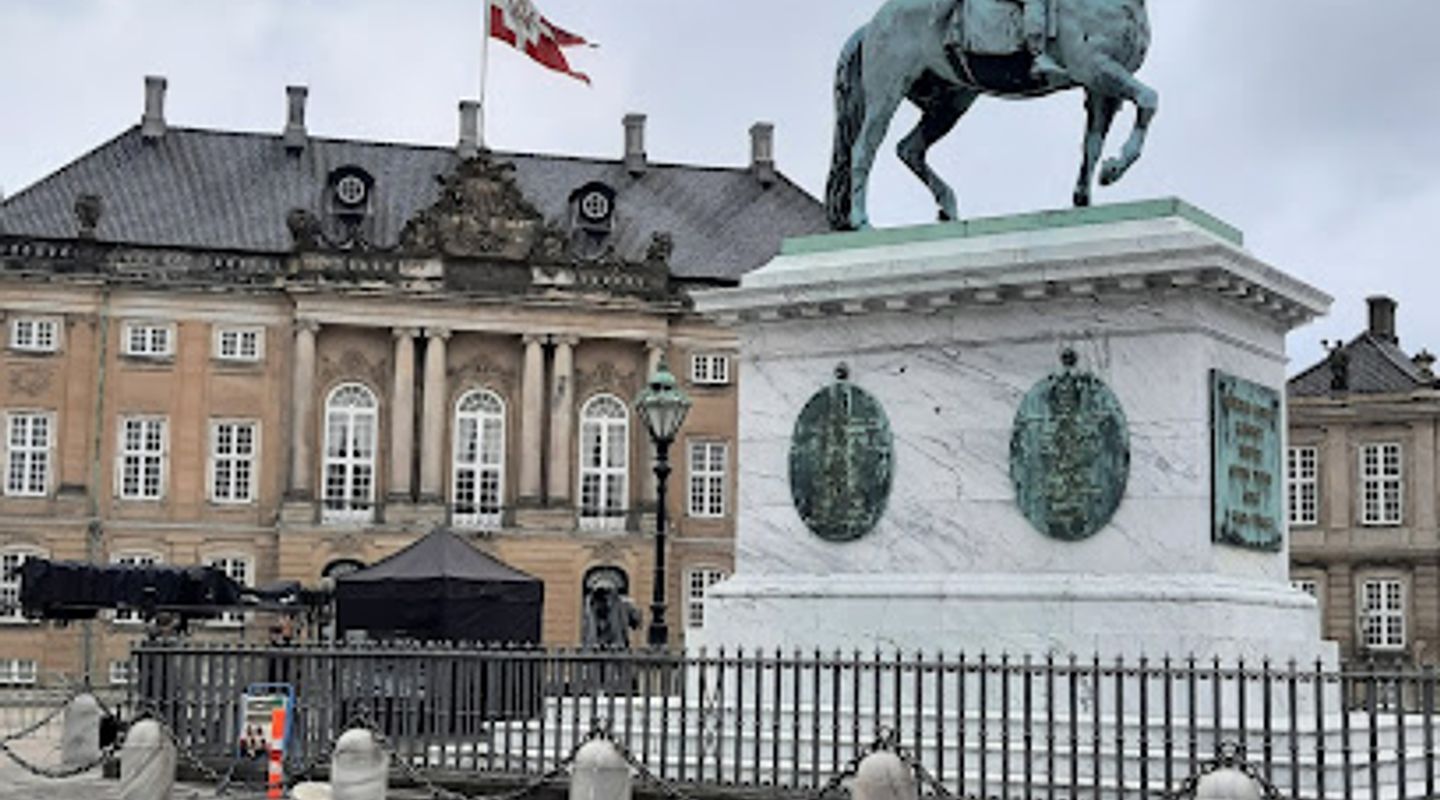
Rytterstatuen, the equestrian statue of King Frederik V, rises at the very heart of Amalienborg Slotsplads in Copenhagen, framed by the four rococo palaces of the Danish royal residence. Cast in bronze by French sculptor Jacques-François-Joseph Saly and unveiled in 1771, the monument portrays the monarch in classical garb, crowned with laurels, his arm extended with a baton of command. More than a photogenic centerpiece, it is a symbol of absolutist power and one of Denmark’s most important baroque sculptures, anchoring the grand axis that links Amalienborg, the Marble Church and the harbor.
On-site amenities
 Trash bins
 Information boards
 Restrooms
 Seating areas
- Address
- Amalienborg Slotsplads, 1257 København K
- Phone
Getting there
Metro and short walk from central Copenhagen
City bus to Amalienborg area
Bicycle from inner Copenhagen
Discover more about Rytterstatuen
A royal rider at the centre of Amalienborg
Rytterstatuen stands precisely where all eyes and streets converge in Amalienborg Slotsplads, the octagonal square of Denmark’s royal residence. Encircled by four near-identical rococo palaces, the bronze king on horseback forms the sculptural heart of this architectural stage set. The statue depicts King Frederik V, the monarch who commissioned Frederiksstaden, the surrounding district created to celebrate the 300th anniversary of the royal house and the ideals of absolutism.Up close, the king wears not contemporary 18th‑century dress but timeless classical armour, a laurel wreath resting on his head. His right arm stretches outward with a commander’s baton, an image of calm authority that mirrored the political message of the time: the monarch as the state itself. The horse beneath him is in controlled motion, frozen mid-stride, lending the composition a sense of poised power rather than battlefield drama.
The story behind a monumental commission
The statue was created by French sculptor Jacques‑François‑Joseph Saly, who arrived in Copenhagen in the 1750s after being selected from among Europe’s leading artists. His commission was lavish, financed by the Danish Asiatic Company as a gift to the king and intended to rival the great royal monuments of Paris. Work on the model alone took years, as Saly observed horses daily and refined countless studies before settling on the final design.Casting the monument was an event in itself. In the late 1760s, tons of molten bronze were poured into the prepared mould while invited dignitaries looked on. The finished statue, weighing around 22 tons, was then transported from its casting site near Kongens Nytorv to Amalienborg on a specially prepared sledge dragged by hundreds of sailors. Frederik V did not live to see the unveiling; when the statue was finally inaugurated in the square in 1771, it served as a posthumous tribute to his reign.
An artwork that cost more than the palaces
One of the most striking facts about Rytterstatuen is its original price tag. Contemporary accounts and later cultural commentators point out that the cost of the monument exceeded that of Amalienborg’s four palatial façades combined. This extravagance underscores its intended role as the jewel of the ensemble, the single sculptural object that encapsulated the ideology and artistic ambition of the era.The statue’s survival history adds to its significance. Where many European bronze monuments were later melted down for armaments during times of conflict or regime change, Frederik V’s equestrian figure was preserved intact. Centuries on, it still occupies its original position, resting on a stone pedestal that has been carefully restored rather than replaced. For art historians, it represents one of the finest 18th‑century equestrian monuments in Northern Europe, bridging baroque grandeur and emerging neoclassical taste.
Axis of power between church, palace and harbor
Stand beside the statue and turn slowly, and the urban choreography it anchors becomes clear. To one side rises the great dome of the Marble Church, its green copper crown lining up perfectly with the king’s forward gaze. In the opposite direction, the view extends across Amaliehaven to the modern opera house on the far side of the harbor. This axial arrangement symbolically ties together faith, monarchy and culture, with Rytterstatuen as the pivot.The surrounding palaces reinforce this sense of carefully planned harmony. Their cream façades and restrained ornament frame the monument from every angle, making the statue the natural focal point for ceremonies, royal appearances and national celebrations on the square. Even when the space is quiet, the combination of open sky, cobblestones and bronze creates a theatrical yet surprisingly intimate atmosphere.
Experiencing the statue today
For visitors, Rytterstatuen is both a work of art and a convenient orientation point in the royal quarter. The open square allows you to walk freely around the monument, appreciating the changing play of light on its patinated surfaces. The horse’s musculature, the folds of the king’s cloak and the detailing of the classical armour reward close inspection as much as wide‑angle views.Many people time their visit to coincide with the daily changing of the Royal Guard at noon, when lines of soldiers and the sound of boots on stone animate the backdrop. Yet the statue can be just as compelling at quieter moments, when you can step back and take in the full 360‑degree panorama of palaces, church dome and waterfront. Whether you are interested in sculpture, royal history or simply a memorable cityscape, Rytterstatuen offers a compact but layered encounter with Copenhagen’s past and present.
Evendo Review Centre
 Google
Guest reviews
Best time to go
Quietest: Jan, Feb & Mar · before 7am or from 9pm
Busy times are Evendo estimates for a typical year, to help you plan. Actual crowds vary with events, school holidays and the weather.
Explore Rytterstatuen on the map
A handpicked selection of must-see spots near Rytterstatuen, mapped for you.
Get your free copy of our complete guide to Rytterstatuen, delivered straight to you.
Everything on this page, from opening hours and how to get there to Eve’s tips and the best time to go, in one PDF you can read offline, print or share.
Already have an account? Sign in
Your Rytterstatuen guide is ready.
We'll send it to · Not you? Sign out

Getting your guide ready…
We are putting together a fresh copy of the Rytterstatuen guide. This can take up to a minute.
This can take a few moments. If your browser asks, choose Allow so the download can start. You'll find the guide in your Downloads folder.
Nothing happened? Download it again
Sorry, the guide is taking longer than usual. Please try again in a minute, or get it by email instead.
Unlock the best of Rytterstatuen
Skip-the-line tickets, guided tours with entry, and walking tours of the area, booked in a few clicks.


Other nearby places you may find interesting
The closest places of the same kind, if this one is not quite what you had in mind.
-
-
-
-
-


Swipe for more places
More to explore near Rytterstatuen

 Best experiences near Rytterstatuen
 Best hotels near Rytterstatuen
 Best landmarks near Rytterstatuen
 Best attractions near Rytterstatuen
 Best shops near Rytterstatuen
 Best restaurants near Rytterstatuen
 Best bars near Rytterstatuen
Do you manage this location?
Take control to get all the benefits, like improved information, better appearance, and stronger visibility across AI-powered discovery.
Explore more
Explore more of Zealand
Discover the charm of Zealand, Denmark's largest island, blending vibrant city life in Copenhagen with serene coastal beauty and rich cultural heritage.
Explore Zealand
Explore more of Denmark
Discover Denmark: A perfect blend of history, modern design, and the cozy concept of hygge. Explore vibrant cities, serene landscapes, and world-class cuisine.
Explore Denmark