

Qalawun Complex Travel Guide
Free Guide: Explore the Qalawun Complex, an iconic landmark of Mamluk architecture and Islamic heritage in the heart of historic Cairo.


A brief summary of Qalawun Complex
Explore the Qalawun Complex, an iconic landmark of Mamluk architecture and Islamic heritage in the heart of historic Cairo.
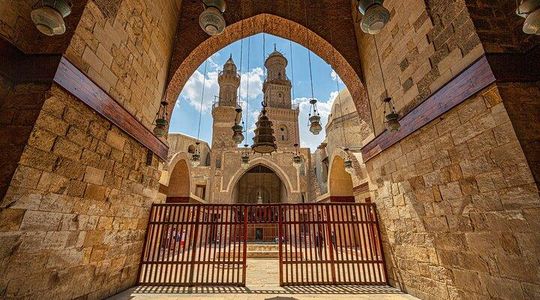
The Qalawun Complex is a stunning example of Mamluk architecture in Cairo, built by Sultan al-Mansur Qalawun between 1284 and 1285. This vast complex includes a mosque, madrasa, mausoleum, and the remains of a hospital, showcasing the grandeur and sophistication of the Mamluk Sultanate.
Opening hours
- Every day9 am–5 pm
Opening hours as listed on the venue’s Google Business Profile. Hours can change for services and special events, so check with the venue before you go.
- Address
- 27X6+Q94, El-Gamaleya, El Gamaliya, Cairo Governorate 4331154
Getting there
Walking
Public Transport
Taxi/Ride-Share
Discover more about Qalawun Complex
Overview
Located on Al-Muizz Street in the heart of historic Cairo, the Qalawun Complex stands as a testament to the architectural and cultural achievements of the Mamluk period. Constructed by Sultan al-Mansur Qalawun in the late 13th century, the complex served as a religious, educational, and medical center.The complex originally consisted of a mosque for worship, a madrasa for legal scholarship, a mausoleum for the Sultan and his family, and a hospital that offered advanced medical care for its time. The hospital was modeled after the Bimaristan Nur al-Din in Damascus, where Qalawun was treated before rising to power. While the hospital was demolished in 1910, the remaining structures showcase intricate details, elaborate decorations, and a seamless blend of Mamluk and Islamic architectural styles.The complex was built over the ruins of the Fatimid Western Palace. The location was strategically chosen to reinforce the Sultan's authority and serve as a central hub for Islamic religious and court ceremonies. The mausoleum's dome became a symbol of new power, signifying a new center of Mamluk power, which enjoyed great prosperity from the 13th to 16th centuries. The complex has undergone several restoration projects throughout its history, including repairs to the minarets after an earthquake in 1327 and renovations commissioned by Abdul-Rahman Katkhuda in 1776.
Evendo Review Centre
 Google
Guest reviews
Explore Qalawun Complex on the map
A handpicked selection of must-see spots near Qalawun Complex, mapped for you.
Get your free copy of our complete guide to Qalawun Complex, delivered straight to you.
Everything on this page, from opening hours and how to get there to Eve’s tips and the best time to go, in one PDF you can read offline, print or share.
Already have an account? Sign in
Your Qalawun Complex guide is ready.
We'll send it to · Not you? Sign out

Getting your guide ready…
We are putting together a fresh copy of the Qalawun Complex guide. This can take up to a minute.
This can take a few moments. If your browser asks, choose Allow so the download can start. You'll find the guide in your Downloads folder.
Nothing happened? Download it again
Sorry, the guide is taking longer than usual. Please try again in a minute, or get it by email instead.
Unlock the best of Qalawun Complex
Skip-the-line tickets, guided tours with entry, and walking tours of the area, booked in a few clicks.
 Tour with entry
Old Cairo Small-Group Historical Walking Tour with Street Food
from $32.68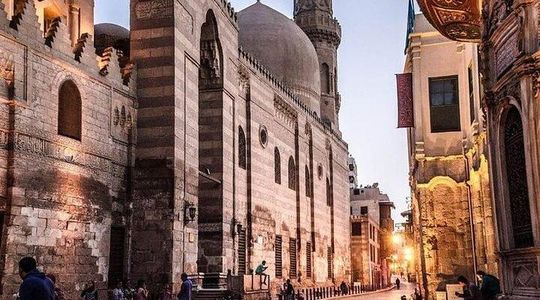 Tour with entry
Cairo Walking Tour Historic, Islamic, and Street Food
from $33.25 Tour with entry
Private Half Day Tour To EL MOEZ Street & Khan El Khalili Bazaar
from $52.25 Tour with entry
Half Day Best of Cairo Secrets Tour with Dinner Egyptian Food
from $57.00


Other nearby places you may find interesting
The closest places of the same kind, if this one is not quite what you had in mind.
-
-
-
-
-


Swipe for more places
More to explore near Qalawun Complex

 Best experiences near Qalawun Complex
 Best hotels near Qalawun Complex
 Best landmarks near Qalawun Complex
 Best attractions near Qalawun Complex
 Best shops near Qalawun Complex
 Best restaurants near Qalawun Complex
 Best bars near Qalawun Complex
Do you manage this location?
Take control to get all the benefits, like improved information, better appearance, and stronger visibility across AI-powered discovery.
Explore more

Explore more of Lower Egypt
Discover the timeless wonders of Lower Egypt, from the iconic Pyramids of Giza to the historic treasures of Alexandria, all set against the backdrop of the majestic Nile Delta.
Explore Lower Egypt
Explore more of Egypt
Discover Egypt: From the timeless pyramids to the vibrant Red Sea, experience a land where ancient wonders meet modern adventures.
Explore Egypt
