
Alpe d'Huez, France Travel Guide
Experience the thrill of Alpe d'Huez: a year-round wonderland in the French Alps with stunning views, thrilling ski slopes, and exciting summer activities.
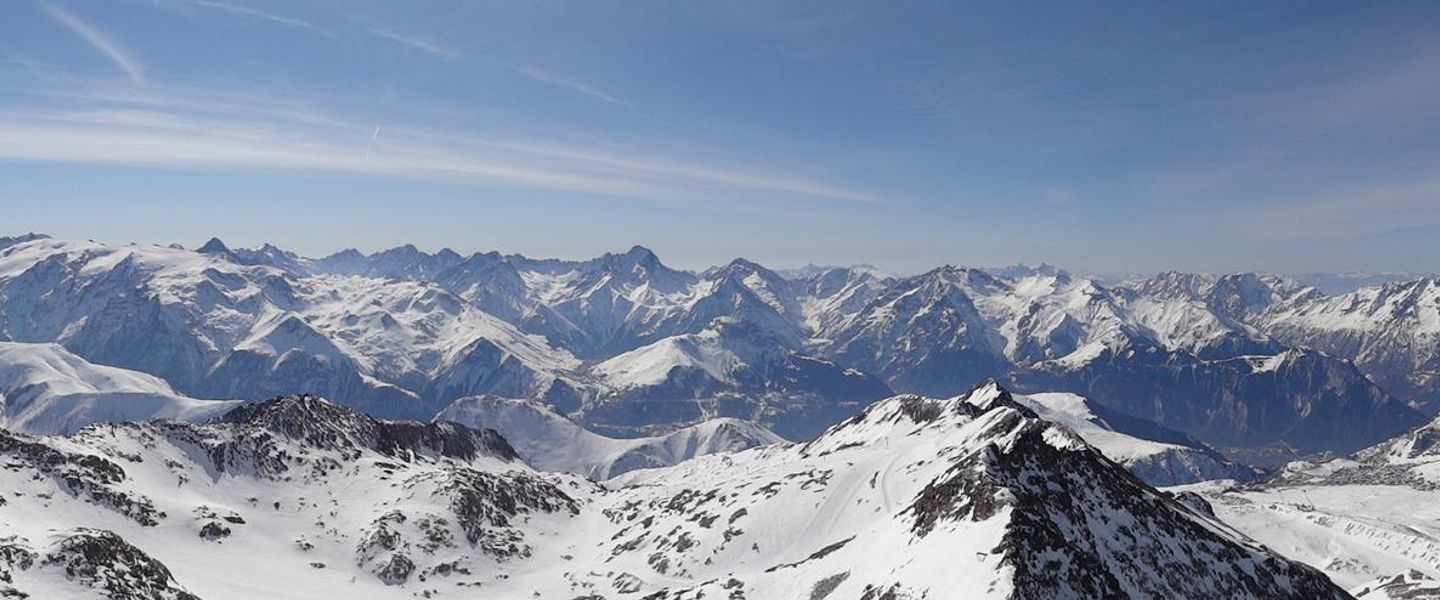
Alpe d'Huez, nestled in the French Alps, is a paradise for outdoor enthusiasts. This charming mountain resort is known for its stunning views and diverse activities. With an elevation of 1,860 meters, it provides breathtaking panoramas, especially from the Pic Blanc summit at 3,330 meters. The view stretches across one-fifth of France, including the Mont Blanc and the Massif Central. In winter, Alpe d'Huez transforms into a snowy playground. It boasts over 250 kilometers of ski slopes, catering to all levels from beginners to experts. The famous Sarenne run, the longest black run in the Alps, offers a thrilling challenge. Besides skiing, you can enjoy snowboarding, ice skating, and even dog sledding. Summer in Alpe d'Huez is equally exciting. The area becomes a haven for hikers, mountain bikers, and paragliders. The resort is part of the Tour de France route, making it a cyclist’s dream. The scenic trails and lush landscapes are perfect for nature lovers. Don't miss the opportunity to explore the charming alpine villages and indulge in local French cuisine at cozy mountain restaurants. Alpe d'Huez is not just about outdoor activities. The resort has a lively après-ski scene with numerous bars, clubs, and events. You can unwind at a spa or take a dip in the heated outdoor pool. The local culture and festivals add a unique touch to your visit, ensuring a memorable experience.

Know before you go
Hi, I'm Eve. Here are a few practical things to know before exploring Alpe d'Huez.
- Visit the Pic Blanc summit for panoramic views that cover one-fifth of France.
- Try the Sarenne run, the longest black run in the Alps, for an unforgettable skiing experience.
- Book accommodation early during the Tour de France to secure the best spots.
- Explore the local villages and taste traditional French mountain cuisine.
- Take advantage of the resort's lively après-ski scene and numerous spas for relaxation.
Explore Alpe d'Huez: Things to Do, Places to Eat, Hotels & More
Handpicked recommendations for top attractions, local dining, accommodations, and more

Best attractions in Alpe d'Huez
Top-rated picks
Best Attractions

Notre-Dame des Neiges, L'Alpe d'Huez
Experience the tranquil beauty and rich architectural heritage of Notre-Dame des Neiges, a must-visit Catholic church in L'Alpe d'Huez.

Alpes d'Huez
Experience the thrill of alpine adventures in Alpe d'Huez, where sunshine meets snow, offering world-class skiing, cycling, and breathtaking panoramic views year-round.
Alpe huez
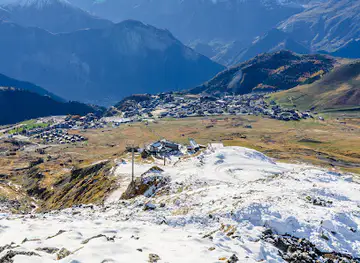
Discover Alpe d'Huez, the 'Island of the Sun' in the French Alps: a year-round destination offering world-class skiing, thrilling cycling, stunning hiking, and a rich mountain history.

Route des Lacs
Discover the breathtaking beauty of the French Alps on the Route des Lacs near Alpe d'Huez, a scenic hiking area with pristine lakes and panoramic mountain views.

Best landmarks in Alpe d'Huez
Top-rated picks
Best Landmarks

Hôtel Le Pic Blanc
Discover luxury and adventure at Hôtel Le Pic Blanc, your gateway to the stunning French Alps, perfect for skiing, hiking, and relaxation.

Alps
Discover the breathtaking beauty and rich history of the Alps, a majestic mountain range spanning across eight European countries.

Compagnie du Mont Blanc
Ascend to breathtaking heights for panoramic Alpine views and unique experiences at the Aiguille du Midi in Chamonix-Mont-Blanc.

Club Med Alpe d'Huez - French Alps
Experience Alpine luxury at Club Med Alpe d'Huez: endless slopes, stunning views, and all-inclusive fun in the heart of the French Alps.

Best restaurants in Alpe d'Huez
Top-rated picks
Best Restaurants

La Folie Douce Alpe d'Huez - Bar et Restaurants
Experience the best of alpine dining at La Folie Douce Alpe d'Huez – where exquisite French cuisine meets vibrant live entertainment in a stunning mountain setting.

La Cabane
Experience exquisite French cuisine at La Cabane in Alpe d'Huez – where culinary tradition meets alpine charm amidst breathtaking mountain views.

Chantebise 2100
Experience exquisite French cuisine paired with local brews at Chantebise 2100 in Alpe D'Huez's stunning alpine setting.

Au Grenier
Experience authentic French dining at Au Grenier in Huez, where fondue and raclette delight every palate amidst charming alpine scenery.

Best bars in Alpe d'Huez
Top-rated picks
Best Bars

Le Tremplin
Discover the vibrant atmosphere and Italian flavors at Le Tremplin, a charming bar and restaurant in the heart of Huez.

Chalet Du Lac Besson
Experience exquisite French cuisine at Chalet Du Lac Besson, a picturesque restaurant in the heart of the Alps, surrounded by stunning alpine views.

Restaurant La Petite Taverne
Experience the essence of French cuisine at Restaurant La Petite Taverne, where every dish tells a story amidst stunning Alpine views.

Restaurant La Pomme de Pin
Experience the flavors of France at Restaurant La Pomme de Pin, a cozy spot in Huez perfect for après-ski dining and relaxation.

Best nightclubs in Alpe d'Huez
Top-rated picks
Best Nightclubs

Les Caves de l'Alpe
Discover the lively nightlife of Huez at Les Caves de l'Alpe, where great music and fantastic drinks create unforgettable memories.

Igloo Club Alpe d’Huez
Discover the vibrant nightlife at Igloo Club Alpe d’Huez, a top destination for dancing and entertainment in the French Alps.

Free Ride Pub
Experience the lively atmosphere of Free Ride Pub in Huez - the perfect spot for drinks, music, and unforgettable alpine vibes.

Underground Bar
Dive into the vibrant nightlife of Huez at Underground Bar, where great drinks and a lively atmosphere create unforgettable experiences.

Best shops in Alpe d'Huez
Top-rated picks
Best Shops

Centre commercial Les Bergers
Explore Centre Commercial Les Bergers: A shopping paradise in Huez offering a blend of local culture, dining, and leisure.

INTERSPORT - ALPE D'HUEZ - LES BERGERS
Discover your alpine adventure with top-quality ski and outdoor sports rentals at Intersport - Alpe D'Huez - Les Bergers in the heart of the French Alps.

Carrefour Montagne Alpe d'Huez
Discover Carrefour Montagne Alpe d'Huez: A premier supermarket offering fresh foods, local delicacies, and an array of essentials for your Alpine adventure.

Cyril's sports - Skimium
Explore the slopes of Alpe d'Huez with top-notch gear from Cyril's Sports, your trusted mountain gear store for ski and snowboard rentals.

Explore Alpe d'Huez on the Map
A handpicked selection of must-see spots in Alpe d'Huez, mapped for you.
Alpe d'Huez Essentials
-
Alpe d'Huez is located in the Central French Alps. The nearest major airport is Grenoble Alpes-Isère Airport, approximately 100 kilometers away. You can also fly into Lyon-Saint Exupéry Airport or Geneva Airport, both of which are about a two-hour drive. From these airports, you can rent a car or take a shuttle service directly to Alpe d'Huez. During the ski season, there are often direct bus services from these airports to the resort. Another option is to take a train to Grenoble, from where you can take a bus or taxi to Alpe d'Huez.
-
Once in Alpe d'Huez, you can navigate the area using the free shuttle buses that run regularly and connect different parts of the resort. For more flexibility, consider renting a car, especially if you plan to explore surrounding villages and attractions. Taxis are also available but can be expensive. During the ski season, ski lifts and gondolas are the main modes of transportation for skiers and snowboarders.
-
The official currency in France is the Euro (EUR). Credit and debit cards are widely accepted in hotels, restaurants, and shops in Alpe d'Huez. However, it's advisable to carry some cash for smaller establishments and for emergencies. ATMs are available throughout the resort, so you can withdraw cash as needed.
-
Alpe d'Huez is generally safe for tourists, with a low crime rate. However, it is always wise to take standard precautions. Keep an eye on your belongings in crowded places and avoid leaving valuables unattended. While there are no specific high-crime areas, it's best to stay vigilant, especially in busy tourist spots. The resort has a strong police presence and security measures to ensure the safety of visitors.
-
In case of an emergency, dial 112 for immediate assistance. The resort has a medical center with doctors and nurses available to handle minor injuries and illnesses. For serious medical emergencies, you may need to be transported to a larger hospital in Grenoble. It is highly recommended to have travel insurance that covers medical emergencies and evacuation. Pharmacies are available in the resort for over-the-counter medications.
-
Fashion: Do dress appropriately for the weather. In winter, layers and waterproof gear are essential. Avoid wearing ski boots in restaurants and shops. Religion: Do respect religious sites and local customs. Although Alpe d'Huez is not known for religious conservatism, a respectful attitude is always appreciated. Public Transport: Do use the free shuttle buses within the resort. Don’t forget to check the schedule as they can vary. Greetings: Do greet people with a simple 'Bonjour' and a smile. It's a polite way to start any conversation. Eating & Drinking: Do try the local cuisine, including raclette and fondue. Don't forget to make a reservation if you plan to dine at popular restaurants during peak season.
-
To experience Alpe d'Huez like a local, consider visiting the weekly market held on Tuesdays and Thursdays, where you can buy local produce and artisanal goods. Engage with the locals, who are often happy to share tips about the best ski runs or hidden hiking trails. For a unique experience, visit the ice cave (Grotte de Glace) at 2,700 meters, which features stunning ice sculptures. Also, don't miss the chance to try night skiing on the floodlit slopes.
When is the best time to visit Alpe d'Huez?
Useful Local Phrases for Alpe d'Huez
You don't need to speak the language perfectly. Even learning a few simple words can make conversations warmer—and locals usually appreciate the effort.
— Eve

Here are the phrases I use most often in Alpe d'Huez. Try a few—you'll be surprised how far they go! 😊
❤️
-
- HelloBonjour
[bon-zhoor] - GoodbyeAu revoir
[oh ruh-vwahr] - YesOui
[wee] - NoNon
[noh] - Please/You're welcomeS'il vous plaît / De rien
[see voo pleh / deh ryen] - Thank youMerci
[mehr-see] - Excuse me/SorryExcusez-moi / Désolé
[ex-kyoo-zay mwah / deh-zoh-lay] - How are you?Comment ça va?
[koh-mohn sah vah?] - Fine. And you?Bien. Et vous?
[byen. eh voo?] - Do you speak English?Parlez-vous anglais?
[par-lay voo ahn-glay?] - I don't understandJe ne comprends pas
[zhuh nuh kohm-prahnd pah]
- HelloBonjour
-
- I'd like to see the menu, pleaseJe voudrais voir la carte, s'il vous plaît
[zhuh voo-dray vwah la kart, see voo pleh] - I don't eat meatJe ne mange pas de viande
[zhuh nuh mahnj pah duh vee-ahnd] - Cheers!Santé!
[sahn-tay] - I would like to pay, pleaseJe voudrais payer, s'il vous plaît
[zhuh voo-dray pay-ay, see voo pleh]
- I'd like to see the menu, pleaseJe voudrais voir la carte, s'il vous plaît
-
- Help!Au secours!
[oh suh-koor] - Go away!Allez-vous en!
[al-ay vooz ahn] - Call the Police!Appelez la police!
[ah-peh-lay lah poh-lees] - Call a doctor!Appelez un médecin!
[ah-peh-lay uh may-deh-sahn] - I'm lostJe suis perdu
[zhuh swee pair-doo] - I'm illJe suis malade
[zhuh swee mah-lahd]
- Help!Au secours!
-
- I'd like to buy...Je voudrais acheter...
[zhuh voo-dray ah-shet-ay] - I'm just lookingJe regarde juste
[zhuh ruh-gard zhuhst] - How much is it?Combien ça coûte?
[kohm-byen sah koot?] - That's too expensiveC'est trop cher
[say troh shair] - Can you lower the price?Pouvez-vous baisser le prix?
[poo-vez voo bay-say luh pree?]
- I'd like to buy...Je voudrais acheter...
-
- What time is it?Quelle heure est-il?
[kell err eh-teel] - It's one o'clockIl est une heure
[eel ehz oon err] - Half past (10)Dix heures et demie
[deez errz ay duh-mee] - MorningMatin
[mah-tahn] - AfternoonAprès-midi
[ah-pray mee-dee] - EveningSoir
[swahr] - YesterdayHier
[yehr] - TodayAujourd'hui
[oh-zhoor dewee] - TomorrowDemain
[duh-mahn] - 1Un
[uh] - 2Deux
[duh] - 3Trois
[twah] - 4Quatre
[kat] - 5Cinq
[sank] - 6Six
[sees] - 7Sept
[set] - 8Huit
[weet] - 9Neuf
[nuf] - 10Dix
[dee]
- What time is it?Quelle heure est-il?
-
- Where's a/the...?Où se trouve...?
[oo suh troov] - What's the address?Quelle est l'adresse?
[kell eh la-dress] - Can you show me (on the map)?Pouvez-vous me montrer (sur la carte)?
[poo-vez voo muh mohn-tray (sur la kart)] - When's the next (bus)?Quand est le prochain (bus)?
[kohn eh luh proh-shahn (bus)] - A ticket (to ....)Un billet (pour ....)
[un bee-yay (poor)]
- Where's a/the...?Où se trouve...?
History of Alpe d'Huez
-
Alpe d'Huez, nestled in the French Alps, traces its origins back to the medieval period. The area was initially settled by shepherds and farmers, taking advantage of the fertile mountain pastures. The small village of Huez, from which Alpe d'Huez gets its name, was first mentioned in historical records in the 11th century.
-
In the late 19th century, Alpe d'Huez experienced a significant transformation due to the discovery of silver and lead deposits. The mining industry brought economic growth and an influx of workers to the region. The mining operations left a lasting legacy, with several old tunnels and mining relics still visible today.
-
The early 20th century marked the beginning of Alpe d'Huez as a winter sports destination. The first ski lift was installed in 1936, and the area quickly gained popularity among skiing enthusiasts. The development of ski infrastructure continued through the decades, solidifying Alpe d'Huez's reputation as a premier ski resort.
-
During World War II, the remote and rugged terrain of Alpe d'Huez provided a strategic advantage for the French Resistance. The local population played a crucial role in supporting resistance fighters, offering shelter and aid. This period of history is commemorated by several monuments and memorials in the area.
-
Alpe d'Huez is perhaps most famous for its association with the Tour de France. Since its first inclusion in the race in 1952, the climb up to Alpe d'Huez has become one of the most iconic and challenging stages of the Tour. The 21 hairpin bends ascending to the resort are legendary among cyclists and spectators alike.
-
In the latter half of the 20th century, Alpe d'Huez continued to expand as a comprehensive tourist destination. Modern amenities, hotels, and restaurants were developed to cater to the growing number of visitors. Today, Alpe d'Huez is a year-round destination, offering a range of activities from skiing and snowboarding in the winter to hiking and mountain biking in the summer.
-
Alpe d'Huez hosts a variety of cultural events throughout the year, including the renowned Alpe d'Huez International Comedy Film Festival. This annual event attracts filmmakers and actors from around the world, adding a vibrant cultural dimension to the area's appeal. In addition to film festivals, Alpe d'Huez also features music festivals, local fairs, and traditional celebrations that highlight the rich cultural heritage of the region.
Neighbouring destination travel guides
Browse our curated selection of top destinations, scenic points, and must-visit spots in the area.




Your all‑in‑one travel companion app
Explore expert travel guides, compare and book tours, experiences, hotels, and more—all from the palm of your hand. Download now for seamless trip planning wherever your wanderlust takes you.


Explore More of Rhône-Alpes

Looking beyond Alpe d'Huez? Discover Rhône-Alpes for broader travel guides, local hot-spots, and regional highlights.
Explore Rhône-AlpesExplore More of France

Looking beyond Alpe d'Huez? Discover France for broader travel guides, local hot-spots, and regional highlights.
Explore FranceAlpe d'Huez in Photos
Browse through our photo collection highlighting the charm and character of the destination.




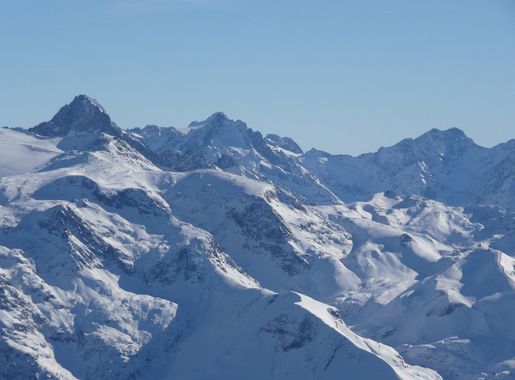


Discover the Alpine Charm of Alpe d'Huez
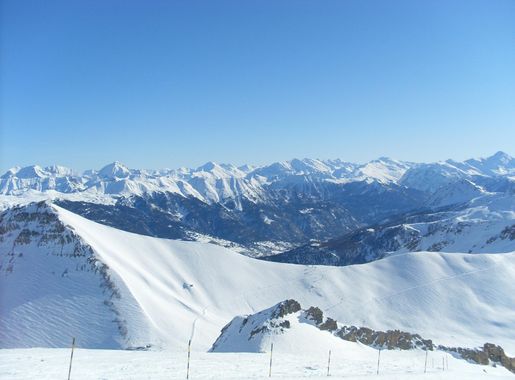
Alpe d'Huez, nestled in the French Alps, is a paradise for outdoor enthusiasts. This charming mountain resort is known for its stunning views and diverse activities. With an elevation of 1,860 meters, it provides breathtaking panoramas, especially from the Pic Blanc summit at 3,330 meters. The view stretches across one-fifth of France, including the Mont Blanc and the Massif Central. In winter, Alpe d'Huez transforms into a snowy playground. It boasts over 250 kilometers of ski slopes, catering to all levels from beginners to experts. The famous Sarenne run, the longest black run in the Alps, offers a thrilling challenge. Besides skiing, you can enjoy snowboarding, ice skating, and even dog sledding. Summer in Alpe d'Huez is equally exciting. The area becomes a haven for hikers, mountain bikers, and paragliders. The resort is part of the Tour de France route, making it a cyclist’s dream. The scenic trails and lush landscapes are perfect for nature lovers. Don't miss the opportunity to explore the charming alpine villages and indulge in local French cuisine at cozy mountain restaurants. Alpe d'Huez is not just about outdoor activities. The resort has a lively après-ski scene with numerous bars, clubs, and events. You can unwind at a spa or take a dip in the heated outdoor pool. The local culture and festivals add a unique touch to your visit, ensuring a memorable experience.