

St Peter's Catholic Church, Caen Travel Guide
Free Guide: Discover Caen's Église Saint-Pierre: A stunning blend of Gothic and Renaissance architecture, rich history, and spiritual significance in the heart of Normandy, a symbol of resilience and beauty.


A brief summary of St Peter's Catholic Church
Discover Caen's Église Saint-Pierre: A stunning blend of Gothic and Renaissance architecture, rich history, and spiritual significance in the heart of Normandy, a symbol of resilience and beauty.
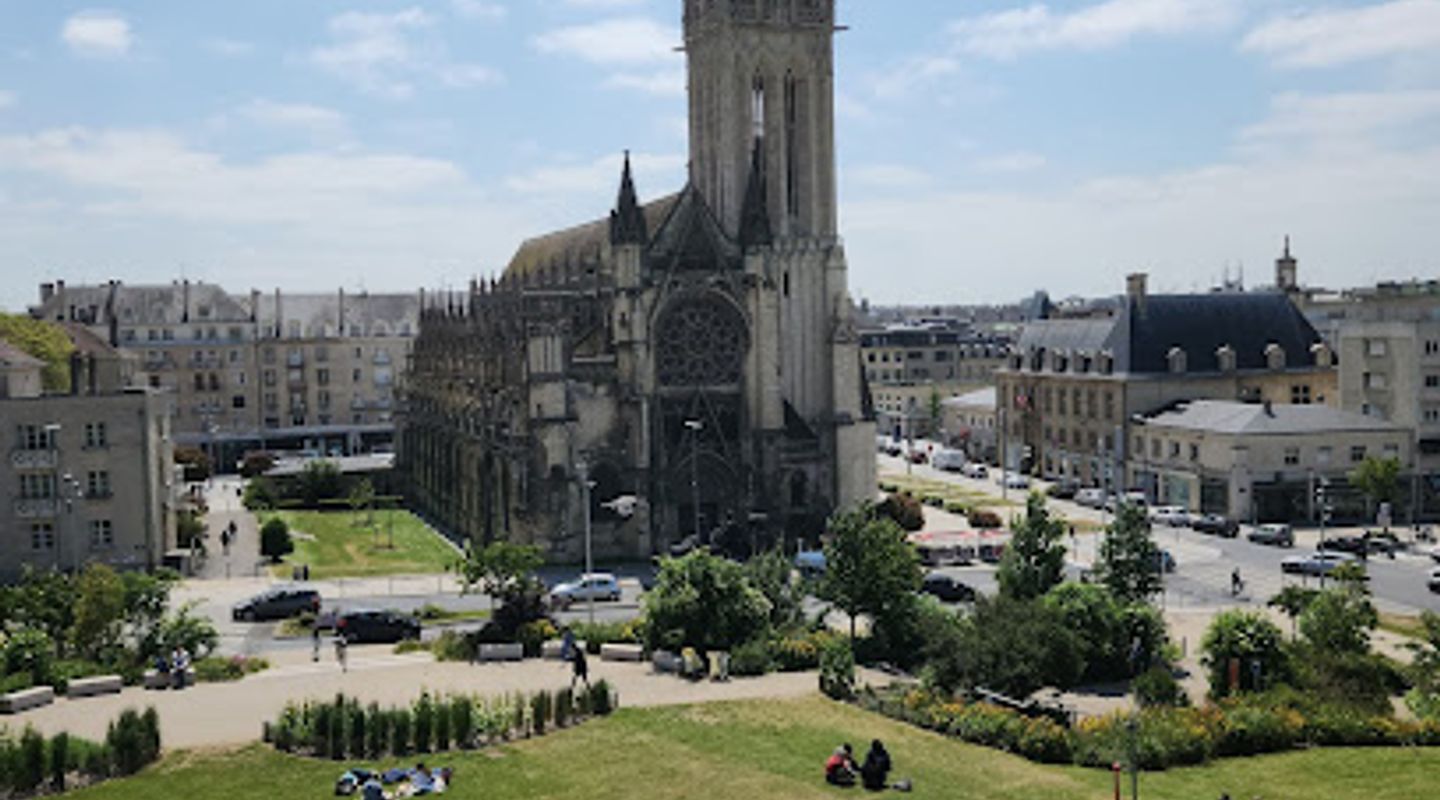
St Peter's Catholic Church, or Église Saint-Pierre, stands proudly in the heart of Caen, Normandy, a testament to centuries of faith and architectural evolution. Its origins trace back to the 13th century, with expansions and renovations continuing through the 16th, resulting in a captivating blend of Gothic and Renaissance styles. The church has witnessed pivotal moments in Caen's history, surviving the devastation of World War II, during which its spire was destroyed and later rebuilt. Today, visitors are greeted by its intricate façade, soaring towers, and a serene interior illuminated by stained glass, offering a glimpse into Caen's rich past and enduring spirit. Wander through the surrounding Place Saint-Pierre, and you'll find yourself immersed in the charm of local cafes and shops, making it a must-see destination for history buffs and casual tourists alike. The church is not only a historical monument but also a vibrant center of worship and community life.
- Address
- Pl. Saint-Pierre, 14000 Caen
- Phone
- Website
Getting there
Walking
Public Transport
Taxi/Ride-Share
Discover more about St Peter's Catholic Church
Overview
Église Saint-Pierre, or St Peter's Catholic Church, is a captivating landmark in the heart of Caen, Normandy, embodying centuries of history, architectural evolution, and spiritual significance. Its prominent location on Place Saint-Pierre makes it a focal point of the city, drawing visitors to explore its rich heritage and admire its stunning design. The church's story began in the 13th century, with construction and expansions continuing through the 16th century. This lengthy building period resulted in a remarkable fusion of architectural styles, most notably Gothic and Renaissance. The façade features intricate stonework, soaring towers, and a large rose window, while the interior showcases vaulted ceilings, stained glass windows, and detailed carvings. The eastern apse, designed by Hector Sohier between 1518 and 1545, exemplifies the transition from Gothic to Renaissance aesthetics. Throughout its history, Église Saint-Pierre has been a witness to significant events in Caen. During the Middle Ages, it served as the primary location for public ceremonies. A notable example is when Henri IV abjured Protestantism, marking the end of religious wars, a Te Deum was sung within its walls in the presence of city officials. The church's resilience was tested during World War II when, in 1944, the spire was destroyed by a shell from a Royal Navy battleship. However, the church was carefully rebuilt, preserving its historical essence while incorporating modern elements, symbolizing Caen's own recovery and strength. Inside, the church offers a serene and awe-inspiring atmosphere. Light filters through the stained-glass windows, casting kaleidoscopic patterns across the stone floor. The interplay of light and shadow enhances the intricate details of the architecture, creating a space for contemplation and appreciation. Visitors can admire the grand organ, a meticulously restored musical marvel, and the life-size sculpture of St. Peter above the main altar. The choir vault, ambulatory chapels, and carvings on the third nave pillar, depicting scenes from medieval novels, are also of particular interest. Beyond its architectural and historical significance, Église Saint-Pierre remains a vibrant center of worship and community life. Regular masses are held, echoing the rituals of generations past. The church also hosts concerts and exhibitions, celebrating both sacred and secular arts. Its grand organ fills the space with melodies, creating unforgettable sensory experiences. Exploring the area surrounding Église Saint-Pierre further enriches the visitor experience. Place Saint-Pierre is a bustling square with charming cafes, shops, and local markets. Nearby attractions include the Caen Castle, Musée de Normandie, and Musée des Beaux-Arts, offering further insights into the region's history and culture. Église Saint-Pierre stands as a symbol of hope and renewal. Its survival and restoration after the devastation of war serve as a reminder of human resilience. The church continues to be a place of unity, where people from all backgrounds can come together to appreciate beauty, history, and shared humanity. Visiting Église Saint-Pierre offers a unique lens through which to view Caen's rich history. The church has witnessed the city's triumphs and tribulations, from the medieval period through the Renaissance, the French Revolution, and the Second World War. Each chapter of this history is etched into the church's walls, waiting to be discovered by curious visitors. Whether you are drawn to its architectural grandeur, its historical significance, or its spiritual atmosphere, Église Saint-Pierre is an essential stop on any journey through Caen, leaving you with lasting memories of its beauty and significance. Major restoration of the church began in 2004, when the façades and the vaults destroyed in the war were rebuilt identically. The church's evolution in architectural styles ranges from Rayonnant to Flamboyant Gothic to Renaissance. The exterior apse and the interior choir of the church project an architectural style that embodies the transition from the Gothic to the Renaissance. It sports rich decoration, unusual vaulting, and a life-size sculpture of patron St. Peter directly over the main altar. Visitors find the choir vault, the ambulatory chapels, and the carvings on the 3rd nave pillar of particular interest. The carvings represent scenes from medieval novels on knighthood. Until the mid-19th century, the eastern end of the church faced a canal, something that was recorded in the works of various artists and engravers. Later the canal was covered and replaced by a road. The church ceased to be a church building on November 20, 1793, and became a Temple of Reason, and was from 1793 to 1795 used as a venue for the 'Culte de l'Être supreme', after which it was used for Catholic worship from June 4, 1795, to 1933.
Evendo Review Centre
 Google
Guest reviews
Explore St Peter's Catholic Church on the map
A handpicked selection of must-see spots near St Peter's Catholic Church, mapped for you.
Get your free copy of our complete guide to St Peter's Catholic Church, delivered straight to you.
Everything on this page, from opening hours and how to get there to Eve’s tips and the best time to go, in one PDF you can read offline, print or share.
Already have an account? Sign in
Your St Peter's Catholic Church guide is ready.
We'll send it to · Not you? Sign out

Getting your guide ready…
We are putting together a fresh copy of the St Peter's Catholic Church guide. This can take up to a minute.
This can take a few moments. If your browser asks, choose Allow so the download can start. You'll find the guide in your Downloads folder.
Nothing happened? Download it again
Sorry, the guide is taking longer than usual. Please try again in a minute, or get it by email instead.
Unlock the best of St Peter's Catholic Church
Skip-the-line tickets, guided tours with entry, and walking tours of the area, booked in a few clicks.


Other nearby places you may find interesting
The closest places of the same kind, if this one is not quite what you had in mind.
-
-
-
-
-


Swipe for more places
More to explore near St Peter's Catholic Church
-
 Best experiences near St Peter's Catholic Church
-
 Best hotels near St Peter's Catholic Church
-
 Best landmarks near St Peter's Catholic Church
-
 Best attractions near St Peter's Catholic Church
-
 Best shops near St Peter's Catholic Church
-
 Best restaurants near St Peter's Catholic Church
-
 Best bars near St Peter's Catholic Church


Do you manage this location?
Take control to get all the benefits, like improved information, better appearance, and stronger visibility across AI-powered discovery.
Explore more

Explore more of Caen
Discover Caen: A city where history meets modern vibrancy. From medieval abbeys to bustling markets, explore the rich heritage and vibrant culture of Normandy's hidden gem.
Explore Caen
Explore more of France
Explore France: A land of romance, history, and unparalleled beauty, from the iconic streets of Paris to the serene landscapes of Provence and the luxury of the French Riviera.
Explore France
