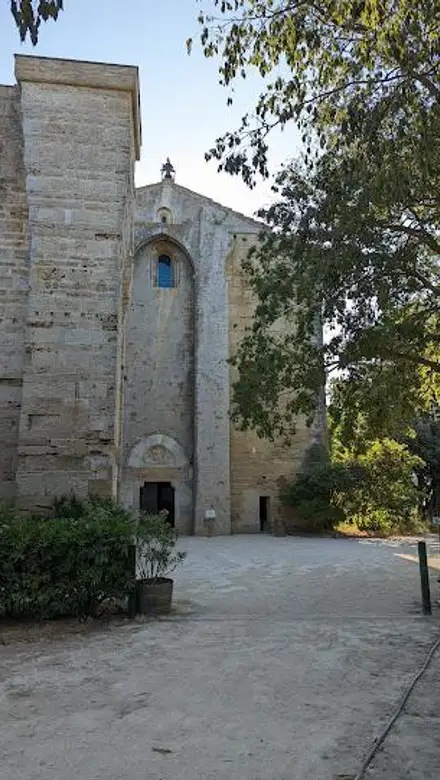
Cathédrale de Maguelone, Montpellier Travel Guide
Free Guide: Discover a historic Romanesque cathedral on a tranquil island, blending faith, architecture, and nature near Montpellier, managed by a community dedicated to heritage and social inclusion.


A brief summary of Cathédrale de Maguelone
Discover a historic Romanesque cathedral on a tranquil island, blending faith, architecture, and nature near Montpellier, managed by a community dedicated to heritage and social inclusion.
The Cathédrale de Maguelone, a majestic Romanesque cathedral, stands proudly on a narrow isthmus near Villeneuve-lès-Maguelone, offering a unique blend of history, architecture, and natural beauty. Once the seat of the Bishop of Maguelone, this fortified church has witnessed centuries of change, serving as a refuge for popes and bishops during the Middle Ages. Surrounded by vineyards and the tranquil waters of the Étang de l'Arnel, the cathedral provides a serene escape with stunning views of the Mediterranean Sea. Visitors can explore the cathedral's austere yet elegant interior, wander through the surrounding parkland, and discover the ongoing efforts to preserve this historical treasure. The site is managed by the Compagnons de Maguelone, a non-profit organization dedicated to heritage preservation and social inclusion, adding a layer of purpose to your visit. Whether you're drawn to its rich history, architectural grandeur, or peaceful setting, the Cathédrale de Maguelone promises a memorable experience.
Opening hours
- Every day9 am–6 pm
Opening hours as listed on the venue’s Google Business Profile. Hours can change for services and special events, so check with the venue before you go.
- Address
- Domaine de, 34750 Villeneuve-lès-Maguelone
- Phone
- Website
Getting there
Walking
Public Transport
Taxi/Ride-Share
Discover more about Cathédrale de Maguelone
Overview
The Cathédrale de Maguelone, officially the Cathédrale Saint-Pierre-et-Saint-Paul de Maguelone, is a Roman Catholic church with a storied past, located approximately 6 miles south of Montpellier in the Hérault department of southern France. Perched on an isthmus between the Étang de l'Arnel and the Mediterranean Sea, this imposing structure marks the site of the ancient city of Maguelone, opposite the modern town of Villeneuve-lès-Maguelone. Originally the episcopal seat of the Bishop of Maguelone, the cathedral held this position until 1563 when the see was moved to Montpellier. The current cathedral, a Romanesque fortified building, was erected in the 11th century under Bishop Arnaud (1030-1060) after the see was returned to Maguelone from Substantion. Despite the demolition of some sections, including the towers, the main structure remains functional and is recognized as a national monument. The history of Maguelone dates back to the 6th century when the island hosted its first church. For the next three centuries, the area remained relatively obscure. However, in the 11th century, Bishop Arnaud initiated the construction of a small episcopal city and cathedral on the ruins of earlier structures. He also built fortifications to protect the site from Muslim attacks. In 1085, the Counts of Melgueil bequeathed their rights over the diocese to Pope Gregory VII, leading to a period of prosperity for Maguelone under the protection of the Holy See. Pope Urban II visited the island in 1096 and declared Maguelone Cathedral as "second only to that of Rome." Throughout the 12th and 13th centuries, Maguelone reached the height of its importance. However, its isolation due to the rise of Montpellier gradually led to its decline. By the 15th century, the bishop had relocated to Montpellier, and in 1536, the episcopal seat was officially transferred. The canons gradually sold off the buildings, which were later occupied by the royal army. In the 19th century, Jean-Jacques Fabre, the new owner of the site, began restoring the cathedral. His son donated the island to the Diocese of Montpellier in 1949, and Christian worship was reinstated in 1875. Today, the cathedral is managed by les Compagnons de Maguelone, a dedicated preservation society, and serves both religious and secular purposes. The architecture of the Cathédrale de Maguelone is a blend of Romanesque and Gothic styles. The austere yet elegant interior features high stone walls and narrow openings, creating a sense of majesty and serenity. The tympanum above the portal depicts Christ in Majesty, surrounded by symbols of the Evangelists. Visitors can explore the cathedral's rich past through guided tours and audio guides, available in multiple languages. The surrounding parkland offers a peaceful setting for a stroll, with vineyards cultivated by the Compagnons de Maguelone. The site also hosts various cultural events, including the Festival de Musique Ancienne de Maguelone, a music festival held annually in June. The Cathédrale de Maguelone is not only a historical monument but also a place of social inclusion. Les Compagnons de Maguelone, the non-profit organization that manages the site, is dedicated to the preservation of the heritage and the professional integration of people with disabilities. Visiting the Cathédrale de Maguelone is a unique experience that combines history, architecture, and natural beauty. Whether you are interested in the cathedral's rich past, its architectural grandeur, or its peaceful setting, you will find something to appreciate in this remarkable place. The site is open to the public year-round, with varying hours depending on the season. Admission to the cathedral and park is free, but there is a charge for guided tours and audio guides. The Cathédrale de Maguelone is a testament to the enduring power of faith and the importance of preserving our cultural heritage. It is a place where history comes alive, and where visitors can connect with the past in a meaningful way. A visit to the Cathédrale de Maguelone is an unforgettable experience that will leave you with a deeper appreciation for the history, architecture, and natural beauty of this remarkable region of France. The island itself is an arboretum, home to diverse flora and fauna. Keep an eye out for migrating birds, blackbirds and even barn owls. The island is part of a protected Natura 2000 site, so binoculars are recommended. Don't miss the opportunity to wander through the vineyards surrounding the cathedral, where the Compagnons de Maguelone cultivate a variety of grapes. The wines produced here are regularly recognized for their quality and offer a taste of the region's rich viticultural heritage.
Evendo Review Centre
 Google
Guest reviews
Explore Cathédrale de Maguelone on the map
A handpicked selection of must-see spots near Cathédrale de Maguelone, mapped for you.
Get your free copy of our complete guide to Cathédrale de Maguelone, delivered straight to you.
Everything on this page, from opening hours and how to get there to Eve’s tips and the best time to go, in one PDF you can read offline, print or share.
Already have an account? Sign in
Your Cathédrale de Maguelone guide is ready.
We'll send it to · Not you? Sign out

Getting your guide ready…
We are putting together a fresh copy of the Cathédrale de Maguelone guide. This can take up to a minute.
This can take a few moments. If your browser asks, choose Allow so the download can start. You'll find the guide in your Downloads folder.
Nothing happened? Download it again
Sorry, the guide is taking longer than usual. Please try again in a minute, or get it by email instead.
Unlock the best of Cathédrale de Maguelone
Skip-the-line tickets, guided tours with entry, and walking tours of the area, booked in a few clicks.


Other nearby places you may find interesting
The closest places of the same kind, if this one is not quite what you had in mind.
-
-
-
-
-


Swipe for more places
More to explore near Cathédrale de Maguelone
-
 Best experiences near Cathédrale de Maguelone
-
 Best hotels near Cathédrale de Maguelone
-
 Best landmarks near Cathédrale de Maguelone
-
 Best attractions near Cathédrale de Maguelone
-
 Best shops near Cathédrale de Maguelone
-
 Best restaurants near Cathédrale de Maguelone
-
 Best bars near Cathédrale de Maguelone


Do you manage this location?
Take control to get all the benefits, like improved information, better appearance, and stronger visibility across AI-powered discovery.
Explore more
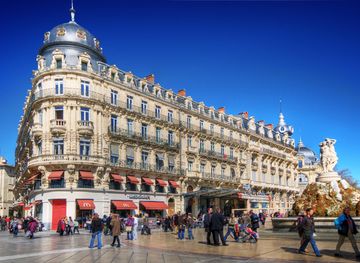
Explore more of Montpellier
Discover Montpellier: A perfect blend of historical charm, cultural richness, and modern vibrancy in the heart of Southern France.
Explore Montpellier
Explore more of France
Explore France: A land of romance, history, and unparalleled beauty, from the iconic streets of Paris to the serene landscapes of Provence and the luxury of the French Riviera.
Explore France