

Hohenschwangau Castle Travel Guide
Free Guide: Discover the enchanting world of Bavarian royalty at Hohenschwangau Castle, the childhood home of King Ludwig II, nestled amidst stunning Alpine scenery near Neuschwanstein.


A brief summary of Hohenschwangau Castle
Discover the enchanting world of Bavarian royalty at Hohenschwangau Castle, the childhood home of King Ludwig II, nestled amidst stunning Alpine scenery near Neuschwanstein.
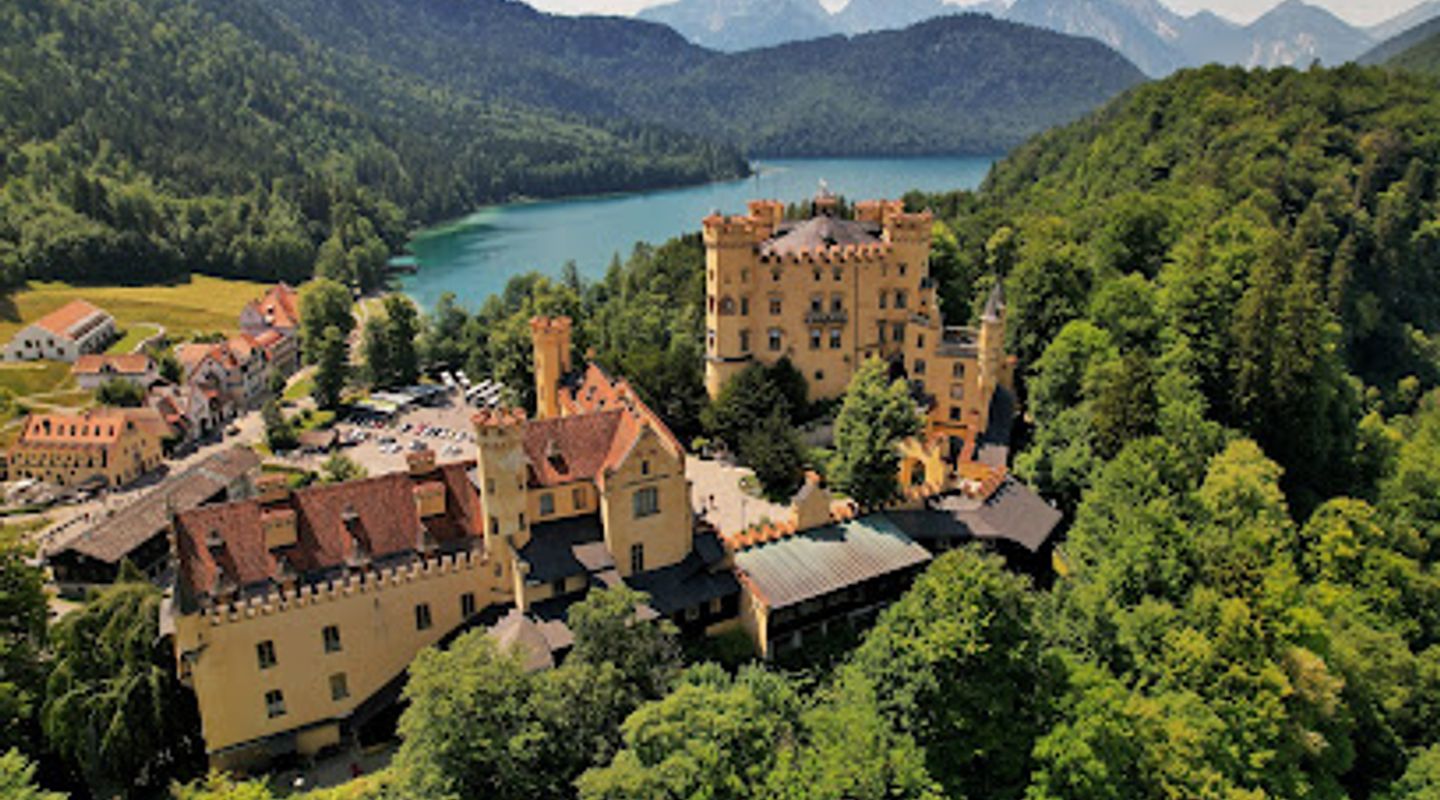
Nestled in the Bavarian Alps, Hohenschwangau Castle offers a captivating glimpse into 19th-century royalty. Built by King Maximilian II, it served as the childhood residence of King Ludwig II, the visionary behind nearby Neuschwanstein. Explore the castle's neo-Gothic architecture, adorned with vibrant murals depicting medieval legends. Wander through the meticulously designed interiors, showcasing Biedermeier furnishings and a romantic ambiance. Discover the history of the Wittelsbach dynasty and the castle's role as a summer retreat for the royal family. A visit to Hohenschwangau provides a unique perspective on the lives and inspirations of Bavaria's most iconic kings, offering a rich cultural experience amidst stunning natural beauty. Don't miss the chance to explore the surrounding gardens and enjoy breathtaking views of the Alpsee lake and the adjacent Neuschwanstein Castle.
Opening hours
- Every day9 am–4:30 pm
Opening hours as listed on the venue’s Google Business Profile. Hours can change for services and special events, so check with the venue before you go.
- Address
- Alpseestraße 30, 87645 Schwangau
- Phone
- Website
Getting there
Walking
Horse-Drawn Carriage
Public Transport
Taxi/Ride-Share
Discover more about Hohenschwangau Castle
Overview
Hohenschwangau Castle, a 19th-century palace in southern Germany, stands as a testament to the romantic visions of the Bavarian monarchy. Located in the village of Hohenschwangau, near Füssen, it's a stone's throw from the more famous Neuschwanstein Castle, offering visitors a unique opportunity to explore the intertwined history of two royal residences. The castle's story begins in the 12th century when it was known as Schwanstein Castle, the home of the Knights of Schwangau. Over the centuries, it changed hands and suffered damage in various wars, eventually falling into ruin. In 1832, Crown Prince Maximilian of Bavaria, later King Maximilian II, discovered the dilapidated castle during a walking tour. Captivated by the site's beauty and history, he purchased it and embarked on a reconstruction project that lasted from 1833 to 1837. Maximilian transformed the ruins into a magnificent neo-Gothic palace, drawing inspiration from medieval architecture and romantic ideals. He entrusted the project to Domenico Quaglio, an architect and theater painter, who brought Maximilian's vision to life. The result was a castle that served as a summer residence for the royal family and a showcase for Bavarian art and culture. Hohenschwangau became the official summer and hunting residence of Maximilian, his wife Marie of Prussia, and their two sons, Ludwig and Otto. The young princes spent much of their childhood within its walls, absorbing the history and legends depicted in the castle's elaborate murals. Queen Marie, a lover of the mountains, created an alpine garden filled with plants from across the Alps. The castle's interior is a feast for the eyes, with over 90 wall paintings depicting scenes from medieval legends, German history, and the lives of the Knights of Schwangau. The Swan motif is omnipresent, a nod to the castle's original name and the legends surrounding the swan knight Lohengrin. The furniture is in the Biedermeier style, complementing the castle's romantic and knightly atmosphere. Ludwig, who later became King Ludwig II, was deeply influenced by his time at Hohenschwangau. The castle sparked his imagination and fueled his passion for art, music, and architecture. He would later build Neuschwanstein Castle just across the valley, a more extravagant expression of his romantic ideals. During his reign, Ludwig often visited Hohenschwangau to oversee the construction of Neuschwanstein. He even had a telescope installed in his room so he could monitor the progress of his dream castle. Despite his grand ambitions, Ludwig never forgot his childhood home, and Hohenschwangau remained a special place for him throughout his life. Today, Hohenschwangau Castle is open to the public, offering guided tours that delve into its history, art, and the lives of the Bavarian royals. Visitors can explore the castle's many rooms, including the Hall of the Knights, the Queen's Room, and the Tasso Room, each filled with unique artwork and historical artifacts. The castle's location is also a major draw. Perched on a hill overlooking the Alpsee lake, Hohenschwangau offers stunning views of the surrounding mountains and forests. The nearby Museum of the Bavarian Kings provides further insight into the history of the Wittelsbach dynasty. Visiting Hohenschwangau Castle requires a bit of planning. Tickets can be purchased online or at the Ticket Center in Hohenschwangau. Due to the castle's popularity, it's recommended to book tickets in advance, especially during peak season. The castle is open year-round, with varying hours depending on the season. While in Hohenschwangau, visitors can also explore the village itself, which offers a variety of restaurants, shops, and hotels. The Alpsee lake is a popular spot for swimming, boating, and hiking. And, of course, no visit to Hohenschwangau is complete without a trip to Neuschwanstein Castle. Hohenschwangau Castle is more than just a historical site; it's a window into the world of Bavarian royalty and the romantic ideals that shaped their lives. It's a place where history, art, and nature come together to create a truly unforgettable experience. Whether you're a history buff, an art lover, or simply seeking a beautiful escape, Hohenschwangau Castle is sure to captivate your imagination and leave you with lasting memories. The castle's significance extends beyond its architectural beauty and historical importance. It represents a pivotal moment in Bavarian history, a time of artistic flourishing and royal ambition. It serves as a reminder of the power of dreams and the enduring legacy of the Wittelsbach dynasty. For those seeking a deeper understanding of Bavarian culture and history, Hohenschwangau Castle is an essential destination. It offers a unique perspective on the lives and inspirations of King Maximilian II and King Ludwig II, two of Bavaria's most iconic figures. A visit to Hohenschwangau is a journey through time, a chance to step into the world of kings and queens, and to experience the magic of a bygone era. The castle's enduring appeal lies in its ability to transport visitors to another time and place. As you wander through its halls and admire its artwork, you can almost imagine the royal family going about their daily lives, discussing affairs of state, and enjoying the beauty of their surroundings. Hohenschwangau Castle is a place where history comes alive, where dreams take flight, and where the spirit of Bavaria shines brightly. Whether you're planning a day trip from Munich or a longer stay in the Bavarian Alps, Hohenschwangau Castle is a must-see destination. It's a place that will inspire, educate, and enchant, leaving you with a deeper appreciation for the history, art, and culture of Bavaria.
Evendo Review Centre
 Google
Guest reviews
Explore Hohenschwangau Castle on the map
A handpicked selection of must-see spots near Hohenschwangau Castle, mapped for you.
Get your free copy of our complete guide to Hohenschwangau Castle, delivered straight to you.
Everything on this page, from opening hours and how to get there to Eve’s tips and the best time to go, in one PDF you can read offline, print or share.
Already have an account? Sign in
Your Hohenschwangau Castle guide is ready.
We'll send it to · Not you? Sign out

Getting your guide ready…
We are putting together a fresh copy of the Hohenschwangau Castle guide. This can take up to a minute.
This can take a few moments. If your browser asks, choose Allow so the download can start. You'll find the guide in your Downloads folder.
Nothing happened? Download it again
Sorry, the guide is taking longer than usual. Please try again in a minute, or get it by email instead.
Unlock the best of Hohenschwangau Castle
Skip-the-line tickets, guided tours with entry, and walking tours of the area, booked in a few clicks.
 Tour with entry
Neuschwanstein Castle and Munich Christmas Market Tour
from $90.64 Tour with entry
Pickup from Munich: Hike Neuschwanstein - Away from the Crowds
from $244.19 Tour with entry
Private Day Tour from Munich to Neuschwanstein Castle and Füssen
from $637.68 Tour with entry
Neuschwanstein and Hohenschwangau Private Tour: Munich or Füssen
from $1,051.77


Other nearby places you may find interesting
The closest places of the same kind, if this one is not quite what you had in mind.
-
-
-


Swipe for more places
More to explore near Hohenschwangau Castle

 Best experiences near Hohenschwangau Castle
 Best hotels near Hohenschwangau Castle
 Best landmarks near Hohenschwangau Castle
 Best attractions near Hohenschwangau Castle
 Best shops near Hohenschwangau Castle
 Best restaurants near Hohenschwangau Castle
 Best bars near Hohenschwangau Castle
Do you manage this location?
Take control to get all the benefits, like improved information, better appearance, and stronger visibility across AI-powered discovery.
Explore more

Explore more of Bavarian Alps
Discover the magic of the Bavarian Alps: a haven of majestic mountains, serene lakes, and enchanting villages perfect for outdoor adventures and cultural exploration.
Explore Bavarian Alps
Explore more of Germany
Experience Germany: where history meets innovation, and urban energy blends with natural beauty. Discover diverse cultures, delicious cuisine, and stunning landscapes.
Explore Germany
