
Background

Schloss Berchtesgaden: A Royal Bavarian Retreat

Explore centuries of royal history and art within the majestic Schloss Berchtesgaden, nestled in the heart of the Bavarian Alps, offering breathtaking views and cultural immersion.

4.5

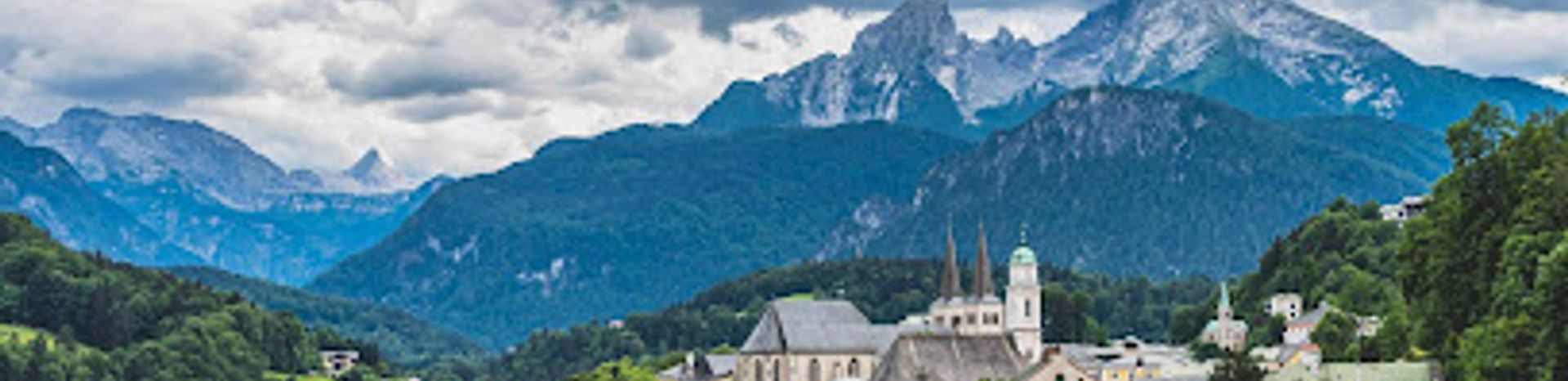
Schloss Berchtesgaden, a former Augustine monastery transformed into a royal residence, stands as a captivating landmark in the heart of Berchtesgaden. Steeped in history, the castle showcases a blend of architectural styles from Romanesque to Baroque, reflecting its evolution over centuries. Today, visitors can explore its opulent interiors through guided tours, marveling at the art collections, period furnishings, and the Rehmuseum, which displays an extensive wildlife collection. Nestled amidst the stunning Bavarian Alps, the castle offers breathtaking views and a glimpse into the lives of Bavarian royalty. Its central location makes it an ideal starting point for exploring the charming town of Berchtesgaden and the surrounding natural wonders, including the Berchtesgaden National Park and the iconic Königssee.

A brief summary to Schloss Berchtesgaden

Local tips

  • Book your guided tour in advance, especially during peak season, to ensure you don't miss out on exploring the castle's fascinating interiors.
  • Combine your visit with a trip to the Rehmuseum to delve deeper into the region's natural history and wildlife.
  • Take a stroll through the Upper Rose Garden for panoramic views of the Watzmann mountain, a perfect photo opportunity.
  • Check the castle's event calendar for special themed tours, such as the Advent in the Castle or evening tours by candlelight, for a unique experience.
  • If you plan to visit multiple attractions in the area, consider purchasing a combi-ticket for cost savings.
widget icon

Getting There

  • Walking

    Schloss Berchtesgaden is centrally located in Berchtesgaden town and easily accessible on foot from most points within the town center. From the Berchtesgaden Hauptbahnhof (train station), it's approximately a 15-20 minute walk. Follow the signs towards the town center (Zentrum). As you approach the center, look for signs directing you to 'Schlossplatz'. The castle is situated on Schlossplatz, a central square. The walk is mostly flat and offers scenic views of the town.

  • Public Transport

    If arriving by bus from outside Berchtesgaden, most bus lines terminate at the Berchtesgaden Hauptbahnhof (train station). From there, you can either walk (as described above) or take a local bus to a stop closer to the Schloss. Bus lines 841 and 843, among others, serve the town center. Disembark at the 'Berchtesgaden Zentrum' stop or 'Schlossplatz' stop, which are both a short walk from the castle. A single bus fare within Berchtesgaden is approximately €2-3. Note that with the Berchtesgaden Guest Card, received from your accommodation, bus travel within the region is free on most lines.

  • Taxi/Ride-Share

    Taxis are readily available at the Berchtesgaden Hauptbahnhof. A taxi ride to Schloss Berchtesgaden from the train station takes approximately 5-10 minutes, depending on traffic, and typically costs between €8-€12. Ride-sharing services like Uber are not widely available in this region.

  • Driving

    If driving, follow signs to Berchtesgaden Zentrum. Limited parking is available directly at Schlossplatz. Underground parking is available at AlpenCongress (Maximilianstraße 9), a 3-minute walk from the castle. Parking fees at AlpenCongress are approximately €2.50 per hour or €15 per day. Bus parking is also available at AlpenCongress. Be aware that parking in the immediate vicinity of the castle can be challenging, especially during peak season.

Unlock the Best of Schloss Berchtesgaden

Buy tickets

    No tickets available

Book tours with entry

    No tours available

Book tours without entry

    No tours available

Discover more about Schloss Berchtesgaden

Schloss Berchtesgaden, perched majestically in the heart of the Bavarian Alps, offers a captivating journey through centuries of history and royal splendor. Originally founded in 1102 as an Augustine monastery by Countess Irmgard von Sulzbach, the site transformed over time into a significant religious and political center. Legend says the monastery was founded as gratitude for saving her spouse after a hunting accident. Throughout the Middle Ages, the monastery flourished, eventually becoming an independent church state within the Holy Roman Empire. The provosts and canons expanded the complex, adding architectural layers that reflect the changing styles of each era. Remarkably, financial constraints often prevented complete overhauls, resulting in a unique blend of Romanesque, Gothic, Renaissance, and Baroque elements that can still be admired today. The Romanesque cloister, built around 1180, and the two-nave Gothic hall, dating back to 1400, stand as testaments to the castle's early origins. In 1803, the monastery's spiritual status was lifted, and the land came under various rulers until 1810, when it became part of the Kingdom of Bavaria. The castle then transitioned into a hunting lodge for the Bavarian royal family, the House of Wittelsbach. Crown Prince Rupprecht of Bavaria resided here from 1922 to 1933, enriching the castle with his extensive art collection. To this day, Duke Franz of Bavaria, head of the House of Wittelsbach, uses the castle as a summer residence. A visit to Schloss Berchtesgaden is an immersive experience. Guided tours, offered year-round, lead visitors through approximately 30 of the castle's 214 rooms, revealing a treasure trove of art and historical artifacts. Highlights include two altarpieces by Tilman Riemenschneider, a Madonna from the circle of Veit Stoss, and paintings by renowned artists such as Peter Gertner and Karl Rottmann. The rooms are furnished with original pieces from the Gothic to Empire and Biedermeier periods, providing an authentic glimpse into royal life. Beyond its artistic treasures, the castle also houses three armories displaying Baroque hunting rifles and medieval weaponry. The Renaissance halls feature three portals from Neuburg on the Danube Castle, one crafted from marble. A unique artifact is the "Liedertisch" (Table of Songs), featuring a Palestrina motet for six voices, engraved in 1591 by Kaspar von der Sitt on a Solnhofen limestone slab. Adding to the castle's allure is the Rehmuseum, located in the former stables. This museum showcases the extensive wildlife collection of Duke Albrecht of Bavaria, featuring almost 5,000 exhibits related to his research. The Upper Rose Garden offers arguably the most beautiful view of the Watzmann mountain in the entire valley. Located on Schlossplatz 2, the castle is easily accessible and serves as a central point for exploring Berchtesgaden. The town itself is a charming destination, with colorful buildings, traditional Bavarian taverns, and a rich history. Nearby attractions include the Berchtesgaden National Park, offering stunning alpine scenery and outdoor activities, and the iconic Königssee, a pristine lake surrounded by dramatic mountain peaks. Schloss Berchtesgaden is more than just a historical site; it's a living testament to Bavaria's royal heritage and a gateway to the natural beauty of the Berchtesgadener Land. Whether you're an art enthusiast, a history buff, or simply seeking a breathtaking escape, Schloss Berchtesgaden promises an unforgettable experience.

Popular Experiences near Schloss Berchtesgaden

Popular Hotels near Schloss Berchtesgaden

Select Currency