Museum für Naturkunde, Berlin Travel Guide
Explore millions of natural history specimens, including dinosaurs and minerals, at Berlin's renowned Museum für Naturkunde.
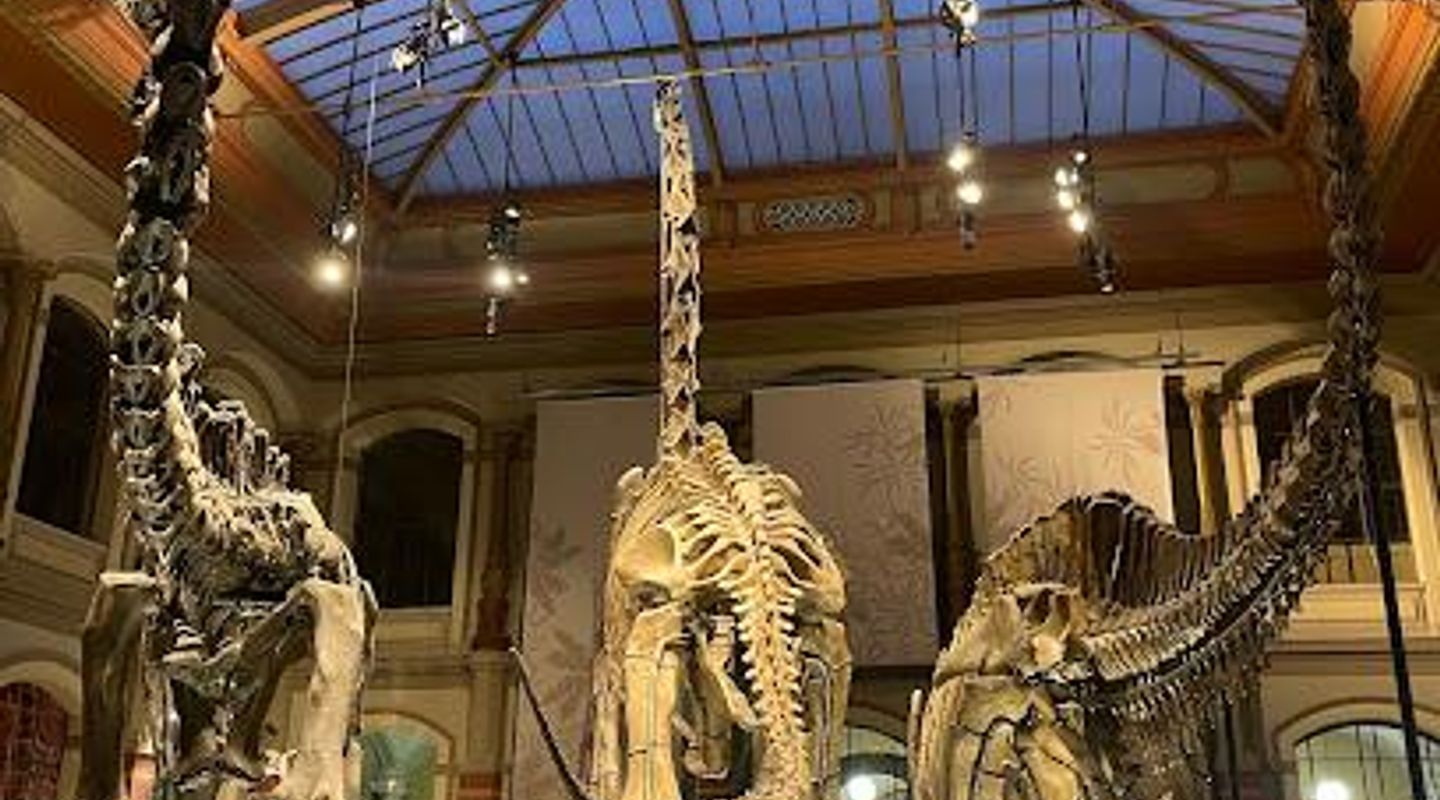
The Museum für Naturkunde in Berlin is one of Germany's largest natural history museums, housing over 30 million specimens. Famous for its dinosaur hall, including the world's largest mounted dinosaur skeleton, and the Archaeopteryx fossil, it offers a fascinating glimpse into the natural world.
A brief summary to Museum für Naturkunde
- Invalidenstraße 43, Berlin, Mitte, 10115, DE
- Click to display
- Click to display
- Tuesday 9:30 am-6 pm
- Wednesday 9:30 am-6 pm
- Thursday 9:30 am-6 pm
- Friday 9:30 am-6 pm
- Saturday 10 am-6 pm
- Sunday 10 am-6 pm

Know before you go
Hi, I'm Eve. Here are a few practical things to know before exploring Museum für Naturkunde.
- Purchase tickets online in advance to avoid potential queues, especially during peak season.
- The museum can be easily reached by public transport, with the U-Bahn station Naturkundemuseum being the closest stop.
- Note that only bags smaller than A4 size are allowed in the exhibition areas; larger luggage cannot be stored at the museum.
- Visit during the weekdays to avoid the weekend crowds.
Do you manage this location?
Take control to get all the benefits, like improved information, better appearance, and stronger visibility across AI-powered discovery. Learn more about listing your business on Evendo
Activate your presenceOther nearby places you may find interesting
The closest places of the same kind, if this one is not quite what you had in mind.



Explore Museum für Naturkunde on the Map
A handpicked selection of must-see spots near Museum für Naturkunde, mapped for you.
Unlock the Best of Museum für Naturkunde
Buy tickets
-
No tickets available
Book tours with entry
-
No tours available
Book tours without entry

Getting There
-
Public Transport
The Museum für Naturkunde is easily accessible via Berlin's efficient public transport system. From Hauptbahnhof (Central Station), take the U-Bahn line U6 (direction Alt-Mariendorf) to Naturkundemuseum station. The museum is a short walk (approximately 300m) from the station. Alternatively, tram lines M5, M8, and M10 also stop close to the museum. A single AB ticket costs €3.80, a short trip ticket is €2.60. Consider a day ticket for €10.60 if you plan to make multiple trips.
-
Walking
From Berlin Hauptbahnhof (Central Station), the Museum für Naturkunde is approximately a 15-minute walk (1.3km). Exit the station towards Invalidenstraße and walk east. The museum will be on your left. Walking is a great way to see the city, but note that Berlin is a large city, so wear comfortable shoes.
-
Taxi
Taxis are readily available throughout Berlin. A taxi from Berlin Hauptbahnhof to the Museum für Naturkunde will cost approximately €14, depending on traffic and the exact route. The base fare is €4.30, plus €2.80 per kilometer for the first 7km. A short trip (Kurzstrecke) of up to 2km is a flat rate of €6 if you hail a taxi on the street.
Discover more about Museum für Naturkunde













Your all‑in‑one travel companion app
Explore expert travel guides, compare and book tours, experiences, hotels, and more—all from the palm of your hand. Download now for seamless trip planning wherever your wanderlust takes you.


Explore More of Berlin
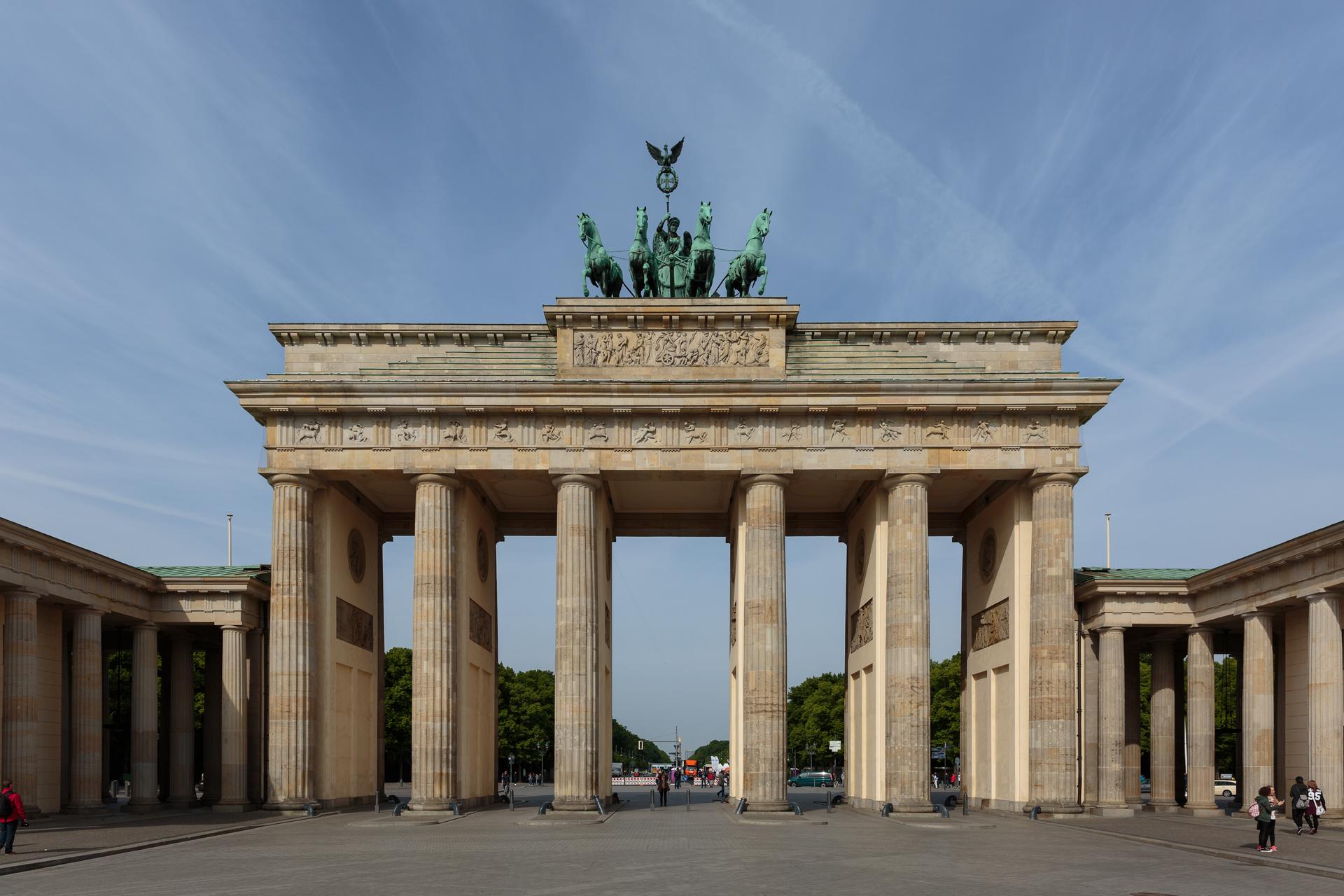
Looking beyond Museum für Naturkunde? Discover Berlin for broader travel guides, local hot-spots, and regional highlights.
Explore Berlin