

Zwinger, Dresden Travel Guide
Free Guide: Discover the Baroque splendor of Dresden's Zwinger Palace, home to world-class art collections and stunning architecture, a testament to Saxony's rich history and artistic heritage.


A brief summary of Zwinger
Discover the Baroque splendor of Dresden's Zwinger Palace, home to world-class art collections and stunning architecture, a testament to Saxony's rich history and artistic heritage.
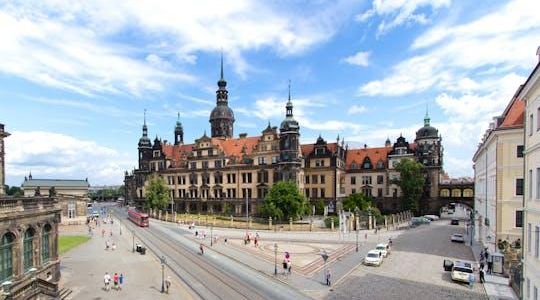
The Dresden Zwinger is a stunning Baroque palace in the heart of Dresden, Germany. Built in the 18th century during the reign of Augustus the Strong, it originally served as an orangery and festival ground. Today, it houses world-renowned museums, including the Old Masters Picture Gallery, the Dresden Porcelain Collection, and the Royal Cabinet of Mathematical and Physical Instruments. The Zwinger's architecture, a synthesis of sculpture and painting, exemplifies the opulence of the Baroque period. Its serene courtyards and intricate details offer a captivating glimpse into Saxony's rich history and artistic heritage, making it a must-see destination for any visitor to Dresden. Admission to the Zwinger complex is free, but its museums and exhibitions cost extra.
Opening hours
- Mon6 am–8 pm
- Tue6 am–8 pm
- Wed6 am–8 pm
- Thu6 am–8 pm
- Fri6 am–8 pm
- Sat8 am–8 pm
- Sun8 am–8 pm
Opening hours as listed on the venue’s Google Business Profile. Hours can change for services and special events, so check with the venue before you go.
- Address
- Sophienstraße, 01067 Dresden
- Phone
- Website
Getting there
Public Transport
Walking
Taxi/Ride-Share
Driving
Discover more about Zwinger
Overview
The Dresden Zwinger is a world-renowned masterpiece of Baroque architecture, located in the heart of Dresden, Germany. Conceived in the early 18th century during the reign of Elector Augustus the Strong, it stands as a testament to the city's rich cultural history and the opulence of the Saxon court. Originally designed by architect Matthäus Daniel Pöppelmann and sculptor Balthasar Permoser, the Zwinger was intended as an orangery, garden, and festive arena, a space for lavish celebrations and courtly tournaments. The name 'Zwinger' itself harkens back to medieval fortifications, referring to the area between the inner and outer defensive walls of a castle. However, the Dresden Zwinger quickly transcended its defensive origins to become a symbol of royal power and artistic expression. Augustus the Strong, inspired by the palatial residences of France and Italy, envisioned a space that would rival the grandeur of other European courts. Construction began in 1710, and over the next two decades, the Zwinger gradually took shape. Its architecture is a harmonious blend of various styles, showcasing the Late Baroque aesthetic with touches of Renaissance influence. The complex comprises several pavilions, interconnected by galleries adorned with intricate sculptures, balustrades, and vases. The Crown Gate (Kronentor), with its gilded Polish crown, serves as the Zwinger's iconic entrance, a testament to Augustus's dual role as Elector of Saxony and King of Poland. The Zwinger's initial purpose was to serve as a venue for court festivities and theatrical performances. In 1719, it was formally inaugurated with the wedding celebrations of Augustus the Strong's son, Friedrich August II, to Maria Josepha of Austria. This lavish event marked the beginning of the Zwinger's role as a ceremonial space, a stage for displaying the wealth and power of the Saxon monarchy. However, the Zwinger's significance evolved over time. In the 19th century, it transitioned into a museum complex, housing an array of art and scientific collections. This transformation solidified its place as a cultural hub, attracting scholars, artists, and visitors from across Europe. Today, the Dresden Zwinger is home to several world-renowned museums: * **Old Masters Picture Gallery (Gemäldegalerie Alte Meister):** This gallery houses an exceptional collection of European paintings from the 15th to 18th centuries. Masterpieces by Raphael, Rembrandt, Vermeer, and other renowned artists are on display, offering a comprehensive overview of European art history. The Sistine Madonna by Raphael is one of the gallery's most prized possessions. * **Dresden Porcelain Collection (Porzellansammlung):** This collection showcases the history of porcelain, from its origins in China and Japan to its development in Europe. The exhibits include exquisite examples of Meissen porcelain, a Saxon specialty, as well as pieces from other prominent European manufacturers. * **Royal Cabinet of Mathematical and Physical Instruments (Mathematisch-Physikalischer Salon):** This museum features a fascinating array of historical scientific instruments, including clocks, globes, telescopes, and measuring devices. It provides insights into the development of science and technology from the 16th to 19th centuries. The Zwinger's architecture and gardens are as captivating as its museum collections. The Nymph Bath (Nymphenbad), an ornate Baroque fountain, is a highlight, showcasing the intricate sculptural work of Balthasar Permoser. The Zwinger Courtyard, with its manicured lawns and flowerbeds, provides a tranquil space for visitors to relax and admire the surrounding architecture. Despite its splendor, the Zwinger suffered extensive damage during the bombing of Dresden in World War II. Much of the complex was reduced to ruins, and its collections were evacuated to safety. After the war, a painstaking reconstruction effort was undertaken to restore the Zwinger to its former glory. The reconstruction was completed in 1963, and the museums were reopened to the public. The Dresden Zwinger stands as a symbol of resilience and cultural rebirth. It is a testament to the enduring power of art and architecture, a reminder of Dresden's rich history, and a beacon of hope for the future. A visit to the Zwinger is an immersive experience, a journey through time and art that will leave a lasting impression. Visiting the Zwinger offers a multifaceted experience. Strolling through the open courtyards is free, allowing visitors to appreciate the Baroque architecture and serene atmosphere without charge. However, access to the museums requires purchasing tickets, with combination tickets available for those wishing to explore multiple collections. The Zwinger Xperience offers a multimedia journey through the palace's history, providing an engaging and informative experience. Whether you are an art enthusiast, a history buff, or simply seeking a beautiful place to explore, the Dresden Zwinger is an unmissable destination. Its architectural grandeur, world-class museums, and serene gardens offer a captivating glimpse into Saxony's rich cultural heritage.
Evendo Review Centre
 Google
Guest reviews
Explore Zwinger on the map
A handpicked selection of must-see spots near Zwinger, mapped for you.
Get your free copy of our complete guide to Zwinger, delivered straight to you.
Everything on this page, from opening hours and how to get there to Eve’s tips and the best time to go, in one PDF you can read offline, print or share.
Already have an account? Sign in
Your Zwinger guide is ready.
We'll send it to · Not you? Sign out

Getting your guide ready…
We are putting together a fresh copy of the Zwinger guide. This can take up to a minute.
This can take a few moments. If your browser asks, choose Allow so the download can start. You'll find the guide in your Downloads folder.
Nothing happened? Download it again
Sorry, the guide is taking longer than usual. Please try again in a minute, or get it by email instead.
Unlock the best of Zwinger
Skip-the-line tickets, guided tours with entry, and walking tours of the area, booked in a few clicks.
 Tour with entry
Dresden walking tour with Treasury visit in the New Green Vault
from $3.20 Tour with entry
Hitler Walking Tour Dresden Audio Guide and Self Guided Tour
from $6.38 Tour with entry
Dresden Interactive City Tour
from $7.46 Tour with entry
Self-guided scavenger hunt in Dresden with your smartphone
from $12.26



Other nearby places you may find interesting
The closest places of the same kind, if this one is not quite what you had in mind.
-
-
-
-
-


Swipe for more places
More to explore near Zwinger

 Best experiences near Zwinger
 Best hotels near Zwinger
 Best landmarks near Zwinger
 Best attractions near Zwinger
 Best shops near Zwinger
 Best restaurants near Zwinger
 Best bars near Zwinger
Do you manage this location?
Take control to get all the benefits, like improved information, better appearance, and stronger visibility across AI-powered discovery.
Explore more

Explore more of Dresden
Discover Dresden: A city of resilience and beauty, where Baroque architecture meets vibrant arts and lush green spaces.
Explore Dresden
Explore more of Germany
Experience Germany: where history meets innovation, and urban energy blends with natural beauty. Discover diverse cultures, delicious cuisine, and stunning landscapes.
Explore Germany
