Goethe-Schiller-Denkmal, Erfurt Travel Guide
Free Guide: A timeless tribute to German literary giants, the Goethe-Schiller Monument in Weimar celebrates the enduring friendship and cultural impact of two iconic poets.


A brief summary of Goethe-Schiller-Denkmal
A timeless tribute to German literary giants, the Goethe-Schiller Monument in Weimar celebrates the enduring friendship and cultural impact of two iconic poets.
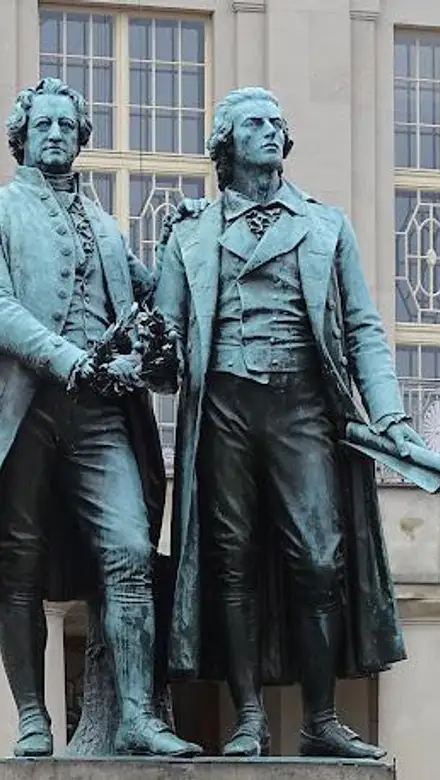
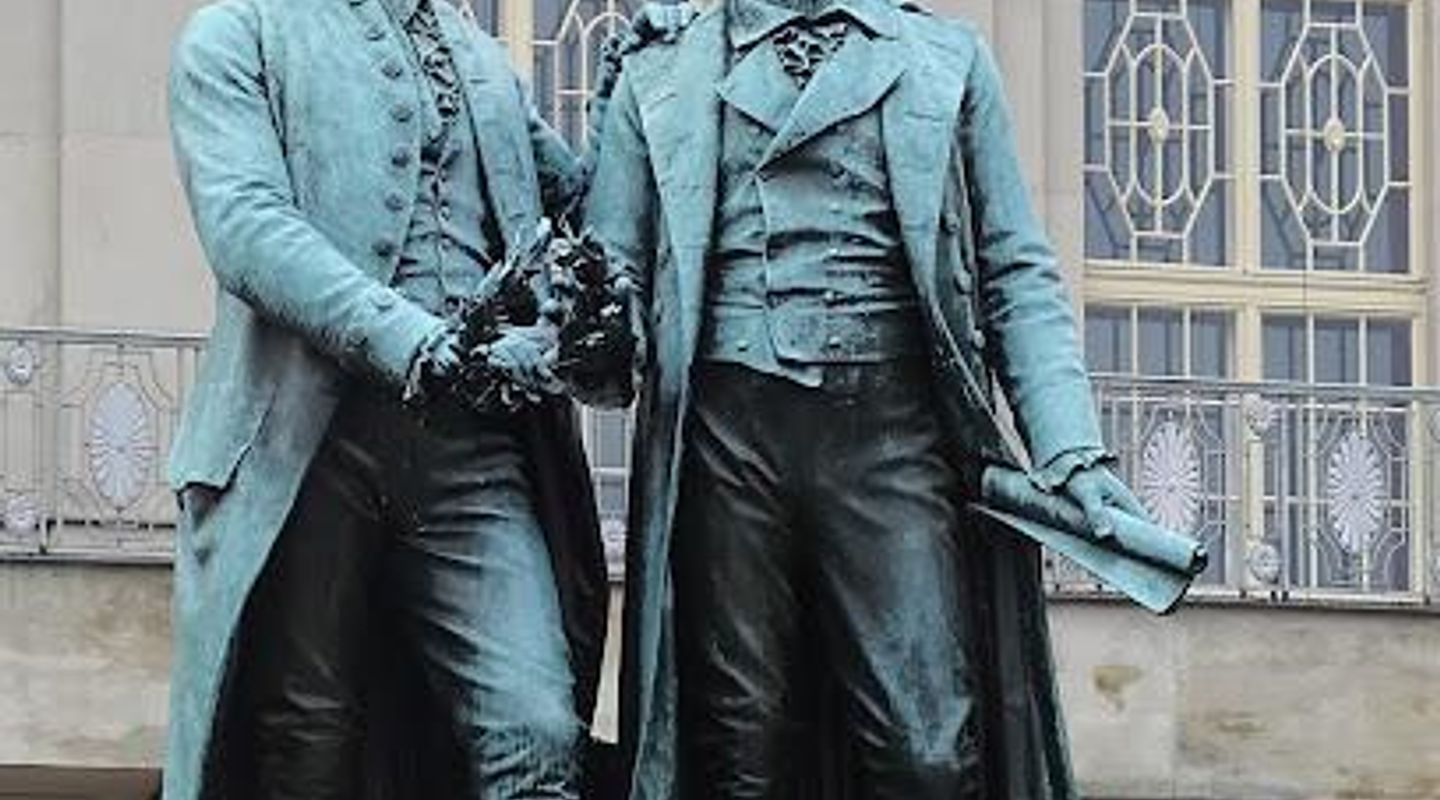
The Goethe-Schiller Monument, a bronze double statue in Weimar's Theaterplatz, immortalizes the friendship and collaboration of Johann Wolfgang von Goethe and Friedrich Schiller, two of Germany's most revered literary figures. Created by Ernst Rietschel in 1857, the monument stands as a symbol of the Weimar Classicism movement and the city's rich cultural heritage. The statue, cast from melted-down Turkish cannons, depicts the poets at equal height, despite Goethe being shorter in reality, to emphasize their equal contribution to German literature. Flanked by significant historical buildings, the monument serves as a focal point for exploring Weimar's old town, attracting visitors from around the globe to pay homage to these literary giants and delve into the era of Weimar Classicism. Its enduring presence and artistic significance make it a must-see landmark, embodying the spirit of German intellectual and artistic achievement. The monument also has copies in cities across the United States and even Shanghai.
Opening hours
- Every dayOpen 24 hours
Opening hours as listed on the venue’s Google Business Profile. Hours can change for services and special events, so check with the venue before you go.
- Address
- Theaterpl., 99423 Weimar
- Phone
- Website
Getting there
Walking
Public Transport
Taxi/Ride-Share
Driving
Discover more about Goethe-Schiller-Denkmal
Overview
The Goethe-Schiller Monument, located in the heart of Weimar on Theaterplatz, is more than just a statue; it's a symbol of German literary history, a testament to the power of friendship, and a focal point for understanding the Weimar Classicism movement. Erected in 1857, the bronze double statue immortalizes Johann Wolfgang von Goethe (1749-1832) and Friedrich Schiller (1759-1805), two of Germany's most celebrated poets, playwrights, and thinkers. The monument's creation was envisioned by Grand Duke Carl Alexander, decades after Goethe's death, as a tribute to the enduring legacy of these literary giants. Designed by Dresden sculptor Ernst Rietschel, the statue was cast in Munich using bronze sourced from melted-down Turkish cannons, a symbolic gesture reflecting the triumph of art and intellect over conflict. The monument's unveiling coincided with the 100th anniversary of Grand Duke Carl August's birth, a patron who had invited Goethe to Weimar in 1775, fostering a lifelong friendship and sparking the city's golden age of intellectual and artistic ferment. The statue depicts Goethe and Schiller standing side-by-side, both figures elevated to the same height despite Goethe being significantly shorter in reality. This artistic choice emphasizes their equal standing and collaborative spirit within the realm of German literature. Goethe, on the left, is portrayed with his hand gently resting on Schiller's shoulder, while holding a laurel wreath, a symbol of poetic achievement. Schiller, in turn, reaches towards the wreath, signifying their shared pursuit of artistic excellence. The inscription on the granite pedestal, "Dem Dichterpaar Goethe und Schiller das Vaterland" (To the poet-pair Goethe and Schiller, the Fatherland), further underscores their national significance. The Goethe-Schiller Monument is strategically positioned in Theaterplatz, surrounded by buildings of historical and cultural importance. The German National Theatre, where many of Schiller's plays premiered, stands as a backdrop, while the former widow's residence of Duchess Anna Amalia and the House of the Weimar Republic flank the square. This setting creates a powerful sense of place, immersing visitors in the atmosphere of Weimar's cultural heyday. Visiting the Goethe-Schiller Monument offers a unique opportunity to connect with the spirit of Weimar Classicism. This era, characterized by a synthesis of classical ideals, humanism, and Enlightenment principles, saw Goethe and Schiller produce some of the most influential works in German literature. Their friendship, marked by intellectual exchange, mutual support, and collaborative projects like the satirical poems known as "Xenien," shaped the course of German literary history. Beyond its artistic and historical significance, the Goethe-Schiller Monument has become a symbol of German identity and cultural pride. Replicas of the statue have been erected in cities across the United States, including Cleveland, Milwaukee, San Francisco and Syracuse, as well as Shanghai, reflecting the enduring appeal of Goethe and Schiller's works and their impact on global culture. These monuments serve as cultural bridges, connecting German heritage with communities around the world. Today, the Goethe-Schiller Monument remains a vibrant gathering place for locals and tourists alike. It's a spot for quiet contemplation, a backdrop for commemorative events, and a starting point for exploring Weimar's many cultural attractions. Whether you're a literature enthusiast, a history buff, or simply a curious traveler, a visit to the Goethe-Schiller Monument is an essential experience for anyone seeking to understand the heart and soul of Weimar. The monument's enduring appeal lies not only in its artistic merit but also in its ability to evoke a sense of connection to the past. Standing before the bronze figures of Goethe and Schiller, one can almost hear the echoes of their lively conversations, their passionate debates, and their unwavering commitment to the power of literature. It is a place where the past comes alive, inspiring visitors to reflect on the enduring legacy of these two literary giants and their profound contribution to German culture and the world. Moreover, the Goethe-Schiller Monument serves as a reminder of the importance of art and culture in shaping national identity. In a world often defined by political and economic forces, the monument stands as a symbol of the enduring power of literature, philosophy, and artistic expression to transcend borders and connect people across generations. It is a testament to the enduring human quest for knowledge, beauty, and meaning, embodied in the works of Goethe and Schiller and celebrated by this iconic monument in the heart of Weimar. Visiting the Goethe-Schiller Monument is more than just a sightseeing stop; it's an immersion into the world of German Classicism, a celebration of literary genius, and a tribute to the enduring power of friendship. It's an experience that will leave you with a deeper appreciation for the cultural heritage of Weimar and the timeless relevance of Goethe and Schiller's works.
Evendo Review Centre
 Google
Guest reviews
Explore Goethe-Schiller-Denkmal on the map
A handpicked selection of must-see spots near Goethe-Schiller-Denkmal, mapped for you.
Get your free copy of our complete guide to Goethe-Schiller-Denkmal, delivered straight to you.
Everything on this page, from opening hours and how to get there to Eve’s tips and the best time to go, in one PDF you can read offline, print or share.
Already have an account? Sign in
Your Goethe-Schiller-Denkmal guide is ready.
We'll send it to · Not you? Sign out

Getting your guide ready…
We are putting together a fresh copy of the Goethe-Schiller-Denkmal guide. This can take up to a minute.
This can take a few moments. If your browser asks, choose Allow so the download can start. You'll find the guide in your Downloads folder.
Nothing happened? Download it again
Sorry, the guide is taking longer than usual. Please try again in a minute, or get it by email instead.
Unlock the best of Goethe-Schiller-Denkmal
Skip-the-line tickets, guided tours with entry, and walking tours of the area, booked in a few clicks.


Other nearby places you may find interesting
The closest places of the same kind, if this one is not quite what you had in mind.
-
-
-

-
-


Swipe for more places
More to explore near Goethe-Schiller-Denkmal
-
 Best experiences near Goethe-Schiller-Denkmal
-
 Best hotels near Goethe-Schiller-Denkmal
-
 Best landmarks near Goethe-Schiller-Denkmal
-
 Best attractions near Goethe-Schiller-Denkmal
-
 Best shops near Goethe-Schiller-Denkmal
-
 Best restaurants near Goethe-Schiller-Denkmal
-
 Best bars near Goethe-Schiller-Denkmal


Do you manage this location?
Take control to get all the benefits, like improved information, better appearance, and stronger visibility across AI-powered discovery.
Explore more
Explore more of Erfurt
Discover Erfurt: A medieval city with stunning architecture, rich history, and vibrant culture in the heart of Germany.
Explore Erfurt
Explore more of Germany
Experience Germany: where history meets innovation, and urban energy blends with natural beauty. Discover diverse cultures, delicious cuisine, and stunning landscapes.
Explore Germany