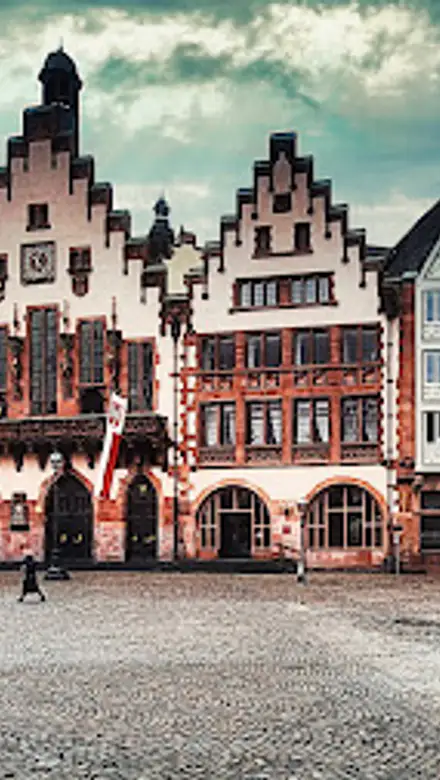
Frankfurter Römer, Frankfurt Travel Guide
Free Guide: Discover the Frankfurter Römer, Frankfurt's iconic city hall, a symbol of history and culture in the heart of the Altstadt, surrounded by charming half-timbered houses and vibrant city life.


A brief summary of Frankfurter Römer
Discover the Frankfurter Römer, Frankfurt's iconic city hall, a symbol of history and culture in the heart of the Altstadt, surrounded by charming half-timbered houses and vibrant city life.
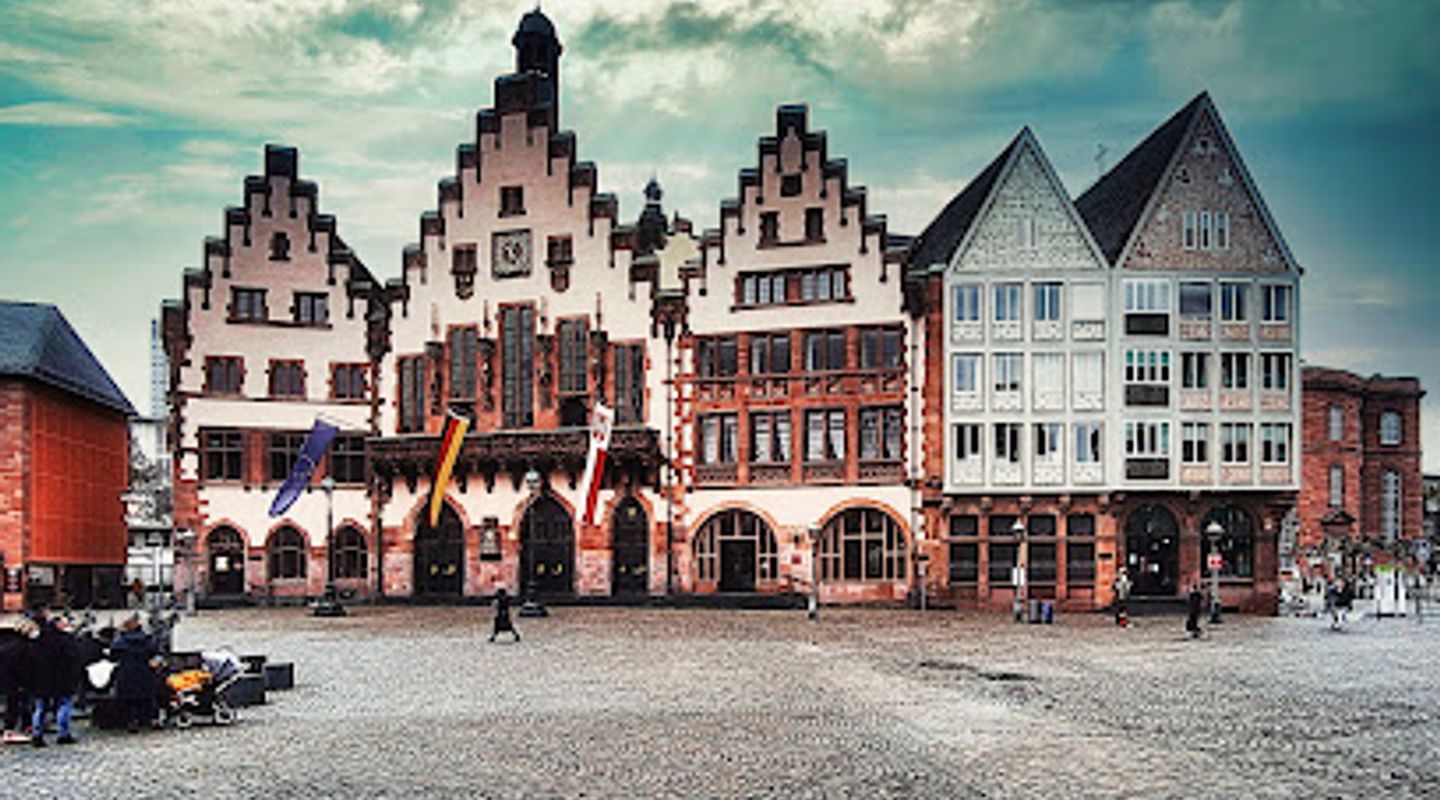
The Frankfurter Römer, Frankfurt's iconic city hall, stands as a testament to the city's rich history and enduring spirit. Located in the heart of the Altstadt (Old Town) on Römerberg square, this medieval building has served as the city hall for over 600 years. Its distinctive three-gabled facade, meticulously reconstructed after World War II, embodies Frankfurt's blend of historical charm and modern dynamism. More than just a building, the Römer is a symbol of Frankfurt, a gathering place for celebrations, markets, and historical events. Explore the Kaisersaal (Emperor Hall) where emperors were once crowned, and soak in the atmosphere of this vibrant square, surrounded by picturesque half-timbered houses and the Fountain of Justice. The Römer is a must-see for any visitor seeking to connect with Frankfurt's past and present.
Opening hours
- Every dayOpen 24 hours
Opening hours as listed on the venue’s Google Business Profile. Hours can change for services and special events, so check with the venue before you go.
- Address
- Römerberg 23, 60311 Frankfurt am Main
- Phone
- Website
Getting there
Walking
Public Transport
Taxi/Ride-Share
Driving
Discover more about Frankfurter Römer
Overview
The Frankfurter Römer, more than just a building, is the very heart of Frankfurt, a place where history resonates with the pulse of modern life. Situated on the Römerberg, the city's central square in the Altstadt, this iconic structure has been Frankfurt's city hall for over six centuries, witnessing countless historical events and embodying the city's enduring spirit. The name 'Römer' originates from the central building of the complex, 'Zum Römer' (At the Roman), a reference to the Roman settlements that predated Frankfurt. The Römer complex evolved from a collection of patrician houses acquired by the city council in the 15th century. Over time, these buildings were interconnected and expanded, creating the labyrinthine structure that exists today. The oldest sections, bordering the Römerberg, showcase the Gothic style of the 15th to 18th centuries, while later additions reflect changing architectural tastes. The Römer's most distinctive feature is its three-gabled facade, a symbol of Frankfurt recognized around the world. This facade, along with much of the Altstadt, was painstakingly reconstructed after the devastation of World War II. The rebuilding efforts aimed to preserve the historical character of the area, creating a harmonious blend of old and new. The buildings 'Alt-Limpurg' and 'Löwenstein' flank the central 'Zum Römer' building, each contributing to the unique character of the complex. Inside the Römer, the Kaisersaal (Emperor Hall) stands as a testament to Frankfurt's imperial past. This grand hall served as the site of celebrations during the election and coronation of Holy Roman Emperors. The walls are adorned with portraits of 52 emperors, from Charlemagne to Francis II, offering a glimpse into the history of the Holy Roman Empire. While the Kaisersaal is not always open to the public, it remains a powerful symbol of Frankfurt's historical significance. The Römerberg itself is a vibrant public space, a stage for a variety of events throughout the year. The Frankfurt Christmas Market, one of Germany's oldest and most famous Christmas markets, transforms the square into a winter wonderland. The Mainfest, a traditional folk festival, brings music, food, and amusement rides to the Römerberg in the summer. Throughout the year, the square hosts demonstrations, festivals, and other public gatherings, making it a central gathering place for the people of Frankfurt. The Fountain of Justice (Justitiabrunnen), located in the heart of the Römerberg, is another important landmark. This Renaissance-style fountain, dating back to the 16th century, features a statue of Justitia, the Roman goddess of justice. With her unbound eyes, scales, and sword, Justitia symbolizes the principles of fairness and impartiality. The fountain has witnessed countless historical events and remains a powerful symbol of justice in Frankfurt. Beyond its historical and symbolic significance, the Römer is also a functional building, housing the office of Frankfurt's mayor and serving as the city's registry office. Couples come to the Römer to be married in its historic setting, adding their own stories to the building's rich history. The Römer Tourist Information Center, located on the Römerberg, provides visitors with information about Frankfurt's attractions, events, and accommodations. Exploring the Römerberg and the Römer is an essential experience for any visitor to Frankfurt. The square offers a glimpse into the city's past, a celebration of its present, and a promise of its future. From the iconic facade of the Römer to the vibrant atmosphere of the Römerberg, this is a place where history comes alive. While visiting the Römer, take time to explore the surrounding Altstadt. Wander through the narrow streets, admire the half-timbered houses, and discover hidden courtyards. Visit the Old St. Nicholas Church, located just south of the Römerberg, and listen to its Glockenspiel (carillon). Explore the Historical Museum, located nearby, to learn more about Frankfurt's history and culture. Cross the Eiserner Steg (Iron Bridge) for panoramic views of the city skyline. The Römer is more than just a collection of buildings; it is a living testament to Frankfurt's history, culture, and spirit. It is a place where emperors were crowned, markets were held, and citizens gathered. Today, it remains a vibrant center of city life, a must-see destination for anyone seeking to experience the heart of Frankfurt.
Evendo Review Centre
 Google
Guest reviews
Explore Frankfurter Römer on the map
A handpicked selection of must-see spots near Frankfurter Römer, mapped for you.
Get your free copy of our complete guide to Frankfurter Römer, delivered straight to you.
Everything on this page, from opening hours and how to get there to Eve’s tips and the best time to go, in one PDF you can read offline, print or share.
Already have an account? Sign in
Your Frankfurter Römer guide is ready.
We'll send it to · Not you? Sign out

Getting your guide ready…
We are putting together a fresh copy of the Frankfurter Römer guide. This can take up to a minute.
This can take a few moments. If your browser asks, choose Allow so the download can start. You'll find the guide in your Downloads folder.
Nothing happened? Download it again
Sorry, the guide is taking longer than usual. Please try again in a minute, or get it by email instead.
Unlock the best of Frankfurter Römer
Skip-the-line tickets, guided tours with entry, and walking tours of the area, booked in a few clicks.
 Tour with entry
Frankfurt highlights and New Old Town walking tour
from $19.74 Tour with entry
Frankfurt at your feet Discover the financial capital with experts
from $192.10 Tour with entry
Frankfurt Half Day Tour with Main Tower Entry and Old Town Walk
from $330.65 Tour with entry
Frankfurt Family-Friendly Historical Walking Tour
from $388.79


Other nearby places you may find interesting
The closest places of the same kind, if this one is not quite what you had in mind.
-

-
-
-
-


Swipe for more places
More to explore near Frankfurter Römer

 Best experiences near Frankfurter Römer
 Best hotels near Frankfurter Römer
 Best landmarks near Frankfurter Römer
 Best attractions near Frankfurter Römer
 Best shops near Frankfurter Römer
 Best restaurants near Frankfurter Römer
 Best bars near Frankfurter Römer
Do you manage this location?
Take control to get all the benefits, like improved information, better appearance, and stronger visibility across AI-powered discovery.
Explore more

Explore more of Frankfurt
Discover Frankfurt: A blend of modernity and history, offering skyscrapers, historic sites, cultural treasures, and vibrant shopping and dining experiences.
Explore Frankfurt
Explore more of Germany
Experience Germany: where history meets innovation, and urban energy blends with natural beauty. Discover diverse cultures, delicious cuisine, and stunning landscapes.
Explore Germany