Background

Memorial of German Unity: A Confluence of History

A historic monument at the confluence of the Rhine and Moselle rivers, symbolizing German unity and offering panoramic views of Koblenz and the Upper Middle Rhine Valley.

4.7

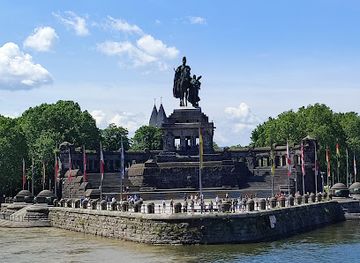
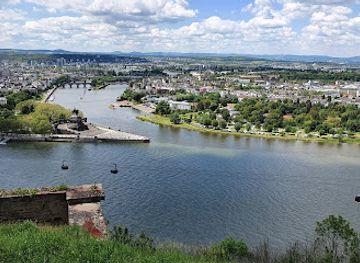
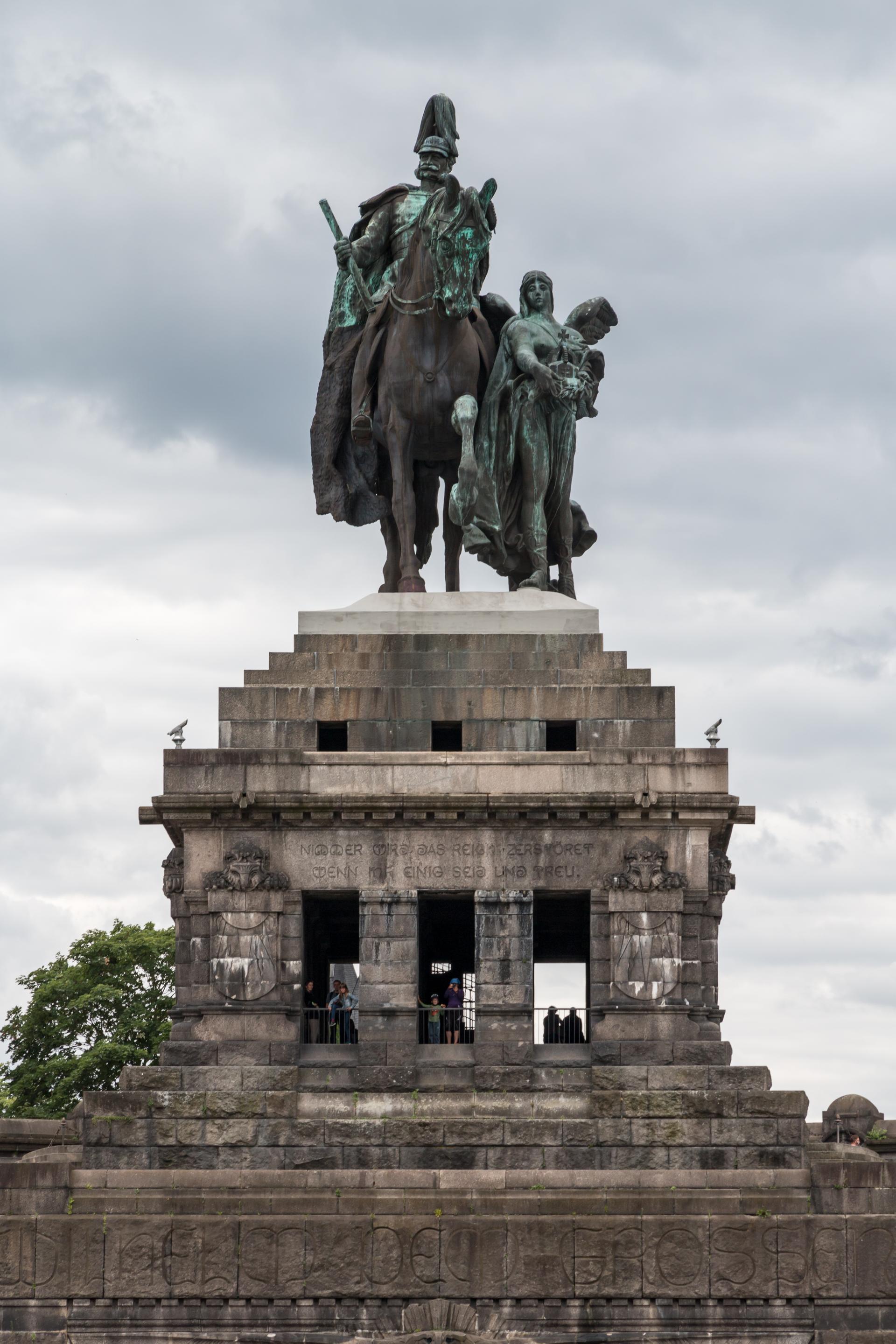
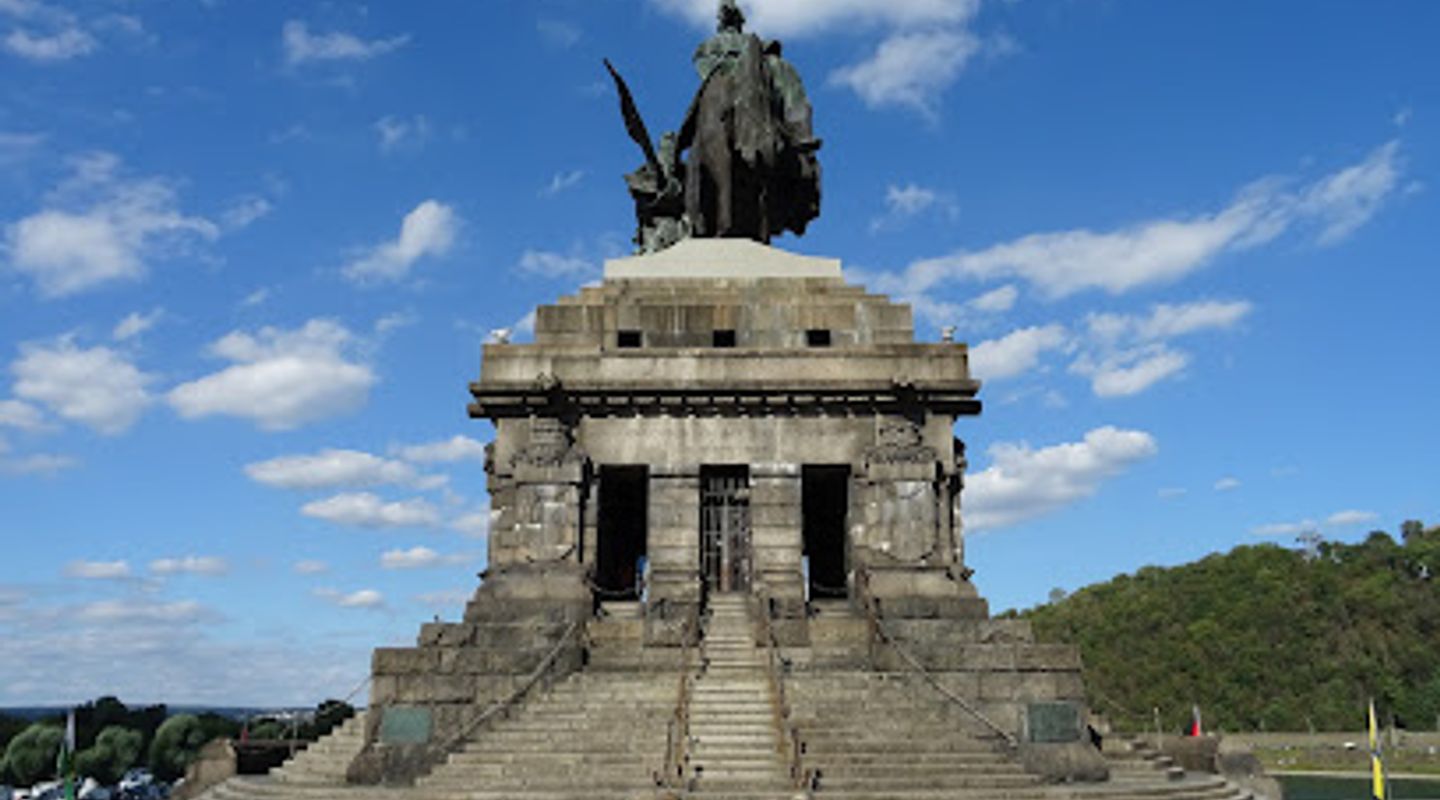
The Memorial of German Unity, standing proudly at Deutsches Eck in Koblenz, marks the confluence of the Rhine and Moselle rivers and symbolizes German reunification. Originally erected in 1897 to honor Kaiser Wilhelm I, the monument was heavily damaged during World War II and later rededicated as a symbol of German unity. Today, a reconstructed equestrian statue of Wilhelm I surveys the rivers, attracting millions of visitors annually. The site offers a compelling blend of history, culture, and scenic beauty, enhanced by its location within the UNESCO World Heritage Site of the Upper Middle Rhine Valley. Visitors can explore the monument's intricate details, reflect on German history, and enjoy panoramic views of the rivers and surrounding landscape, making it a must-see destination in Koblenz.

A brief summary to Memorial of German Unity

Local tips

  • Visit early in the morning or late in the afternoon to avoid crowds and enjoy a more peaceful experience.
  • Take the Koblenz Cable Car to Ehrenbreitstein Fortress for stunning aerial views of the Deutsches Eck and the surrounding area.
  • Explore the Old Town of Koblenz, located near the Deutsches Eck, for charming streets, historic buildings, and local cuisine.
widget icon

Getting There

  • Walking

    From Koblenz Hauptbahnhof (main train station), walk towards the city center following the signs for 'Altstadt' (Old Town) and 'Deutsches Eck'. The walk is approximately 15-20 minutes. As you approach the confluence of the Rhine and Moselle, the monument will become visible. The path is mostly flat and well-paved.

  • Public Transport

    From Koblenz Hauptbahnhof, take any bus heading towards 'Zentralplatz/Forum'. From there, it's a short walk (approximately 10 minutes) to Deutsches Eck. Most bus lines in Koblenz stop at Zentralplatz/Forum, making it a convenient hub. A single bus fare within Koblenz city area is around €2.60. Consider purchasing a Koblenz Card for €9.80, which provides 24 hours of free travel on public transport within the city and discounts on other attractions.

  • Taxi/Ride-Share

    A taxi or ride-share from Koblenz Hauptbahnhof to Deutsches Eck will take approximately 5-10 minutes, depending on traffic. The estimated cost is between €8-€12. Ride-sharing services like Uber and Bolt operate in Koblenz.

  • Driving

    If driving, navigate to 'Peter-Altmeier-Ufer, 56068 Koblenz'. Parking is available in several garages near the Deutsches Eck, such as 'Parkhaus am Schloss' or 'Tiefgarage am Peter-Altmeier-Ufer'. Parking fees typically range from €1.50 to €2.00 per hour. Street parking is limited and may require a parking disc (Parkscheibe).

Unlock the Best of Memorial of German Unity

Buy tickets

    No tickets available

Book tours with entry

    No tours available

Book tours without entry

    No tours available

Discover more about Memorial of German Unity

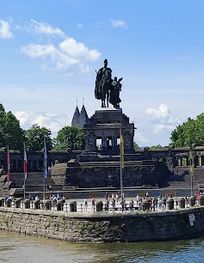
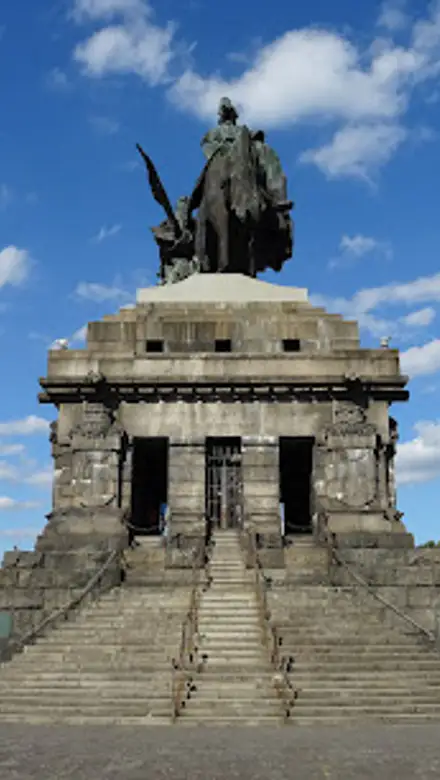
At the point where the Rhine and Moselle rivers converge in Koblenz, the Memorial of German Unity stands as a powerful symbol of national identity and historical transformation. Known as Deutsches Eck (German Corner), this site has been a focal point of German history for centuries, witnessing periods of division, destruction, and ultimately, reunification. The memorial's origins trace back to the late 19th century when it was conceived as a tribute to Kaiser Wilhelm I, the first German Emperor. Following Wilhelm's death, plans were set in motion to erect a monument that would commemorate his role in unifying Germany after years of fragmentation. In 1891, Wilhelm II, the grandson of Wilhelm I, selected Deutsches Eck as the ideal location for the monument. To accommodate the massive structure, a harbor of refuge at the mouth of the Moselle was filled in, creating the foundation for what would become one of Germany's most recognizable landmarks. The monument, designed by architect Bruno Schmitz, was inaugurated on August 31, 1897, in a grand ceremony attended by Kaiser Wilhelm II himself. The centerpiece was a towering equestrian statue of Wilhelm I, standing 14 meters tall and mounted atop a 37-meter-high pedestal. The statue depicted the emperor in military attire, symbolizing his leadership in the unification process. The monument quickly became a symbol of German national pride and imperial power, drawing visitors from across the country and beyond. However, the monument's significance would be dramatically altered by the events of the 20th century. During World War II, Koblenz was heavily bombed, and the Deutsches Eck monument suffered extensive damage. In March 1945, the equestrian statue was destroyed by artillery fire, leaving only the pedestal standing. In the aftermath of the war, Germany was divided, and the Deutsches Eck found itself in the American occupation zone. In 1953, Theodor Heuss, the first President of the Federal Republic of Germany, rededicated the site as a memorial to German unity. The remaining pedestal was transformed into a symbol of hope for reunification, adorned with the coats of arms of the German states and a German flag. For decades, the Deutsches Eck served as a poignant reminder of Germany's division and the yearning for reunification. As the Cold War raged on, the site became a gathering place for those who dreamed of a united Germany. With the fall of the Berlin Wall in 1989 and the subsequent reunification of Germany in 1990, the Deutsches Eck took on a new significance. The monument, which had once symbolized division, now represented the triumph of unity and the overcoming of historical barriers. In 1993, a private initiative led to the reconstruction of the equestrian statue of Kaiser Wilhelm I. The restored statue was placed back on its pedestal, completing the monument and restoring its pre-war appearance. However, the monument's meaning had evolved. It was no longer simply a tribute to an emperor but a symbol of Germany's journey from division to unity, from destruction to renewal. Today, the Memorial of German Unity at Deutsches Eck attracts over two million visitors each year. The site offers a unique blend of historical significance, cultural symbolism, and scenic beauty. Visitors can climb the monument's pedestal for panoramic views of the Rhine and Moselle rivers, explore the intricate details of the equestrian statue, and reflect on the historical events that have shaped the site's identity. The Deutsches Eck is also a popular venue for events and festivals, further enhancing its appeal as a vibrant public space. The Memorial of German Unity is more than just a monument; it is a living testament to the power of unity, the resilience of the human spirit, and the enduring quest for a better future. Its location at the confluence of two major European rivers adds to its symbolic significance, representing the convergence of different cultures, ideas, and histories. As part of the UNESCO World Heritage Site of the Upper Middle Rhine Valley, the Deutsches Eck is recognized as a site of outstanding universal value, deserving of protection for future generations. Visiting the Memorial of German Unity offers a multifaceted experience. The imposing statue of Kaiser Wilhelm I provides a glimpse into Germany's imperial past, while the monument's transformation into a symbol of reunification speaks to the country's post-war journey. The panoramic views from the monument's base offer a stunning perspective on the surrounding landscape, showcasing the natural beauty of the Rhine and Moselle valleys. The site's accessibility and central location make it an easy addition to any Koblenz itinerary. Beyond the monument itself, the Deutsches Eck is surrounded by other attractions and amenities. The Rhine Promenade offers a pleasant walking path along the river, while the Old Town of Koblenz is just a short distance away, with its charming streets, historic buildings, and diverse culinary offerings. The Koblenz Cable Car provides a scenic link between the Deutsches Eck and the Ehrenbreitstein Fortress, offering breathtaking views of the city and the rivers. The Forum Confluentes, a modern cultural center, houses museums, galleries, and the tourist information office, providing visitors with a wealth of information about the region. The Memorial of German Unity at Deutsches Eck is a destination that appeals to a wide range of interests. History buffs will appreciate the site's rich historical significance, while culture enthusiasts will be drawn to its symbolic value. Nature lovers will enjoy the scenic views, and families will find plenty of activities to keep everyone entertained. Whether you are a first-time visitor to Koblenz or a seasoned traveler, the Deutsches Eck is a must-see destination that will leave a lasting impression.

Popular Experiences near Memorial of German Unity

Popular Hotels near Memorial of German Unity

Select Currency