Background

Bazargebäude: A Neoclassical Gem on Odeonsplatz

Discover the Bazargebäude, a neoclassical masterpiece on Munich's Odeonsplatz, blending history, architecture, and vibrant city life in one iconic location, near top attractions.

4.6

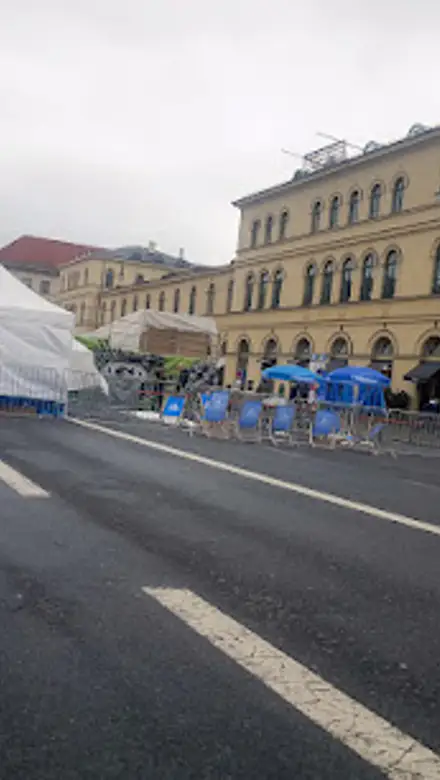
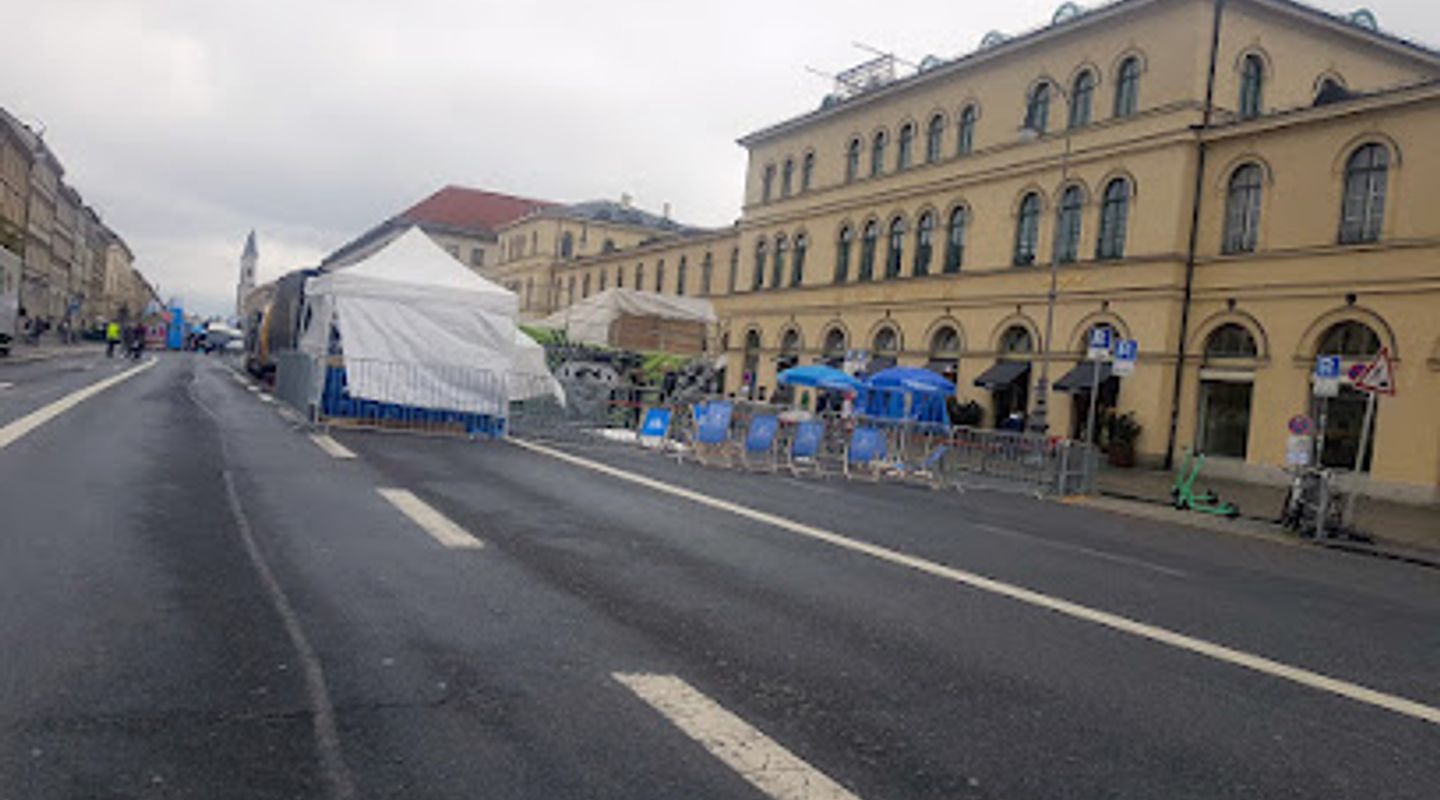
The Bazargebäude, an elegant building complex gracing the east side of Munich's Odeonsplatz, is a testament to the city's rich architectural heritage. Designed by Leo von Klenze in the early 19th century, this neoclassical structure, with its symmetrical facade and subtle arcades, provides a striking backdrop to one of Munich's most iconic squares. Housing a variety of shops and cafes, the Bazargebäude not only contributes to the aesthetic appeal of Odeonsplatz but also serves as a vibrant hub of activity. Its historical significance, coupled with its prime location near landmarks like the Hofgarten and the Residenz, makes it a must-see for visitors exploring Munich's historical center. The building stands as a reminder of Munich's royal past and its commitment to preserving architectural beauty amidst a bustling modern city.

A brief summary to Bazargebäude

  • Odeonspl. 13, Munich, Altstadt-Lehel, 80539, DE

Local tips

  • Visit Café Tambosi, Munich's oldest coffee house located within the Bazargebäude, for a taste of traditional Bavarian café culture.
  • Explore the Hofgarten, directly behind the Bazargebäude, for a peaceful retreat from the city's hustle and bustle.
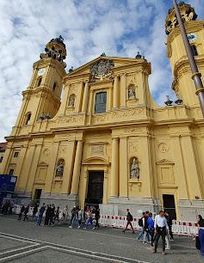
  • Take a stroll around Odeonsplatz to admire the surrounding historical landmarks, including the Feldherrnhalle and Theatinerkirche.
widget icon

Getting There

  • Public Transport

    Odeonsplatz is easily accessible via Munich's efficient public transport system. Take the U3, U4, U5 or U6 U-Bahn lines to the Odeonsplatz station, which is directly on the square. From the station, the Bazargebäude is a short walk away, located on the east side of the square, adjacent to the Hofgarten. A single journey ticket within the inner district (Zone M) costs around €3.90.

  • Walking

    If you are already in Munich's city center, walking to the Bazargebäude is a pleasant option. From Marienplatz, head north along Theatinerstrasse. You'll pass the Theatinerkirche on your right. Continue straight, and you'll arrive at Odeonsplatz. The Bazargebäude will be on your left, on the east side of the square. The walk is approximately 5-10 minutes.

  • Taxi/Ride-Share

    Taxis and ride-sharing services are readily available in Munich. Simply request a ride to Odeonsplatz. Be aware that traffic can be heavy in the city center, especially during peak hours. A short taxi ride from Munich Central Station (Hauptbahnhof) to Odeonsplatz will cost approximately €11-€13.

  • Driving

    Driving directly to Odeonsplatz is not recommended due to limited parking and heavy traffic. If driving is necessary, consider parking in a garage further from the city center and taking public transport for the final leg. Street parking near Odeonsplatz is very limited and can cost around €0.50 for each 12 minutes, with a maximum parking duration of 2 hours. Parking garages in the city center can cost around €40 per day.

Unlock the Best of Bazargebäude

Buy tickets

    No tickets available

Book tours with entry

    No tours available

Book tours without entry

    No tours available

Discover more about Bazargebäude

The Bazargebäude, prominently situated on the east side of Odeonsplatz in Munich, stands as a remarkable example of neoclassical architecture and urban planning. Constructed between 1824 and 1826 by the renowned architect Leo von Klenze, the building was commissioned to revitalize the newly laid-out Ludwigstrasse and to provide a visual screen between the street and the Hofgarten. Financed by the banker Simon Freiherr von Eichthal, the Bazargebäude quickly became an integral part of Munich's cityscape. Klenze's design showcases a symmetrical, two-story structure stretching 175 meters in length. The building is characterized by a central pavilion and corner pavilions, all reflecting a classical style reminiscent of Italian Renaissance architecture. The facade facing Odeonsplatz features arched motifs, echoing the arcades that were integrated into the Hofgarten-facing side of the building. This thoughtful design not only created a harmonious visual transition but also enhanced the overall aesthetic appeal of the square. Throughout its history, the Bazargebäude has undergone several transformations. Between 1854 and 1856, under the direction of Eduard Riedel, the corner pavilions were raised by one story, altering Klenze's original design. During World War II, the building suffered extensive damage from aerial bombings. However, it was meticulously reconstructed by 1956, preserving its historical character while incorporating modern elements. In its early years, the Bazargebäude housed the Kunstverein München in the north pavilion until 1866, contributing to Munich's vibrant arts scene. In 1951, the Filmcasino, designed by architect Paul Stohrer, moved into the northern section, becoming a renowned arthouse cinema until its closure in 2011. The south pavilion is home to Café Tambosi, Munich's oldest coffee house, which opened in 1775 as a kiosk serving coffee, chocolate, and lemonade. Luigi Tambosi, son of the court master cellarer, took over the establishment in 1810, giving it its current name. Today, the Bazargebäude continues to serve as a commercial hub, housing a variety of shops, offices, and restaurants. Its location on Odeonsplatz places it in close proximity to other significant landmarks, including the Feldherrnhalle, the Theatinerkirche, and the Munich Residenz. The square itself is a focal point for numerous cultural and political events, making the Bazargebäude a central part of Munich's public life. The architectural significance of the Bazargebäude lies in its contribution to the neoclassical design of Odeonsplatz and Ludwigstrasse. Klenze's vision of creating a unified architectural ensemble, inspired by Italian models, transformed Munich into a city reminiscent of ancient Athens. The Bazargebäude, with its elegant facade and harmonious proportions, exemplifies this vision. Visiting the Bazargebäude offers a unique opportunity to experience Munich's historical and cultural atmosphere. The building's central location makes it easily accessible, and its proximity to other attractions allows visitors to explore the city's rich heritage. Whether enjoying a coffee at Café Tambosi, browsing the shops, or simply admiring the architecture, the Bazargebäude provides a memorable experience for tourists and locals alike. The Bazargebäude is more than just a building; it is a symbol of Munich's resilience, architectural innovation, and cultural vibrancy. Its enduring presence on Odeonsplatz ensures that it will continue to be a landmark for generations to come. The building's blend of historical significance and modern functionality makes it a must-see destination for anyone visiting Munich, offering a glimpse into the city's past while remaining an active part of its present. Odeonsplatz, where the Bazargebäude is located, is easily accessible by public transport, with the U-Bahn station 'Odeonsplatz' serving as a direct stop. The square is open throughout the day and night, allowing visitors to explore the area at their leisure. Nearby attractions include the Hofgarten, a serene Renaissance garden perfect for relaxation, and the Munich Residenz, the former home of Bavarian monarchs now turned into a museum. The Bazargebäude's historical importance is further highlighted by its role in significant events that have taken place on Odeonsplatz. The square has been a site for political rallies and public gatherings, reflecting its central role in Munich's civic life. The Feldherrnhalle, located on the south side of the square, is a monumental loggia that pays tribute to Bavaria's military leaders and serves as a reminder of the city's past. For those interested in architecture, the Bazargebäude offers a prime example of neoclassical design. Leo von Klenze's attention to detail and his ability to create a harmonious urban space are evident in every aspect of the building. The symmetrical facade, the arched motifs, and the integration of the building with the surrounding landscape all contribute to its architectural significance. In conclusion, the Bazargebäude is a vital part of Munich's cultural and historical identity. Its architectural beauty, its central location, and its role in the city's public life make it a must-see destination for anyone visiting Munich. Whether you are interested in history, architecture, or simply experiencing the local culture, the Bazargebäude offers a unique and memorable experience.

Popular Experiences near Bazargebäude

Popular Hotels near Bazargebäude

Select Currency