Rathaus-Glockenspiel, Upper Palatinate Travel Guide
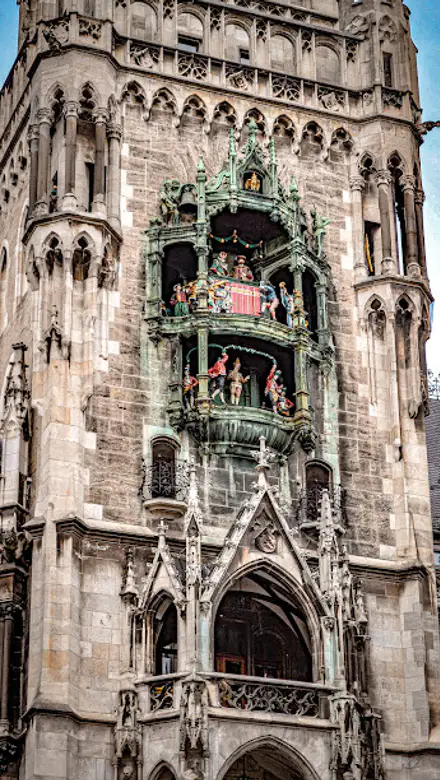
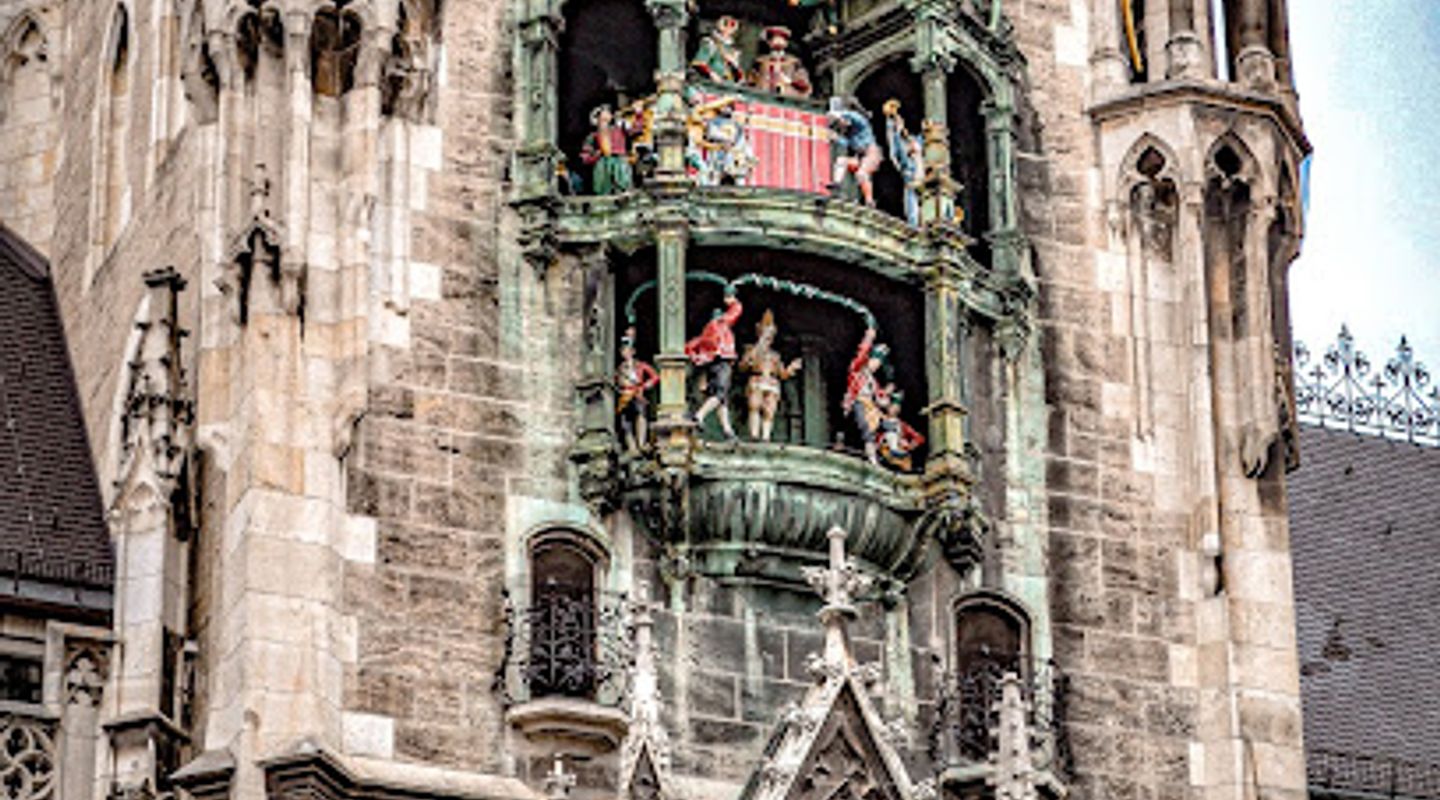
Experience Munich's enchanting Rathaus-Glockenspiel, a historic mechanical clock in Marienplatz, offering captivating performances that bring Bavarian traditions to life for over a century.
The Rathaus-Glockenspiel, a captivating mechanical clock in Munich's Marienplatz, has been enchanting visitors since 1908. Housed in the New Town Hall, this elaborate carillon features 43 bells and 32 life-sized figures that re-enact two significant events from Munich's history. Witness the wedding of Duke Wilhelm V and Renata of Lorraine, complete with a jousting tournament, and the Schäfflertanz, a dance commemorating the end of a plague in 1517. The performance, lasting about 15 minutes, occurs several times daily and is a must-see for anyone visiting Munich, offering a glimpse into Bavarian culture and history. The best viewing spots are in the center of Marienplatz facing the New Town Hall. Arrive early to secure a good spot, as the square fills up quickly, especially during peak tourist seasons. Alternatively, head to the Café Glockenspiel for an elevated vantage point.
A brief summary to Rathaus-Glockenspiel
- Marienplatz 8, Munich, Altstadt-Lehel, 80331, DE
- Click to display
- Click to display
- Monday 10 am-8 pm
- Tuesday 10 am-8 pm
- Wednesday 10 am-8 pm
- Thursday 10 am-8 pm
- Friday 10 am-8 pm
- Saturday 10 am-7 pm
- Sunday 10 am-7 pm

Know before you go
Hi, I'm Eve. Here are a few practical things to know before exploring Rathaus-Glockenspiel.
- Arrive at least 15 minutes early to secure a good viewing spot in Marienplatz, as the square fills up quickly, especially during peak tourist season.
- Consider visiting the Café Glockenspiel opposite the New Town Hall for an elevated view of the performance while enjoying a coffee or snack.
- Check the performance schedule in advance, as there are additional shows at 5:00 PM from March to October.
- Explore the New Town Hall itself with a guided tour to discover its history and architecture beyond the Glockenspiel.
- Don't miss the mini-show at 9 pm, featuring the Angel of Peace blessing the Münchner Kindl and a night watchman sounding the city curfew.
Do you manage this location?
Take control to get all the benefits, like improved information, better appearance, and stronger visibility across AI-powered discovery. Learn more about listing your business on Evendo
Activate your presenceOther nearby places you may find interesting
The closest places of the same kind, if this one is not quite what you had in mind.

Explore Rathaus-Glockenspiel on the Map
A handpicked selection of must-see spots near Rathaus-Glockenspiel, mapped for you.
Unlock the Best of Rathaus-Glockenspiel
Buy tickets
-
No tickets available
Book tours with entry


Getting There
-
Public Transport
Marienplatz is easily accessible via Munich's efficient public transport system. Take the U3 or U6 U-Bahn lines or the S1, S2, S3, S4, S6, S7, or S8 S-Bahn lines to Marienplatz station. The station exits lead directly into Marienplatz, with the New Town Hall and Glockenspiel immediately visible. A single journey ticket within the Munich city zone costs around €3.70.
-
Walking
From most central Munich locations, Marienplatz is easily reachable on foot. Follow signs towards the city center (Zentrum or Altstadt). From the Frauenkirche (Cathedral of Our Lady), walk approximately 5 minutes east along Kaufingerstraße to reach Marienplatz. From Odeonsplatz, walk south along Theatinerstraße for about 10 minutes. Theatinerstraße ends at Marienplatz. Walking is free and allows you to explore the charming streets of Munich's Old Town.
-
Taxi/Ride-Share
Taxis and ride-sharing services are readily available throughout Munich. Request a ride to Marienplatz. Be aware that Marienplatz is a pedestrian zone, so the driver will drop you off at the nearest accessible point, such as Tal or Weinstrasse, a short walk from the square. A short taxi ride from the main train station (Hauptbahnhof) to Marienplatz will cost approximately €10-€15.
-
Driving
Driving directly to Marienplatz is not recommended due to it being a pedestrian zone. However, if driving is necessary, park at one of the nearby parking garages. The Tiefgarage Marienplatz is located at Rindermarkt 16 and costs €6 per hour, with a daily maximum of €45. Other garages are located at the Opera (Operngarage) and Stachus. From the parking garage, follow pedestrian signs to Marienplatz.
Discover more about Rathaus-Glockenspiel













Your all‑in‑one travel companion app
Explore expert travel guides, compare and book tours, experiences, hotels, and more—all from the palm of your hand. Download now for seamless trip planning wherever your wanderlust takes you.


Explore More of Upper Palatinate
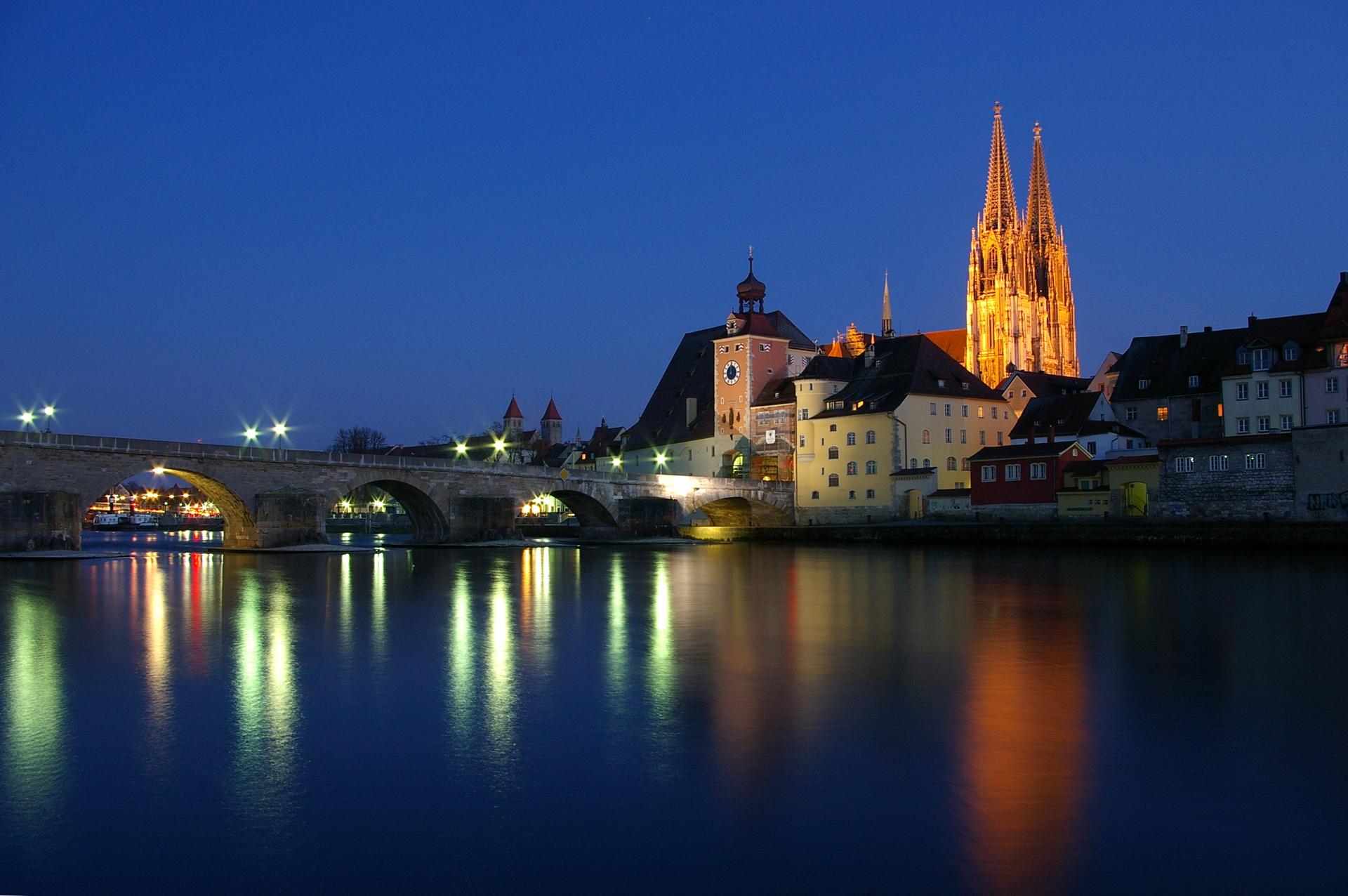
Looking beyond Rathaus-Glockenspiel? Discover Upper Palatinate for broader travel guides, local hot-spots, and regional highlights.
Explore Upper Palatinate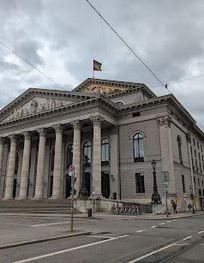
Explore Max-Joseph-Platz in Munich, a cultural gem with stunning architecture, vibrant atmosphere, and a hub for arts and local cuisine.
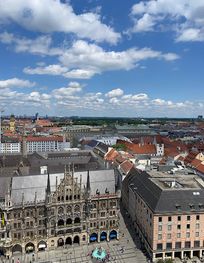
Experience the heart of Munich at Marienplatz, a historic square brimming with architectural wonders, cultural events, and Bavarian charm, easily accessible and a perfect starting point for city exploration.