Neubaukirche, Wurzburg Travel Guide
Free Guide: Discover the Neubaukirche in Würzburg: A stunning Renaissance church turned university hall, blending history, architecture, and culture in the heart of Bavaria.


A brief summary of Neubaukirche
Discover the Neubaukirche in Würzburg: A stunning Renaissance church turned university hall, blending history, architecture, and culture in the heart of Bavaria.
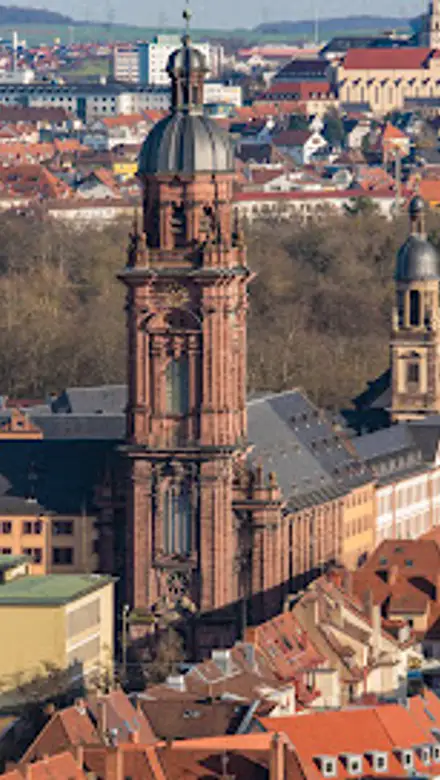
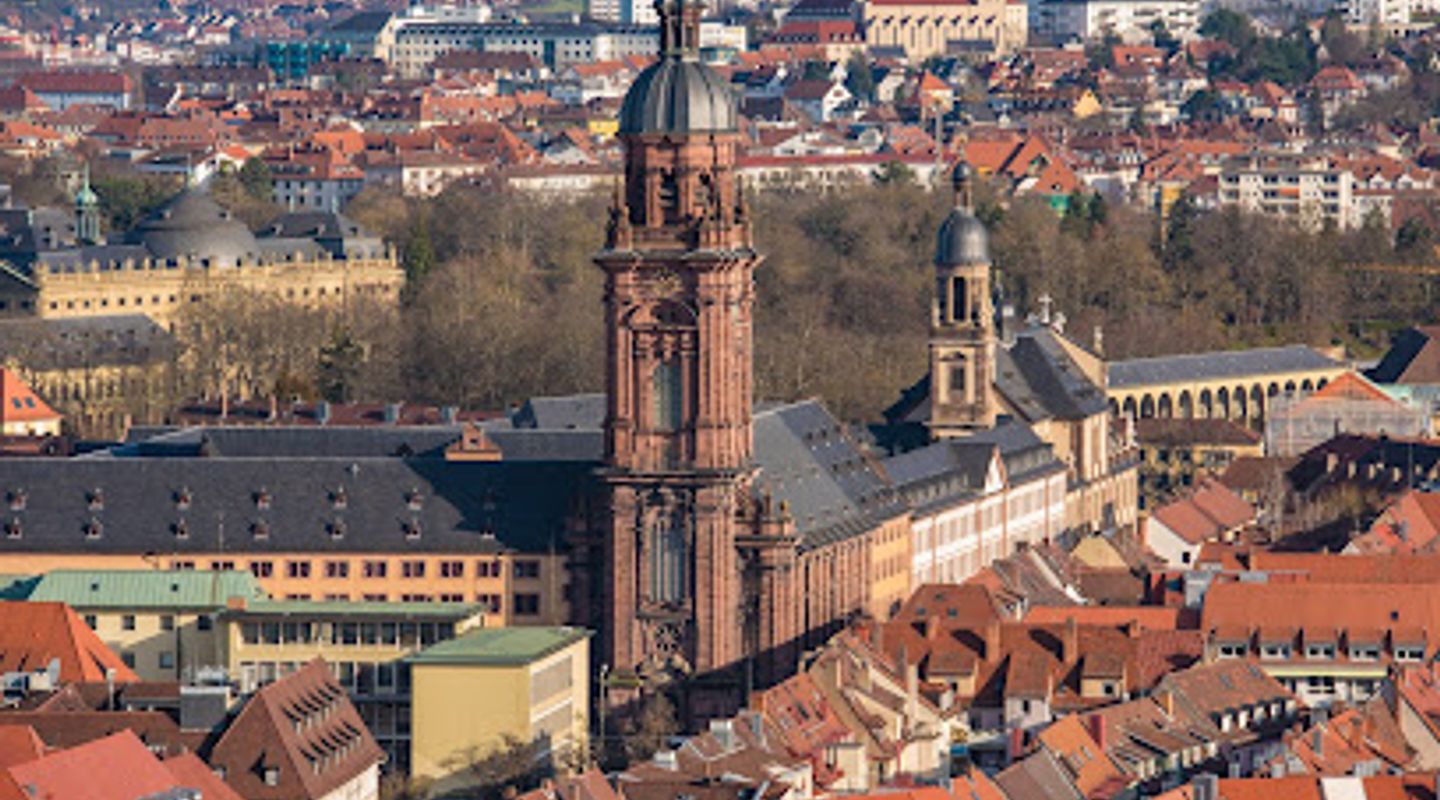
The Neubaukirche, or New Church, stands as a prominent landmark in Würzburg, Germany. Originally built as the university church for the Julius-Maximilians-Universität in the late 16th century, it now serves as a venue for university functions, concerts, and conferences. Its architecture showcases a blend of Renaissance and Baroque styles, with a towering steeple that dominates the city skyline. Despite suffering severe damage during World War II, the Neubaukirche has been meticulously restored, preserving its historical significance and architectural beauty. Visitors can admire the intricate details of its facade, explore its rich history, and experience the vibrant cultural events held within its walls. The Neubaukirche is more than just a building; it's a symbol of Würzburg's resilience and enduring spirit.
- Address
- Neubaustraße 9, 97070 Würzburg
- Phone
- Website
Getting there
Walking
Public Transport
Taxi/Ride-Share
Discover more about Neubaukirche
Overview
The Neubaukirche, or New Church, is a captivating historical and architectural landmark nestled in the heart of Würzburg, Germany. Constructed between 1583 and 1591, it was commissioned by Prince-Bishop Julius Echter von Mespelbrunn as the official church of the newly refounded Julius-Maximilians-Universität. Today, the Neubaukirche no longer functions as a religious sanctuary but rather as a prestigious venue for university ceremonies, concerts, conferences, and other cultural events, solidifying its place as a central hub of academic and civic life in Würzburg. The Neubaukirche's origins are deeply intertwined with the history of the University of Würzburg. Following its initial founding in 1402, the university was re-established in 1582 by Prince-Bishop Julius Echter, a prominent figure in the Counter-Reformation. Echter envisioned a grand complex that would encompass both the academic and spiritual needs of the university community. To this end, he enlisted the expertise of Georg Robin, an architect from Mainz, to design and construct a monumental building that would house the university, along with a dedicated church. The Neubaukirche, whose name translates to "New Building Church," was so named because, in the 16th century, it was the newest church in Würzburg. The architectural style of the Neubaukirche is a harmonious blend of Renaissance and Baroque influences. The initial design, attributed to Georg Robin, reflects the prevailing Renaissance aesthetic of the late 16th century, characterized by its symmetrical facade, classical proportions, and restrained ornamentation. However, subsequent modifications and additions, most notably the Baroque-style tower designed by Antonio Petrini in the late 17th century, introduced a contrasting element of dynamism and exuberance. The tower, which soars to a height of 79.57 meters (or 91 meters, depending on the source), is the tallest church tower in Würzburg and a defining feature of the city's skyline. In 2005, a carillon with 51 bells was installed in the tower. The exterior of the Neubaukirche is adorned with intricate details that showcase the craftsmanship of the period. The facade features a series of pilasters, cornices, and pediments, all meticulously carved from local stone. The windows are framed by decorative moldings, and the main entrance is surmounted by a sculpted tympanum. The overall effect is one of understated elegance and refined sophistication. The interior of the Neubaukirche has undergone significant transformations over the centuries, reflecting its changing role from a place of worship to a secular venue. While the original furnishings and religious iconography have been removed, the space retains its grandeur and architectural integrity. The high vaulted ceilings, supported by massive columns, create a sense of spaciousness and awe. The walls are adorned with decorative plasterwork and frescoes, remnants of the church's earlier incarnation. Throughout its history, the Neubaukirche has witnessed numerous significant events. It served as the venue for countless religious ceremonies, academic convocations, and civic gatherings. In 1591, the church was consecrated. Prince-Bishop Julius Echter, the founder, wanted his heart buried within the church. In 1761, the tower was used as an observatory by Franz Huberti to observe the Transit of Venus. During the tumultuous years of the Thirty Years' War (1618-1648), the church suffered damage and neglect. In 1626, the vault had to be dismantled, and the roof of the steeple had to be removed. Restoration work was halted in 1631 by the Swedish invasion, and for almost 70 years, the church was left without a roof and a vault. However, it was during World War II that the Neubaukirche sustained its most devastating blow. On March 16, 1945, an Allied bombing raid reduced much of Würzburg to rubble, including the Old University and the Neubaukirche. The church's roof, dome, Petrini vault, and interior were destroyed. The destruction was so complete that only the outer walls remained standing. Following the war, the Neubaukirche lay in ruins for several years. However, in the 1970s, the Senate of the University decided to rebuild the church. In 1982, the reconstruction was completed, and the church was rededicated as a venue for university events. The restoration of the Neubaukirche was a monumental undertaking that required the expertise of skilled architects, engineers, and artisans. The reconstruction was completed in 1982, in time for the university's 400th anniversary. The exterior was meticulously restored to its original appearance, while the interior was adapted to its new function as a concert and event hall. The rebuilt Neubaukirche stands as a testament to the resilience and determination of the people of Würzburg. Today, the Neubaukirche is a popular tourist attraction and a symbol of Würzburg's rich cultural heritage. Visitors can explore the church's interior, admire its architecture, and learn about its fascinating history. The church also hosts a variety of concerts, lectures, and other events throughout the year, making it a vibrant center of cultural activity. The Neubaukirche is easily accessible by public transportation and is located within walking distance of other major attractions in Würzburg, such as the Würzburg Residence and the Marienberg Fortress. Whether you are interested in history, architecture, or culture, the Neubaukirche is a must-see destination in Würzburg.
Evendo Review Centre
 Google
Guest reviews
Explore Neubaukirche on the map
A handpicked selection of must-see spots near Neubaukirche, mapped for you.
Get your free copy of our complete guide to Neubaukirche, delivered straight to you.
Everything on this page, from opening hours and how to get there to Eve’s tips and the best time to go, in one PDF you can read offline, print or share.
Already have an account? Sign in
Your Neubaukirche guide is ready.
We'll send it to · Not you? Sign out

Getting your guide ready…
We are putting together a fresh copy of the Neubaukirche guide. This can take up to a minute.
This can take a few moments. If your browser asks, choose Allow so the download can start. You'll find the guide in your Downloads folder.
Nothing happened? Download it again
Sorry, the guide is taking longer than usual. Please try again in a minute, or get it by email instead.
Other nearby places you may find interesting
The closest places of the same kind, if this one is not quite what you had in mind.
-
-

-
-
-


Swipe for more places
More to explore near Neubaukirche

 Best experiences near Neubaukirche
 Best hotels near Neubaukirche
 Best landmarks near Neubaukirche
 Best attractions near Neubaukirche
 Best shops near Neubaukirche
 Best restaurants near Neubaukirche
 Best bars near Neubaukirche
Do you manage this location?
Take control to get all the benefits, like improved information, better appearance, and stronger visibility across AI-powered discovery.
Explore more

Explore more of Wurzburg
Discover Würzburg: A harmonious blend of baroque splendor, vibrant culture, and scenic beauty in the heart of Franconia.
Explore Wurzburg
Explore more of Germany
Experience Germany: where history meets innovation, and urban energy blends with natural beauty. Discover diverse cultures, delicious cuisine, and stunning landscapes.
Explore Germany