

Lower St Michael's Cave Travel Guide
Free Guide: Explore a hidden world of stunning rock formations and crystal-clear waters in Gibraltar's Lower St Michael's Cave.


A brief summary of Lower St Michael's Cave
Explore a hidden world of stunning rock formations and crystal-clear waters in Gibraltar's Lower St Michael's Cave.
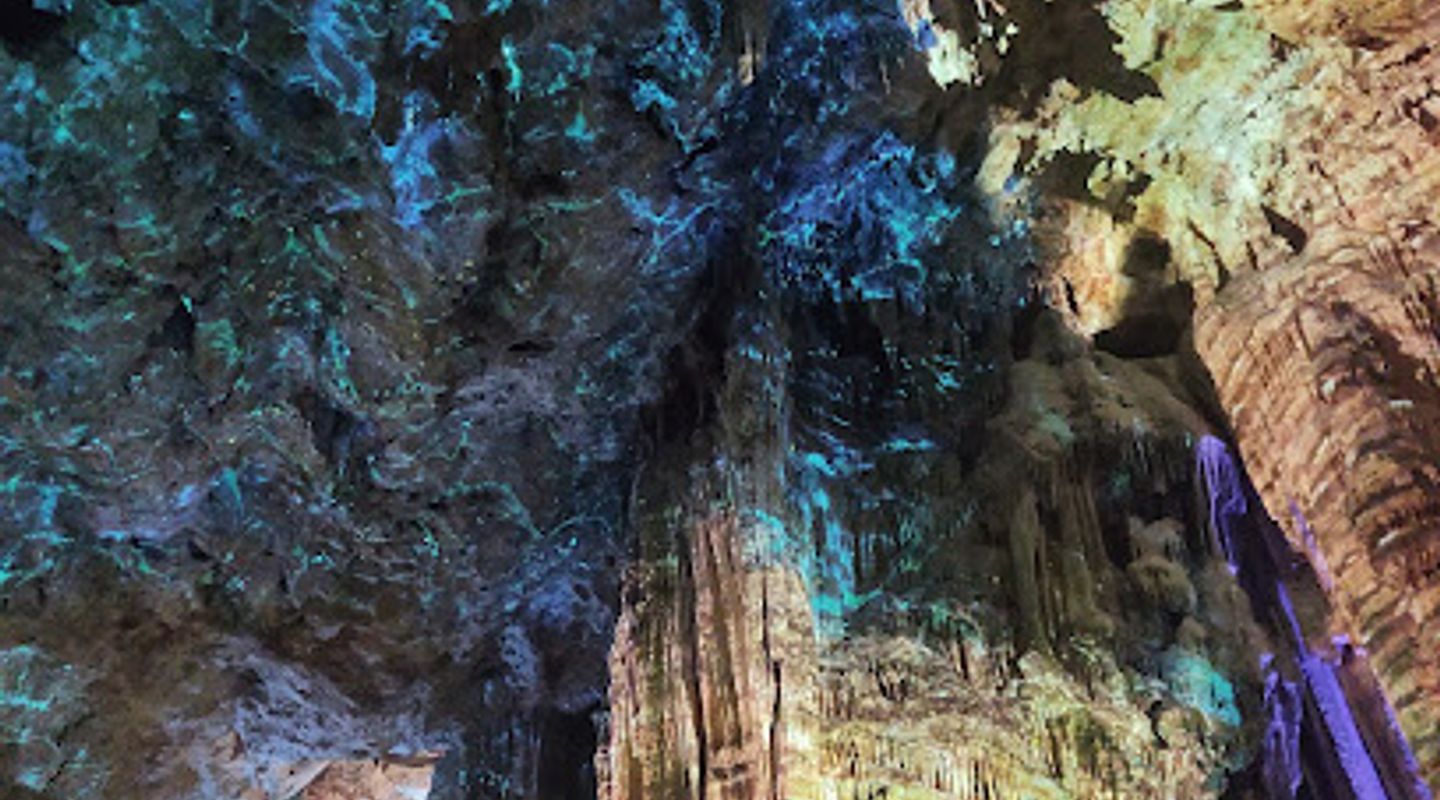
Discovered in 1942 during WWII, Lower St Michael's Cave is a hidden network of caverns within the Rock of Gibraltar, showcasing stunning stalactites, stalagmites, and a crystal-clear underground lake. This unique site offers a glimpse into a world sealed off for potentially 20,000 years, featuring a variety of cave formations and a serene, cathedral-like atmosphere.
- Address
- 4MG3+5GW, Gibraltar GX11 1AA
- Website
Getting there
Walking
Public Transport
Taxi
Discover more about Lower St Michael's Cave
Overview
Lower St Michael's Cave, also known as New St. Michael's Cave, is a captivating natural wonder discovered in 1942 during World War II when Royal Engineers were blasting a new entrance to the lower chambers of the main St. Michael's Cave. This accidental discovery revealed a series of chambers that may have been sealed off for 20,000 years.The cave is renowned for its stunning array of speleothems, encompassing nearly all known cave formations. Visitors can marvel at stalactites, stalagmites, rim stone, helictites, columns, coral rocks, flowstone, straws, and curtains, creating a breathtaking subterranean landscape. The main chambers evoke the ambiance of a cathedral, complete with formations resembling a pulpit, chancel, and organ pipes.A highlight of Lower St Michael's Cave is its 37-meter-long underground lake, estimated to hold 200,000 liters of crystal-clear water. The cave is carefully preserved, with ropes and lighting installed to ensure visitor safety while minimizing impact on its natural state. Tours, lasting around three hours, involve some scrambling and minor climbing with ropes. It's recommended to wear sturdy shoes and casual clothing. Photography is permitted, allowing visitors to capture the unforgettable experience.Access to Lower St Michael's Cave is by arrangement only, with tours available for groups of five to ten people. Children under ten years old are not permitted on the tour.
Evendo Review Centre
 Google
Guest reviews
Explore Lower St Michael's Cave on the map
A handpicked selection of must-see spots near Lower St Michael's Cave, mapped for you.
Get your free copy of our complete guide to Lower St Michael's Cave, delivered straight to you.
Everything on this page, from opening hours and how to get there to Eve’s tips and the best time to go, in one PDF you can read offline, print or share.
Already have an account? Sign in
Your Lower St Michael's Cave guide is ready.
We'll send it to · Not you? Sign out

Getting your guide ready…
We are putting together a fresh copy of the Lower St Michael's Cave guide. This can take up to a minute.
This can take a few moments. If your browser asks, choose Allow so the download can start. You'll find the guide in your Downloads folder.
Nothing happened? Download it again
Sorry, the guide is taking longer than usual. Please try again in a minute, or get it by email instead.
Unlock the best of Lower St Michael's Cave
Skip-the-line tickets, guided tours with entry, and walking tours of the area, booked in a few clicks.


Other nearby places you may find interesting
The closest places of the same kind, if this one is not quite what you had in mind.
-
-
-
-
-


Swipe for more places
More to explore near Lower St Michael's Cave
-
 Best experiences near Lower St Michael's Cave
-
 Best hotels near Lower St Michael's Cave
-
 Best landmarks near Lower St Michael's Cave
-
 Best attractions near Lower St Michael's Cave
-
 Best shops near Lower St Michael's Cave
-
 Best restaurants near Lower St Michael's Cave
-
 Best bars near Lower St Michael's Cave


Do you manage this location?
Take control to get all the benefits, like improved information, better appearance, and stronger visibility across AI-powered discovery.
Explore more

Explore more of Little Bay
Discover Little Bay in Gibraltar: A tranquil beach escape with crystal-clear waters, rich history, and exciting water sports activities.
Explore Little Bay
Explore more of Gibraltar
Discover Gibraltar, a unique blend of British and Spanish cultures, stunning natural beauty, and rich history at the gateway to the Mediterranean.
Explore Gibraltar
