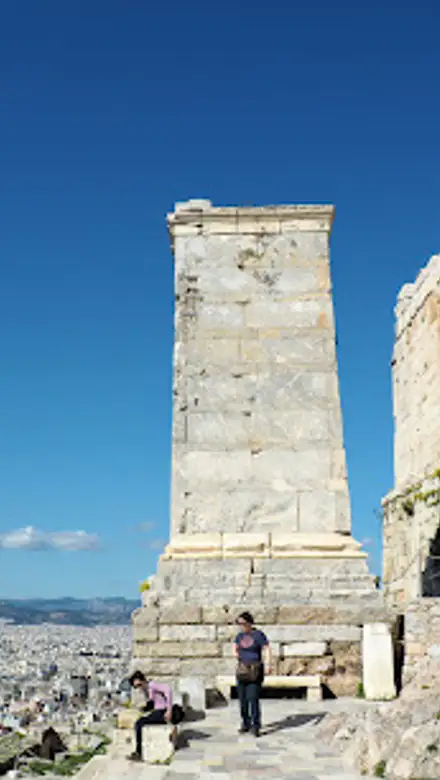
Monument of Agrippa, Athens Travel Guide
Free Guide: Explore the Monument of Agrippa on the Acropolis: a historical landmark showcasing Greek and Roman influences in ancient Athens.


A brief summary of Monument of Agrippa
Explore the Monument of Agrippa on the Acropolis: a historical landmark showcasing Greek and Roman influences in ancient Athens.
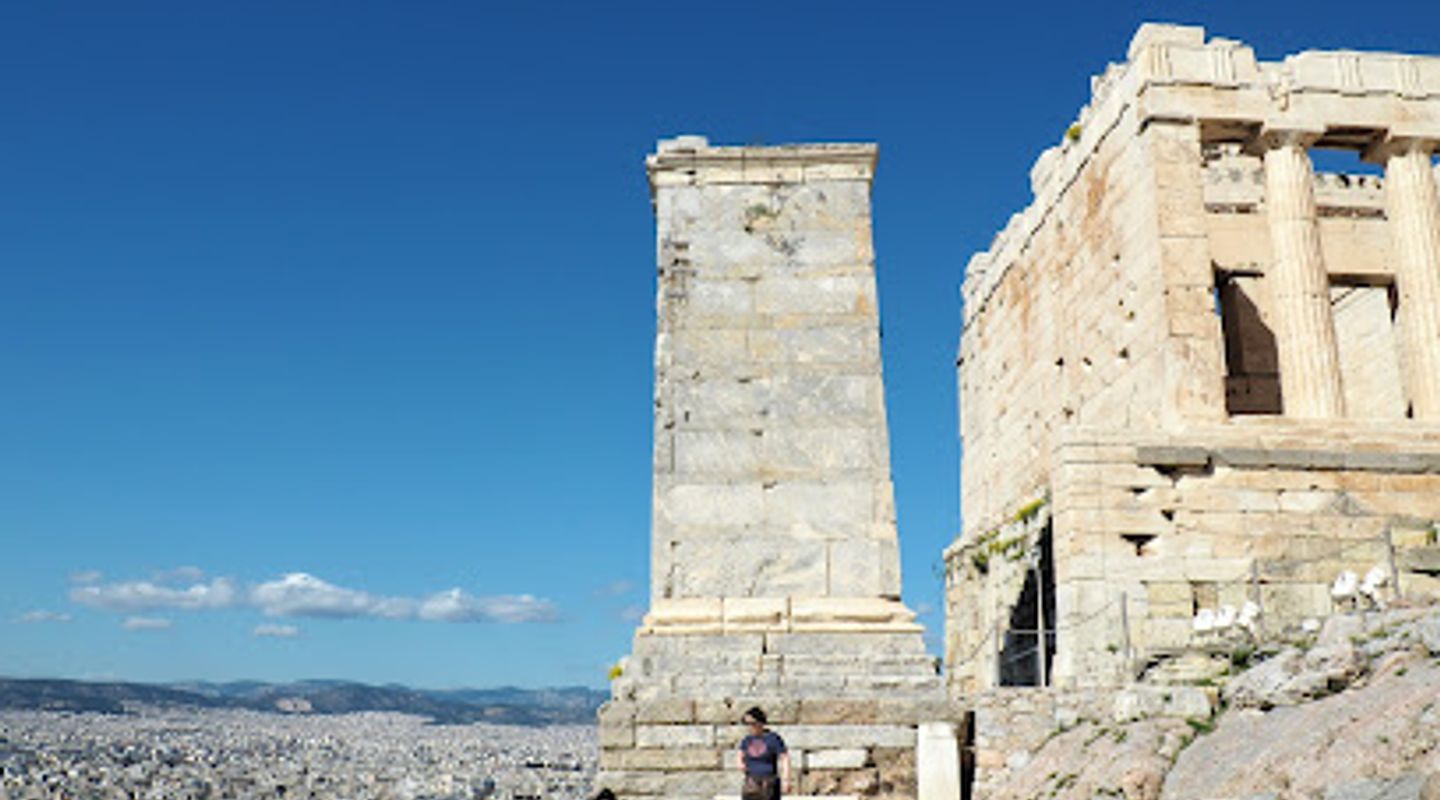
The Monument of Agrippa, located on the Acropolis in Athens, is an ancient pedestal with a rich history. Originally built in 178 BC to honor King Eumenes II of Pergamon, it was later dedicated to Marcus Agrippa, a Roman general. The monument offers a glimpse into the blend of Greek and Roman influences in Athens.
Opening hours
- Every day8 am–8 pm
Opening hours as listed on the venue’s Google Business Profile. Hours can change for services and special events, so check with the venue before you go.
- Address
- Theorias 21, Athina 105 58
- Phone
Getting there
Walking
Public Transport
Taxi/Ride-Share
Discover more about Monument of Agrippa
Overview
The Monument of Agrippa stands proudly on the Acropolis, near the Propylaea, serving as a tangible link to Athens' storied past. This monument's history began around 178 BC, when it was constructed to celebrate King Eumenes II of Pergamon's victory in the Panathenaic Games. The monument initially supported a bronze quadriga, a four-horse chariot, likely depicting Eumenes and his brother.In a later era, around 27 BC, the city of Athens rededicated the monument to Marcus Vipsanius Agrippa, a Roman general and son-in-law of Emperor Augustus, recognizing his contributions to the city, including the reconstruction of the Odeon of Athens. The statue of Agrippa that once stood atop the pedestal is now lost to time, but the pedestal itself remains.The monument's construction features a blend of materials, including greyish-blue Hymettian marble for the shaft and white Pentelic marble for the base and crown. The structure comprises a stereobate, a three-stepped crepis, and an Attic-Ionic base. Over the centuries, the monument has seen various modifications, including the addition of a bastion in the 14th century to fortify the Acropolis. These additions were later removed in 1835, restoring the monument closer to its original form.Visiting the Monument of Agrippa offers a unique opportunity to witness the layers of history embedded within the Acropolis. Its location provides stunning views and a chance to reflect on the individuals and events that have shaped Athens.
Evendo Review Centre
 Google
Guest reviews
Explore Monument of Agrippa on the map
A handpicked selection of must-see spots near Monument of Agrippa, mapped for you.
Get your free copy of our complete guide to Monument of Agrippa, delivered straight to you.
Everything on this page, from opening hours and how to get there to Eve’s tips and the best time to go, in one PDF you can read offline, print or share.
Already have an account? Sign in
Your Monument of Agrippa guide is ready.
We'll send it to · Not you? Sign out

Getting your guide ready…
We are putting together a fresh copy of the Monument of Agrippa guide. This can take up to a minute.
This can take a few moments. If your browser asks, choose Allow so the download can start. You'll find the guide in your Downloads folder.
Nothing happened? Download it again
Sorry, the guide is taking longer than usual. Please try again in a minute, or get it by email instead.
Unlock the best of Monument of Agrippa
Skip-the-line tickets, guided tours with entry, and walking tours of the area, booked in a few clicks.




Other nearby places you may find interesting
The closest places of the same kind, if this one is not quite what you had in mind.
-
-
-
-
-


Swipe for more places
More to explore near Monument of Agrippa

 Best experiences near Monument of Agrippa
 Best hotels near Monument of Agrippa
 Best landmarks near Monument of Agrippa
 Best attractions near Monument of Agrippa
 Best shops near Monument of Agrippa
 Best restaurants near Monument of Agrippa
 Best bars near Monument of Agrippa
Do you manage this location?
Take control to get all the benefits, like improved information, better appearance, and stronger visibility across AI-powered discovery.
Explore more

Explore more of Athens
Discover Athens: A journey through time in the cradle of Western civilization, where ancient wonders and modern vibrancy create an unforgettable experience.
Explore Athens
Explore more of Greece
Discover Greece: A land where ancient history meets modern vibrancy, offering stunning islands, crystal-clear seas, and unforgettable cultural experiences.
Explore Greece