

National Archaeological Museum, Attica Travel Guide
Explore 11,000+ artifacts from ancient Greece, spanning from prehistory to late antiquity, in Athens' premier archaeological museum.
The National Archaeological Museum in Athens is Greece's largest archaeological museum, showcasing an unparalleled collection of Greek antiquities from prehistory to late antiquity. Housing over 11,000 exhibits, it offers a comprehensive panorama of ancient Greek civilization.
A brief summary to National Archaeological Museum
- 28is Oktovriou 44, Athens, 106 82, GR
- Click to display
- Click to display
- Monday 8:30 am-3:30 pm
- Tuesday 1 pm-8 pm
- Wednesday 8:30 am-3:30 pm
- Thursday 8:30 am-3:30 pm
- Friday 8:30 am-3:30 pm
- Saturday 8:30 am-3:30 pm
- Sunday 8:30 am-3:30 pm

Know before you go
Hi, I'm Eve. Here are a few practical things to know before exploring National Archaeological Museum.
- Visit during the off-season (November to March) for smaller crowds and reduced admission fees.
- Take advantage of the free audio tours offered in multiple languages to enhance your visit.
- Allocate at least 3 hours to explore the museum's vast collection.
- Check the museum's website for free admission days and special events.
- Wear comfortable shoes, as you'll be doing a lot of walking.
Do you manage this location?
Take control to get all the benefits, like improved information, better appearance, and stronger visibility across AI-powered discovery. Learn more about listing your business on Evendo
Activate your presenceOther nearby places you may find interesting
The closest places of the same kind, if this one is not quite what you had in mind.




Explore National Archaeological Museum on the Map
A handpicked selection of must-see spots near National Archaeological Museum, mapped for you.
Unlock the Best of National Archaeological Museum
Buy tickets
Book tours with entry


Getting There
-
Public Transport
The National Archaeological Museum is easily accessible via the Athens Metro. Take Line 1 (Green Line) to Victoria Station or Line 2 (Red Line) to Omonia Station. From either station, it's a short 10-minute walk to the museum. A single metro ticket costs €1.20 and is valid for 90 minutes.
-
Bus
Several bus lines stop near the National Archaeological Museum at the Polytechnio bus stop. These include lines 224, 608, and A8. A single bus ticket costs €1.20 and is valid for 90 minutes.
-
Taxi
Taxis are readily available throughout Athens. A short taxi ride from Syntagma Square to the museum typically costs between €4-€5 and takes only a few minutes. Note that traffic can affect travel time and cost.
-
Walking
From Omonia Square, walk north along 28th of October (Patission) Street for approximately 10 minutes. The museum will be on your right. From Syntagma Square, the museum is about a 25-minute walk.
Discover more about National Archaeological Museum
More to explore near National Archaeological Museum













Your all‑in‑one travel companion app
Explore expert travel guides, compare and book tours, experiences, hotels, and more—all from the palm of your hand. Download now for seamless trip planning wherever your wanderlust takes you.


Explore More of Attica

Looking beyond National Archaeological Museum? Discover Attica for broader travel guides, local hot-spots, and regional highlights.
Explore Attica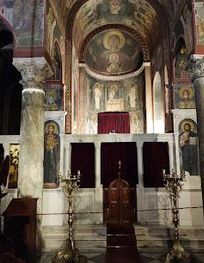
Explore the breathtaking Panagía Kapnikaréa Church in Athens - a Byzantine masterpiece showcasing stunning art and serene spirituality in a vibrant setting.

Discover the architectural elegance and historical significance of Athens' Acropole Palace, a landmark Art Nouveau masterpiece.
