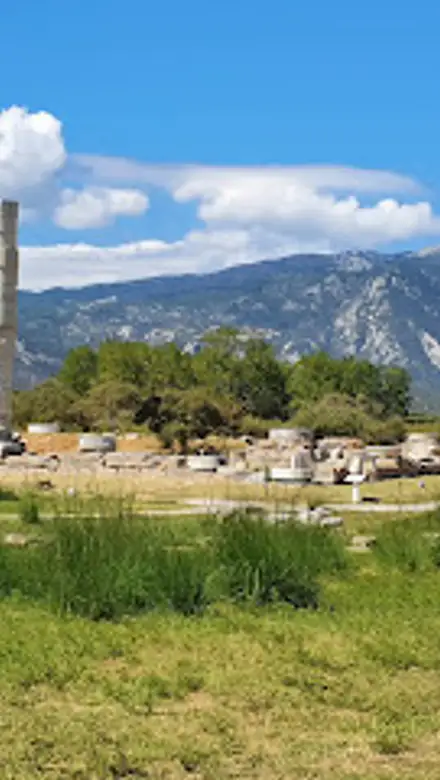
Temple of Hera, Samos Travel Guide
Free Guide: Explore the ruins of the Temple of Hera on Samos, a UNESCO World Heritage Site and a testament to ancient Greek grandeur and religious significance.


A brief summary of Temple of Hera
Explore the ruins of the Temple of Hera on Samos, a UNESCO World Heritage Site and a testament to ancient Greek grandeur and religious significance.
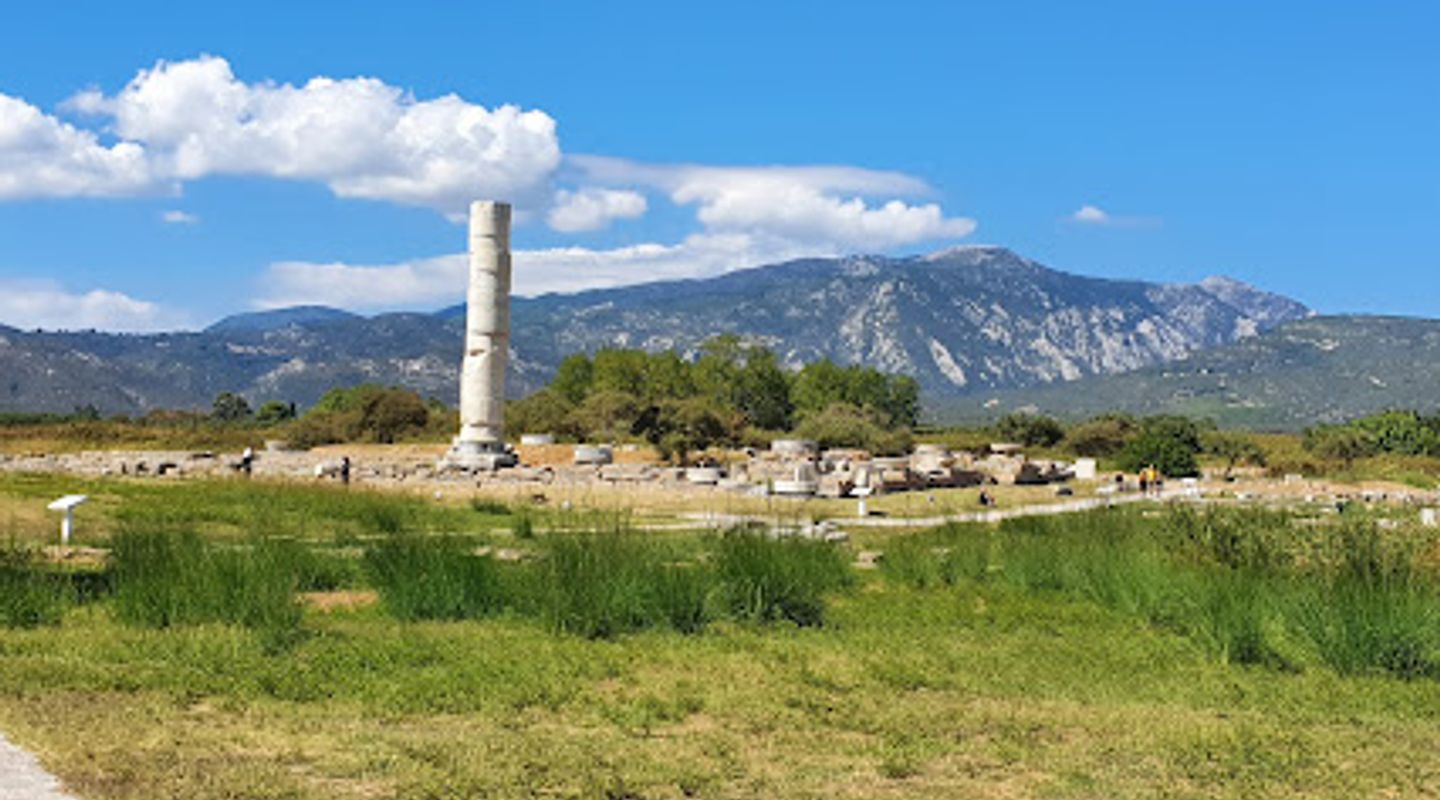
The Temple of Hera, or Heraion, on the island of Samos, is an ancient sanctuary dedicated to the goddess Hera, wife of Zeus. Once a grand temple rivaling the Parthenon, today, visitors can explore the evocative ruins, including a solitary standing column, remnants of a once-massive structure, and imagine the site's rich history and religious significance dating back to the 8th century BC.
Opening hours
- Mon8:30 am–3:30 pm
- TueClosed
- Wed8:30 am–3:30 pm
- Thu8:30 am–3:30 pm
- Fri8:30 am–3:30 pm
- Sat8:30 am–3:30 pm
- Sun8:30 am–3:30 pm
Opening hours as listed on the venue’s Google Business Profile. Hours can change for services and special events, so check with the venue before you go.
- Address
- Pithagorio 831 03
Getting there
Walking
Public Transport
Taxi
Discover more about Temple of Hera
Overview
Located near the modern village of Ireon, about 6 km southwest of Pythagorion, the Temple of Hera (Heraion) is a UNESCO World Heritage Site and one of the most important ancient landmarks in Greece. Dedicated to Hera, the queen of the Olympian gods, the temple was a major religious center, attracting pilgrims from across the Greek world.Originally constructed around the 8th century BC, the Heraion underwent several reconstructions, reaching its peak during the reign of Polycrates in the 6th century BC. At that time, it was considered the largest Greek temple, boasting 155 columns, each approximately 20 meters high. Herodotus described it as the "greatest and most impressive temple in Greece".Today, visitors can wander through the ruins and envision the temple's former glory. The single remaining standing column, known as the “Hera Column,” offers a striking visual. Excavations have revealed significant remains, including massive columns, intricate sculptures, and architectural details, providing insights into the religious and cultural life of ancient Samos. The "Sacred Way," a paved road that once connected the temple to the ancient city of Samos (now Pythagorion), was used for religious processions. Remnants of this path can still be seen. The site also features the remains of a large altar used for sacrifices and offerings to Hera.The temple's location, close to the sea and the Imbrasos River, was significant in its history, with legends suggesting Hera's birth on the riverbanks. Despite being in ruins, the Temple of Hera remains a powerful testament to the architectural brilliance and religious devotion of the Ancient Greeks.
Evendo Review Centre
 Google
Guest reviews
Explore Temple of Hera on the map
A handpicked selection of must-see spots near Temple of Hera, mapped for you.
Get your free copy of our complete guide to Temple of Hera, delivered straight to you.
Everything on this page, from opening hours and how to get there to Eve’s tips and the best time to go, in one PDF you can read offline, print or share.
Already have an account? Sign in
Your Temple of Hera guide is ready.
We'll send it to · Not you? Sign out

Getting your guide ready…
We are putting together a fresh copy of the Temple of Hera guide. This can take up to a minute.
This can take a few moments. If your browser asks, choose Allow so the download can start. You'll find the guide in your Downloads folder.
Nothing happened? Download it again
Sorry, the guide is taking longer than usual. Please try again in a minute, or get it by email instead.
Unlock the best of Temple of Hera
Skip-the-line tickets, guided tours with entry, and walking tours of the area, booked in a few clicks.


Other nearby places you may find interesting
The closest places of the same kind, if this one is not quite what you had in mind.
-
-
-
-
-


Swipe for more places
More to explore near Temple of Hera

 Best experiences near Temple of Hera
 Best hotels near Temple of Hera
 Best landmarks near Temple of Hera
 Best attractions near Temple of Hera
 Best shops near Temple of Hera
 Best restaurants near Temple of Hera
 Best bars near Temple of Hera
Do you manage this location?
Take control to get all the benefits, like improved information, better appearance, and stronger visibility across AI-powered discovery.
Explore more

Explore more of Samos
Discover Samos, an idyllic Greek island known for its stunning beaches, ancient heritage, and delightful vineyards. Experience the perfect blend of nature, history, and culture.
Explore Samos
Explore more of Greece
Discover Greece: A land where ancient history meets modern vibrancy, offering stunning islands, crystal-clear seas, and unforgettable cultural experiences.
Explore Greece