
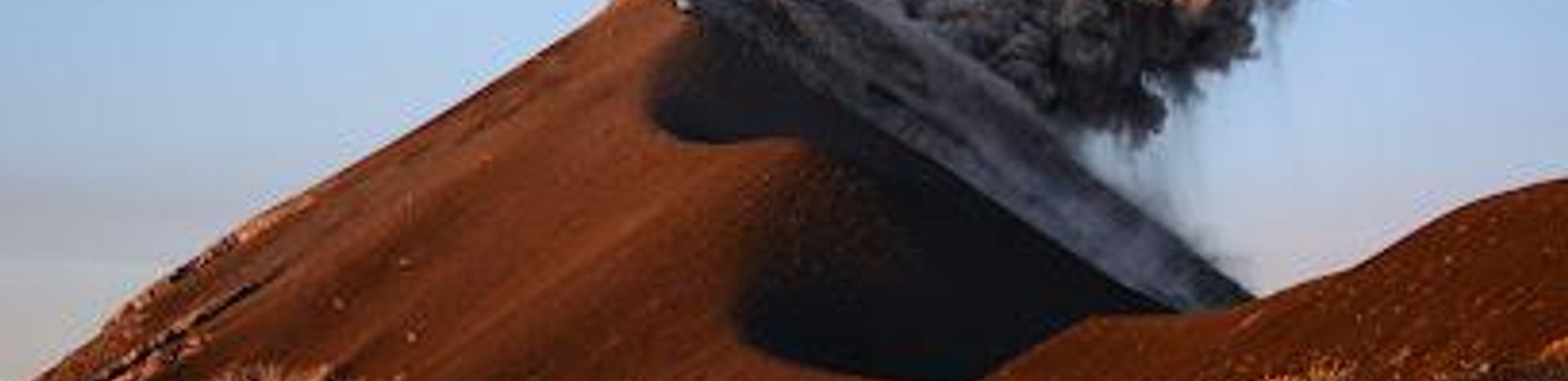
Volcán de Fuego: Guatemala's Fiery Giant
Witness the raw power of nature at Volcán de Fuego, one of Central America's most active volcanoes, a mesmerizing spectacle from a safe distance.
Volcán de Fuego is a highly active stratovolcano located near Antigua, Guatemala, and is part of the Pacific Ring of Fire. Its history is etched in fire and ash, with eruptions documented since the early 16th century. The volcano's frequent activity, characterized by explosive eruptions, lava flows, and pyroclastic flows, has significantly impacted the surrounding communities and environment. Volcán de Fuego is joined to the Acatenango volcano to the north; the complex is known as La Horqueta. Between Fuego and Acatenango lies La Meseta, a scarp that marks the remains of an older volcano that collapsed around 8,500 years ago. The indigenous populations once revered the volcano as a deity, attributing its beauty and destructive power to divine forces. Today, scientists closely monitor Volcán de Fuego to understand volcanic activity better and improve early warning systems. While hiking to the summit of Volcán de Fuego is not permitted due to its continuous activity, many tourists hike the adjacent Acatenango volcano to witness Fuego's eruptions. From Acatenango, you can safely observe the awe-inspiring display of smoke, ash, and glowing lava.
Local tips
- The best views of Volcán de Fuego are from the summit of Acatenango. Consider an overnight hike to witness both sunset and sunrise.
- Check the Volcán de Fuego's activity reports before planning your visit and heed any warnings or recommendations from local guides.
- Bring appropriate gear for hiking, including sturdy shoes, warm layers, and rain protection, as weather conditions can change rapidly.
- Hire a local guide for the Acatenango hike. They can provide valuable insights, ensure your safety, and enrich your experience.

A brief summary to Volcán de fuego
- F4F9+665, 14, Alotenango, GT
Getting There
-
Public Transport
From Guatemala City, take a bus to Antigua. Buses leave frequently from the El Trebol bus station in Zone 7 and cost approximately $2-4. The journey takes around 1.5 to 2 hours. From Antigua, arrange transport to La Soledad, the starting point for the Acatenango hike, with a tour operator. A shared shuttle should cost around $5.
-
Taxi/Ride-share
From Antigua, a taxi or ride-share to La Soledad will cost around $20-30 and take approximately 1 hour, depending on traffic. Negotiate the price beforehand.


