

Pikes Peak State Park, Iowa Travel Guide
Discover Pikes Peak State Park in Iowa, where panoramic views, lush trails, and rich history converge along the majestic Mississippi River.
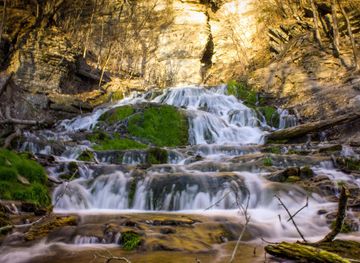
Pikes Peak State Park, nestled along the Mississippi River in Iowa, is a natural gem offering awe-inspiring views and a tranquil escape. This park is renowned for its panoramic vistas from the 500-foot bluffs, where the breathtaking scenery of the river and surrounding landscapes unfolds before your eyes. Whether you're a nature enthusiast, a history buff, or simply seeking a peaceful retreat, Pikes Peak State Park has something for everyone. The park's trails wind through lush forests, leading you to picturesque overlooks and hidden waterfalls. Bridal Veil Falls, one of the park's highlights, is a must-visit. The gentle cascade of water provides a soothing background as you explore the park's rich biodiversity. Wildlife sightings are common, with deer, birds, and other woodland creatures often making appearances. In addition to its natural beauty, Pikes Peak State Park is steeped in history. The park is named after Lieutenant Zebulon Pike, who explored the area in the early 1800s. Interpretive signs along the trails offer insight into the region's past, from Native American heritage to early European settlers. The park also features several picnic areas, making it an ideal spot for a family outing or a leisurely lunch surrounded by nature.

Know before you go
Hi, I'm Eve. Here are a few practical things to know before exploring Pikes Peak State Park.
- Visit early in the morning to catch the sunrise over the Mississippi River for a truly unforgettable experience.
- Wear comfortable hiking shoes as the trails can be uneven and rocky in some areas.
- Bring a camera or binoculars for wildlife and bird watching opportunities.
- Pack a picnic and enjoy a meal at one of the park's scenic picnic areas.
- Check the weather forecast and dress in layers, as temperatures can vary throughout the day.
Explore Pikes Peak State Park: Things to Do, Places to Eat, Hotels & More
Handpicked recommendations for top attractions, local dining, accommodations, and more

Best attractions in Pikes Peak State Park
Top-rated picks
Best Attractions

Union Grove State Park
Discover the serene beauty and outdoor adventures at Union Grove State Park in Iowa, a perfect getaway for nature enthusiasts and families.

Pikes Peak Scenic Overlook
Discover stunning views and natural beauty at Pikes Peak Scenic Overlook, one of Iowa's hidden treasures perfect for nature lovers and photographers.

Garnavillo Historical Museum
Explore the Garnavillo Historical Museum, where local history and natural heritage come alive through engaging exhibits and immersive experiences.

Best bars in Pikes Peak State Park
Top-rated picks
Best Bars

Silver Dollar Saloon
Experience the vibrant atmosphere and delicious grill offerings at Silver Dollar Saloon in McGregor, Iowa - a local favorite for food and fun.

Pikes Peak Scenic Overlook
Discover the tranquility and stunning vistas at Pikes Peak Scenic Overlook, a hidden gem in McGregor, Iowa, perfect for nature lovers and photographers.

Concession Stand Friends of Pikes Peak
Discover a delightful snack experience at Concession Stand Friends of Pikes Peak, your refreshing stop in McGregor, Iowa while exploring beautiful landscapes.

Best shops in Pikes Peak State Park
Top-rated picks
Best Shops

Pikes Peak State Park
Explore the breathtaking views and diverse trails of Pikes Peak State Park, a true natural wonder in Iowa.

River Junction Trade Co
Discover authentic western apparel and unique gifts at River Junction Trade Co in McGregor, Iowa, a must-visit for western culture enthusiasts.

Explore Pikes Peak State Park on the Map
A handpicked selection of must-see spots in Pikes Peak State Park, mapped for you.
Pikes Peak State Park Essentials
-
Pikes Peak State Park is located in northeastern Iowa, near the town of McGregor. The nearest major airport is the Eastern Iowa Airport (CID) in Cedar Rapids, approximately 110 miles away. From the airport, you can rent a car and drive to the park, which takes around 2 hours. Alternatively, you can fly into Des Moines International Airport (DSM), which is about 175 miles away. Public transit options are limited, so renting a car is the most convenient way to reach the park.
-
Once at Pikes Peak State Park, transportation within the park is mostly on foot. The park features numerous hiking trails that offer stunning views of the Mississippi River and surrounding landscapes. For those who wish to explore nearby areas, cars are the most convenient mode of transportation. There are no public transport services within the park, but local taxis or rideshare options like Uber and Lyft are available in surrounding towns.
-
The official currency is the United States Dollar (USD). Credit and debit cards are widely accepted at hotels, restaurants, and shops in nearby towns. However, it is advisable to carry some cash, especially for small purchases or in situations where card payments may not be accepted. ATMs are available in McGregor and other nearby towns.
-
Pikes Peak State Park is generally a safe destination for tourists. However, standard safety precautions should still be taken. Avoid leaving valuable items in your car and be cautious when hiking on less-traveled trails. There are no known high-crime areas specifically targeting tourists, but it is always wise to stay vigilant and aware of your surroundings.
-
In case of emergency, dial 911 for immediate assistance. The park staff and local authorities can provide help in emergencies. It is recommended to carry a basic first aid kit and have travel insurance that covers medical emergencies. For minor health issues, there are pharmacies in nearby towns like McGregor and Prairie du Chien, Wisconsin.
-
Fashion: Do wear comfortable, weather-appropriate clothing and sturdy hiking shoes. Avoid wearing heavy perfumes or colognes, as they can attract insects. Religion: Do respect any local customs or sites that have historical significance. Public Transport: Do understand that there is no public transport within the park. Plan to drive or walk. Greetings: Do greet people with a smile or a nod. Midwesterners are generally friendly and may engage in small talk. Eating & Drinking: Do try local eateries in nearby towns. Don't litter within the park; always use designated trash bins.
-
To experience Pikes Peak State Park like a local, visit during the early morning or late afternoon for the best light and fewer crowds. Engage with park rangers, who can provide valuable insights into the park's history and natural features. Don't miss the scenic overlook that offers a panoramic view of the Mississippi River. Also, consider visiting nearby attractions like the Effigy Mounds National Monument and the quaint shops in McGregor for a more comprehensive local experience.
When is the best time to visit Pikes Peak State Park?
Useful Local Phrases for Pikes Peak State Park
You don't need to speak the language perfectly. Even learning a few simple words can make conversations warmer—and locals usually appreciate the effort.
— Eve

Here are the phrases I use most often in Pikes Peak State Park. Try a few—you'll be surprised how far they go! 😊
❤️
-
- HelloHowdy
[haw-dee] - GoodbyeSee ya
[see-yuh] - YesYep
[yep] - NoNah
[nah] - Please/You're welcomePlease/No problem
[pleez/no prob-lem] - Thank youThanks
[thanks] - Excuse me/SorryPardon me/My bad
[par-dun me/my bad] - How are you?Howdy
[haw-dee] - Fine. And you?Jes fine. And you?
[jes fine. And yuh?] - Do you speak English?Ya speak English?
[ya speak ing-lish?] - I don't understandI ain't gettin' ya
[i ent get-tin yuh]
- HelloHowdy
-
- I'd like to see the menu, pleaseI reckon I'll take a gander at the menu, please
[i reck-on i'll take a gan-der at the menu, please] - I don't eat meatI ain't no meat eater
[i ent no meat eat-er] - Cheers!Bottoms up!
[bot-ums up] - I would like to pay, pleaseI'm fixin' to settle up, please
[i'm fix-in to set-tle up, please]
- I'd like to see the menu, pleaseI reckon I'll take a gander at the menu, please
-
- Help!I need a hand!
[i need a hand] - Go away!Git!
[git] - Call the Police!Ring up the Sheriff!
[ring up the sher-iff] - Call a doctor!Fetch a doc!
[fetch a doc] - I'm lostI'm turned around
[i'm turned a-round] - I'm illI ain't feelin' right
[i ent feel-in right]
- Help!I need a hand!
-
- I'd like to buy...I reckon I'll buy...
[i reck-on i'll buy] - I'm just lookingI'm jest browsin'
[i'm jest brow-sin] - How much is it?How much fer that?
[how much fur that] - That's too expensiveThat's mighty pricey
[that's mighty pry-see] - Can you lower the price?Can ya cut me a deal?
[can yuh cut me a deal]
- I'd like to buy...I reckon I'll buy...
-
- What time is it?What's the hour?
[what's the hour] - It's one o'clockIt's one of the clock
[it's one of the clock] - Half past (10)10-thirty
[ten-thir-tee] - MorningMornin'
[morn-in] - AfternoonAfternoon
[after-noon] - EveningEvenin'
[even-in] - YesterdayYest'day
[yest-day] - TodayToday
[to-day] - TomorrowMorrow
[mor-row] - 1One
[wun] - 2Two
[too] - 3Three
[three] - 4Four
[four] - 5Five
[five] - 6Six
[six] - 7Seven
[seven] - 8Eight
[ate] - 9Nine
[nine] - 10Ten
[ten]
- What time is it?What's the hour?
-
- Where's a/the...?Where's the...
[where's the] - What's the address?What's the addy?
[what's the addy] - Can you show me (on the map)?Can ya show me (on the map)?
[can yuh show me (on the map)] - When's the next (bus)?When's the next (bus)?
[when's the next (bus)] - A ticket (to ....)A ticket (to ....)
[a ticket (to)]
- Where's a/the...?Where's the...
History of Pikes Peak State Park
-
Long before European settlers arrived, the area now known as Pikes Peak State Park was inhabited by Native American tribes, including the Ho-Chunk (Winnebago) and Sauk and Fox (Meskwaki) tribes. These tribes utilized the land for hunting, fishing, and gathering. The park still contains effigy mounds constructed by these indigenous peoples, which served as burial sites and ceremonial grounds. These mounds are integral to understanding the area's pre-colonial history and offer a glimpse into the spiritual and cultural practices of the Native American tribes.
-
Pikes Peak State Park was named in honor of Zebulon Pike, an American explorer and military officer. In 1805, Pike led an expedition to explore the upper Mississippi River and its tributaries. Although Zebulon Pike is more famously associated with Pikes Peak in Colorado, his journeys also took him through Iowa, where he recognized the strategic importance of the bluffs overlooking the Mississippi River. The park's name commemorates his contributions to the exploration and mapping of the American frontier.
-
In the early 19th century, European settlers began to arrive in the region, drawn by the fertile land and the promise of new opportunities. The area around Pikes Peak State Park became a hub of activity as settlers established farms and small communities. The town of McGregor, located nearby, grew rapidly due to its access to the Mississippi River, which served as a vital transportation route for goods and people. The European settlers significantly transformed the landscape, clearing forests for agriculture and constructing homes and infrastructure.
-
During the Civil War era, the region surrounding Pikes Peak State Park was marked by significant social and political changes. Many residents of the area supported the Union cause, and several local men enlisted in the Union Army. The Mississippi River played a crucial role in the movement of troops and supplies, and towns like McGregor became important logistical points. The war's impact on the community can still be felt today through various historical markers and preserved sites.
-
Pikes Peak State Park was officially established in 1936 as part of a broader movement to preserve America's natural landscapes. The park's development was influenced by the efforts of the Civilian Conservation Corps (CCC), a New Deal program aimed at providing jobs during the Great Depression. The CCC was instrumental in constructing many of the park's infrastructure, including trails, shelters, and scenic overlooks. Their work laid the foundation for the park's current layout and ensured its accessibility for future generations.
-
In recent decades, Pikes Peak State Park has seen increased efforts to preserve its natural and historical resources. Conservation initiatives have focused on protecting the park's diverse ecosystems, including its forests, prairies, and river bluffs. Additionally, there has been a renewed emphasis on preserving and interpreting the Native American effigy mounds. These efforts aim to provide visitors with a deeper understanding of the park's rich history and ensure that its cultural and natural heritage is safeguarded for future generations.
Neighbouring destination travel guides
Browse our curated selection of top destinations, scenic points, and must-visit spots in the area.




Your all‑in‑one travel companion app
Explore expert travel guides, compare and book tours, experiences, hotels, and more—all from the palm of your hand. Download now for seamless trip planning wherever your wanderlust takes you.


Explore More of Little Switzerland

Looking beyond Pikes Peak State Park? Discover Little Switzerland for broader travel guides, local hot-spots, and regional highlights.
Explore Little SwitzerlandExplore More of Iowa

Looking beyond Pikes Peak State Park? Discover Iowa for broader travel guides, local hot-spots, and regional highlights.
Explore IowaPikes Peak State Park in Photos
Browse through our photo collection highlighting the charm and character of the destination.




The Majestic Splendor of Pikes Peak State Park
Pikes Peak State Park, nestled along the Mississippi River in Iowa, is a natural gem offering awe-inspiring views and a tranquil escape. This park is renowned for its panoramic vistas from the 500-foot bluffs, where the breathtaking scenery of the river and surrounding landscapes unfolds before your eyes. Whether you're a nature enthusiast, a history buff, or simply seeking a peaceful retreat, Pikes Peak State Park has something for everyone. The park's trails wind through lush forests, leading you to picturesque overlooks and hidden waterfalls. Bridal Veil Falls, one of the park's highlights, is a must-visit. The gentle cascade of water provides a soothing background as you explore the park's rich biodiversity. Wildlife sightings are common, with deer, birds, and other woodland creatures often making appearances. In addition to its natural beauty, Pikes Peak State Park is steeped in history. The park is named after Lieutenant Zebulon Pike, who explored the area in the early 1800s. Interpretive signs along the trails offer insight into the region's past, from Native American heritage to early European settlers. The park also features several picnic areas, making it an ideal spot for a family outing or a leisurely lunch surrounded by nature.