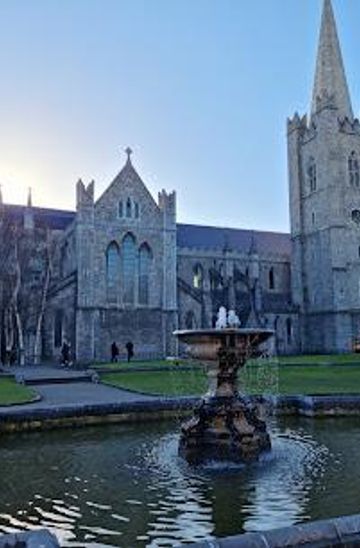
St Patrick's Cathedral: A Dublin Landmark
Explore Dublin's iconic St Patrick's Cathedral: a historic landmark with stunning Gothic architecture and a rich cultural heritage.
St Patrick's Cathedral, founded in 1191, stands as a significant historical and architectural landmark in Dublin, Ireland. As the National Cathedral of the Church of Ireland, it boasts a rich history, stunning Gothic architecture, and a serene atmosphere, drawing visitors from around the globe.
A brief summary to St Patrick's Cathedral
- St Patrick's Close, Dublin, D08 H6X3, IE
- Click to display
- Click to display
- Monday 9:30 am-5 pm
- Tuesday 9:30 am-5 pm
- Wednesday 9:30 am-5 pm
- Thursday 9:30 am-5 pm
- Friday 9:30 am-5 pm
- Saturday 9 am-5 pm
- Sunday 9 am-10:30 am

Know before you go
Hi, I'm Eve. Here are a few practical things to know before exploring St Patrick's Cathedral.
- Take a free guided tour to delve deeper into the cathedral's history and significance.
- Check the cathedral's schedule for services and events to enhance your visit.
- Wear comfortable shoes, as you'll be doing a lot of walking.
- Visit Marsh's Library, located next to the cathedral, for a glimpse into a preserved 18th-century library.
Do you manage this location?
Take control to get all the benefits, like improved information, better appearance, and stronger visibility across AI-powered discovery. Learn more
Activate your presence


Getting There
-
Walking
St Patrick's Cathedral is easily accessible on foot from Dublin city center. From Trinity College, walk southwest along Dame Street, then continue onto Lord Edward Street. Turn left onto Christ Church Place, then continue onto Patrick Street. The cathedral will be on your left. The walk is approximately 1.9km and should take about 23 minutes.
-
Public Transport
Numerous Dublin Bus routes serve St Patrick's Cathedral. From O'Connell Street, take bus routes 27, 49, 54a, 77a, or 151 to the 'Patrick's Cathedral' stop. The ride is approximately 20 minutes, and a single fare is around €3. Alternatively, the Green Line Luas (light rail) has stops within a 12-minute walk.
-
Taxi/Ride-Share
Taxis and ride-sharing services are readily available throughout Dublin. A taxi from Dublin city center to St Patrick's Cathedral typically takes 5-10 minutes, depending on traffic. Expect to pay around €8-€10 for the ride.
Discover more about St Patrick's Cathedral
Explore the best of what St Patrick's Cathedral has to offer













More about County Dublin
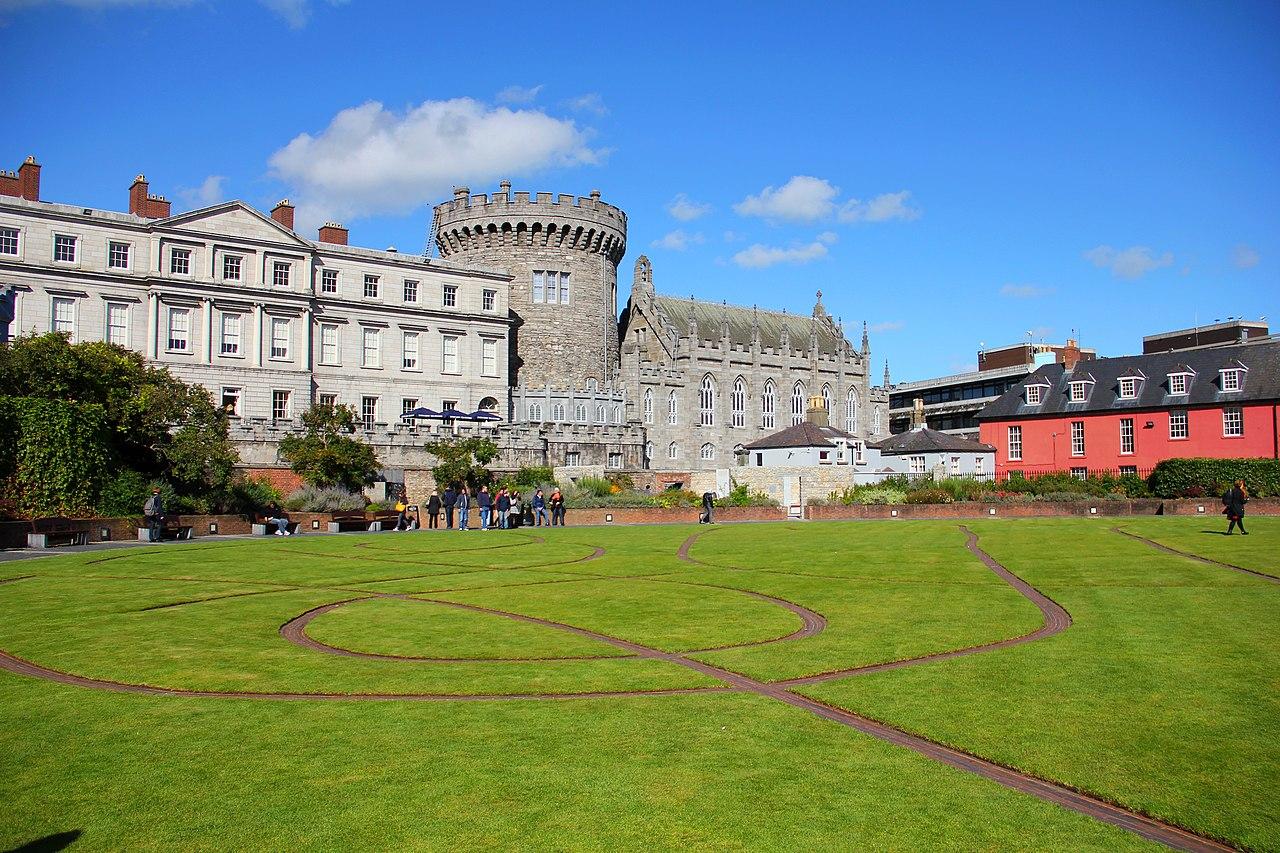
Discover the rich history, vibrant culture, and stunning landscapes of County Dublin, Ireland's dynamic capital region.
Tell me more about County Dublin
Explore Kevin Street Library, Dublin's cultural gem, where literature and community come together in a beautifully designed space.

Explore the historic Marsh's Library in Dublin – a treasure trove of literature and heritage showcasing Ireland's rich cultural history.