
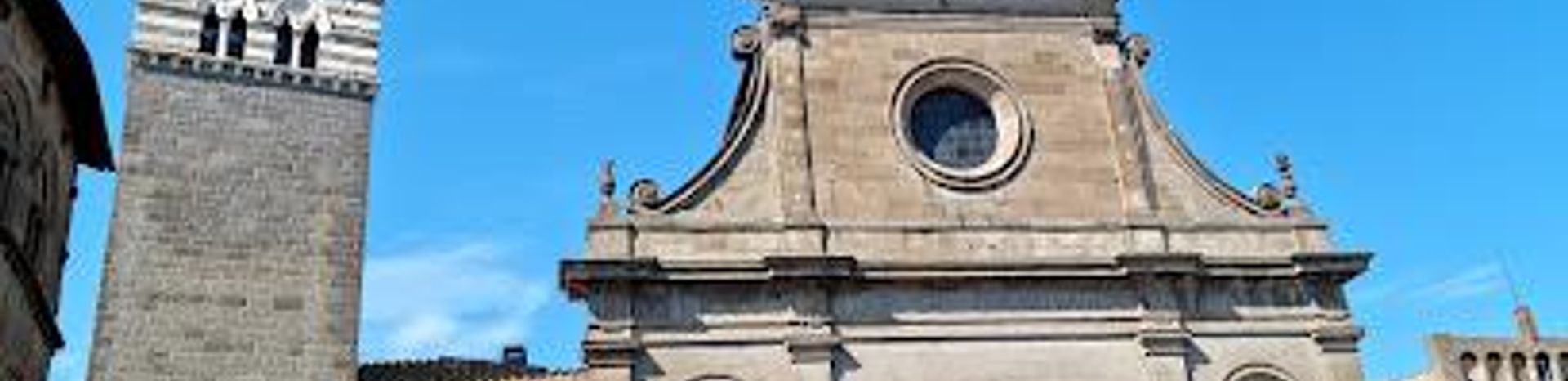
Viterbo Cathedral: A Blend of History and Art
Explore Viterbo Cathedral: a historic landmark with Romanesque architecture, Renaissance influences, and a rich papal history.
The Viterbo Cathedral, also known as the Cathedral of San Lorenzo, is a Roman Catholic cathedral built in the 12th century on the site of an ancient temple of Hercules. Its Romanesque structure and Renaissance-style facade offer a glimpse into the city's layered past.
A brief summary to Cathedral of Viterbo
- Piazza S. Lorenzo, Viterbo, Province of Viterbo, 01100, IT
- +393207911328
- Visit website
Local tips
- Visit early in the morning to avoid crowds and enjoy a peaceful experience.
- Take time to admire the detailed artwork and frescoes inside the cathedral.
- Explore the nearby Piazza San Lorenzo, perfect for taking photos and enjoying a coffee.

Getting There
-
Walking
From Viterbo's city center, such as Piazza del Plebiscito, walk northeast towards Piazza San Lorenzo. The cathedral is located on Piazza San Lorenzo, a short walk from the city's main attractions. The walk is approximately 5-10 minutes, depending on your starting point.
-
Public Transport
From Viterbo Porta Romana or Viterbo Porta Fiorentina train stations, take a local bus (Francigena) towards the city center. Bus lines C4 and C5 are useful for reaching the city center. Get off at a stop near Piazza del Plebiscito and walk to Piazza San Lorenzo. A single bus ticket costs approximately €1.00 - €1.50.
-
Taxi
Taxis are available throughout Viterbo. A taxi ride from Viterbo Porta Romana train station to the cathedral (approximately 3km) will cost around €10. Taxi fares start at €4.50, with an additional €1.60-€2.00 per kilometer.


