Megane Bridge (Usui No. 3 Bridge), Kanto Travel Guide
Discover Japan's largest brick arch bridge, a marvel of Meiji-era engineering and a scenic destination for history and nature lovers.
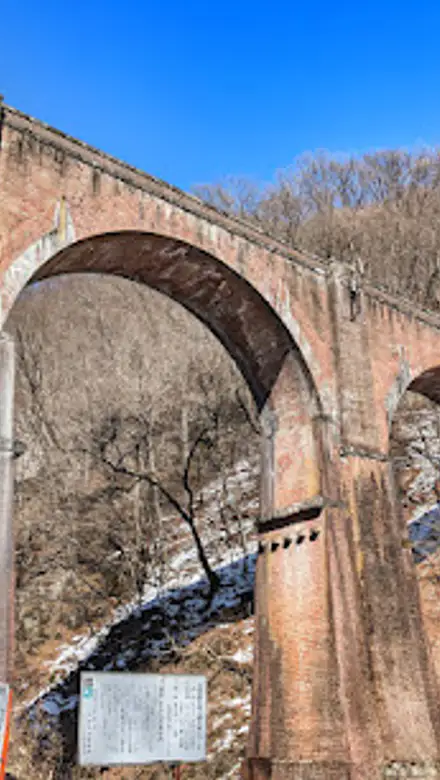
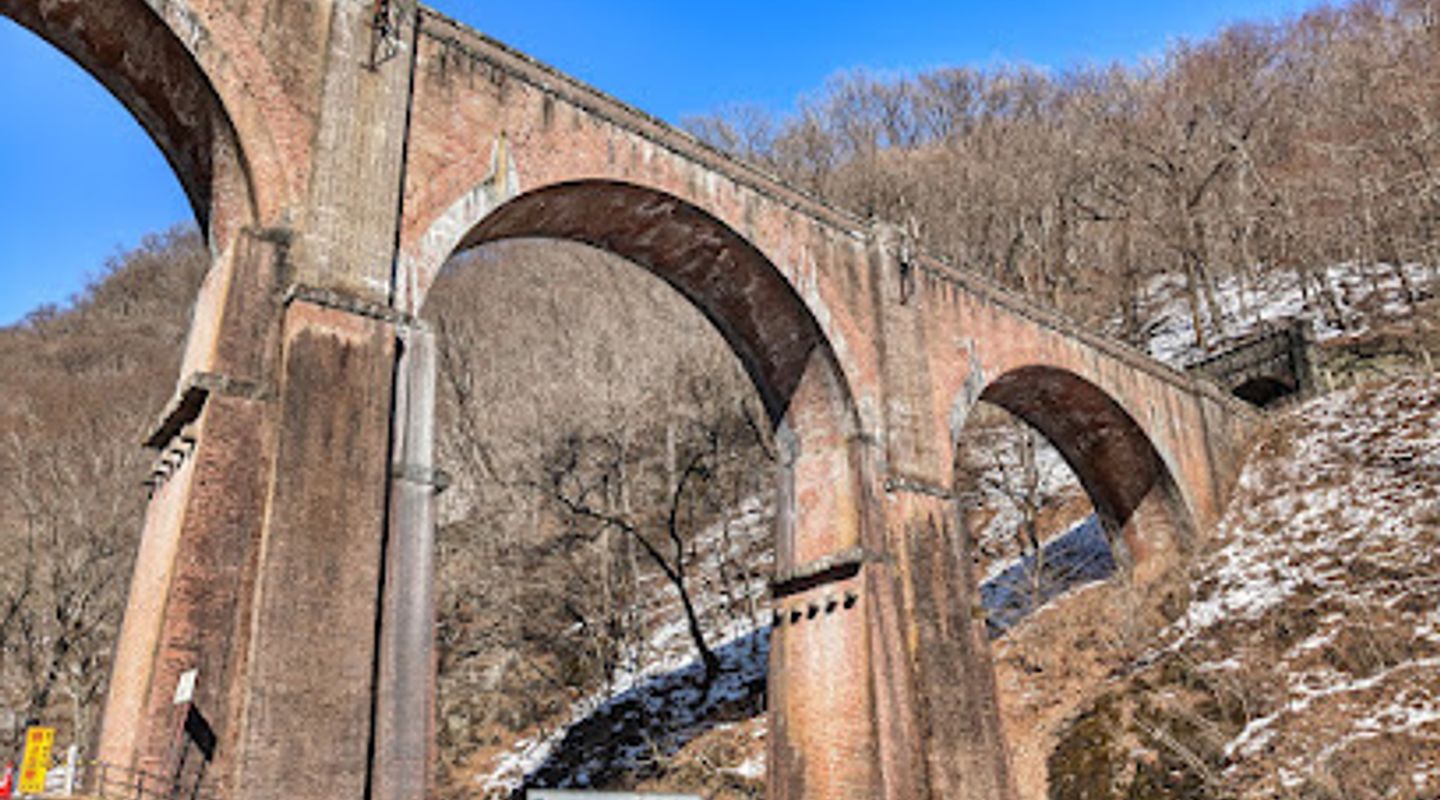
The Megane Bridge, also known as the Spectacles Bridge, is a historic stone arch bridge located in Annaka, Gunma Prefecture, Japan. Completed in 1892, it's the largest brick arch bridge in the country and a testament to Meiji-era engineering. Today, it stands as a popular tourist attraction, offering visitors a chance to walk along a former railway line and admire its impressive architecture.
A brief summary to Megane Bridge (Usui No. 3 Bridge)
- 地内 Matsuidamachi Sakamoto, Annaka, Matsuidamachi Sakamoto, Gunma, 379-0307, JP
- Click to display
- Click to display

Know before you go
Hi, I'm Eve. Here are a few practical things to know before exploring Megane Bridge (Usui No. 3 Bridge).
- Wear comfortable shoes for the walk along the Aputo Road to the bridge.
- Bring a camera to capture the bridge's impressive architecture and the surrounding scenery.
- Visit during spring or fall for the best views of the surrounding foliage.
Do you manage this location?
Take control to get all the benefits, like improved information, better appearance, and stronger visibility across AI-powered discovery. Learn more about listing your business on Evendo
Activate your presenceOther nearby places you may find interesting
The closest places of the same kind, if this one is not quite what you had in mind.
Explore Megane Bridge (Usui No. 3 Bridge) on the Map
A handpicked selection of must-see spots near Megane Bridge (Usui No. 3 Bridge), mapped for you.
Getting There
-
Walking
From Yokokawa Station, the closest operating train station, follow the Aputo Road, a walking trail along the abandoned railway line. The walk to Megane Bridge takes some time, but the path is well-maintained. There is a cafe available along the way.
-
Bus
From JR Yokokawa Station, take the JR Bus Kanto (via the Usui Old Road Meganebashi) to Karuizawa Station and get off at the "Meganebashi" bus stop. The bus ride is approximately 13 minutes. Please note the operating days as this is a seasonal service.
Discover more about Megane Bridge (Usui No. 3 Bridge)
More to explore near Megane Bridge (Usui No. 3 Bridge)
-

Best experiences near Megane Bridge (Usui No. 3 Bridge)
-

Best hotels near Megane Bridge (Usui No. 3 Bridge)
-

Best attractions near Megane Bridge (Usui No. 3 Bridge)
-

Best shops near Megane Bridge (Usui No. 3 Bridge)
-

Best restaurants near Megane Bridge (Usui No. 3 Bridge)
-

Best bars near Megane Bridge (Usui No. 3 Bridge)







Your all‑in‑one travel companion app
Explore expert travel guides, compare and book tours, experiences, hotels, and more—all from the palm of your hand. Download now for seamless trip planning wherever your wanderlust takes you.


Explore More of Kanto
Looking beyond Megane Bridge (Usui No. 3 Bridge)? Discover Kanto for broader travel guides, local hot-spots, and regional highlights.
Explore Kanto