
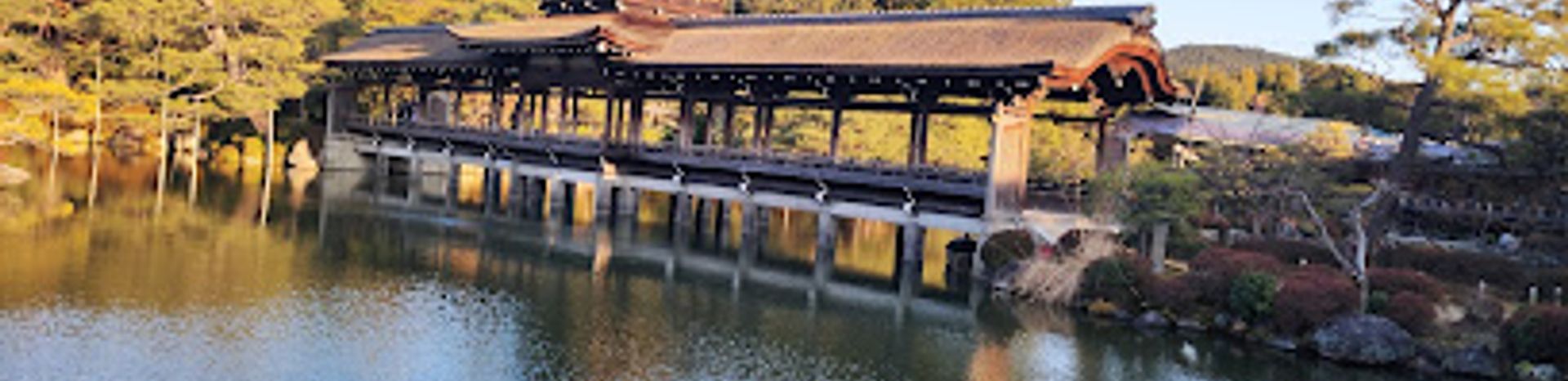
Heian Jingu: A Celebration of Kyoto's Imperial Past
Step back in time at Heian Jingu Shrine, a vibrant tribute to Kyoto's imperial past and the elegance of the Heian period.
Heian Jingu Shrine, built in 1895, commemorates Kyoto's 1100th anniversary as Japan's capital. A scaled replica of the Heian Imperial Palace, it enshrines Emperor Kanmu and Emperor Komei, offering visitors a glimpse into the Heian period's grandeur.
A brief summary to Heian Jingu
- 97 Okazaki Nishitennocho, Kyoto, Okazaki Nishitennocho, Sakyo Ward, Kyoto, 606-8341, JP
- +8175-761-0221
- Visit website
Local tips
- Visit during the Jidai Matsuri on October 22nd to witness a spectacular historical procession.
- Explore the Shin-en Garden for seasonal beauty; the weeping cherry blossoms in mid-April are especially stunning.
- Arrive early to avoid crowds, especially on weekends and holidays.
- Take time to appreciate the architecture, noting the Chinese influences and the shrine's replication of the Heian Imperial Palace.
- Check out the red seal station next to the main gate to purchase a unique souvenir.

Getting There
-
Public Transport
From Kyoto Station, take Kyoto City Bus number 5. Alight at the 'Okazaki Koen Bijutsukan/Heian Jingu-mae' bus stop, a 5-minute walk to the shrine. Alternatively, take the Karasuma Subway Line to Karasuma Oike Station, transfer to the Tozai Line, and get off at Higashiyama Station. The shrine is a 10-minute walk from Higashiyama Station. A single bus fare is ¥230. Subway fare is ¥260.
-
Taxi
From Kyoto Station, a taxi to Heian Jingu Shrine typically costs between ¥1500 and ¥2000, depending on traffic. The journey usually takes around 15-20 minutes. Taxis are readily available at the station's taxi stands.
-
Walking
From Higashiyama Station on the Tozai Subway Line, exit and walk east for approximately 10 minutes. Follow the signs for Heian Jingu Shrine, passing through the Okazaki area. Note that the route is about 1km.


