Saint George Maronite Cathedral, Beirut Travel Guide
Free Guide: Discover the spiritual heart of Beirut at Saint George Maronite Cathedral, a symbol of resilience and architectural beauty rooted in history.


A brief summary of Saint George Maronite Cathedral
Discover the spiritual heart of Beirut at Saint George Maronite Cathedral, a symbol of resilience and architectural beauty rooted in history.
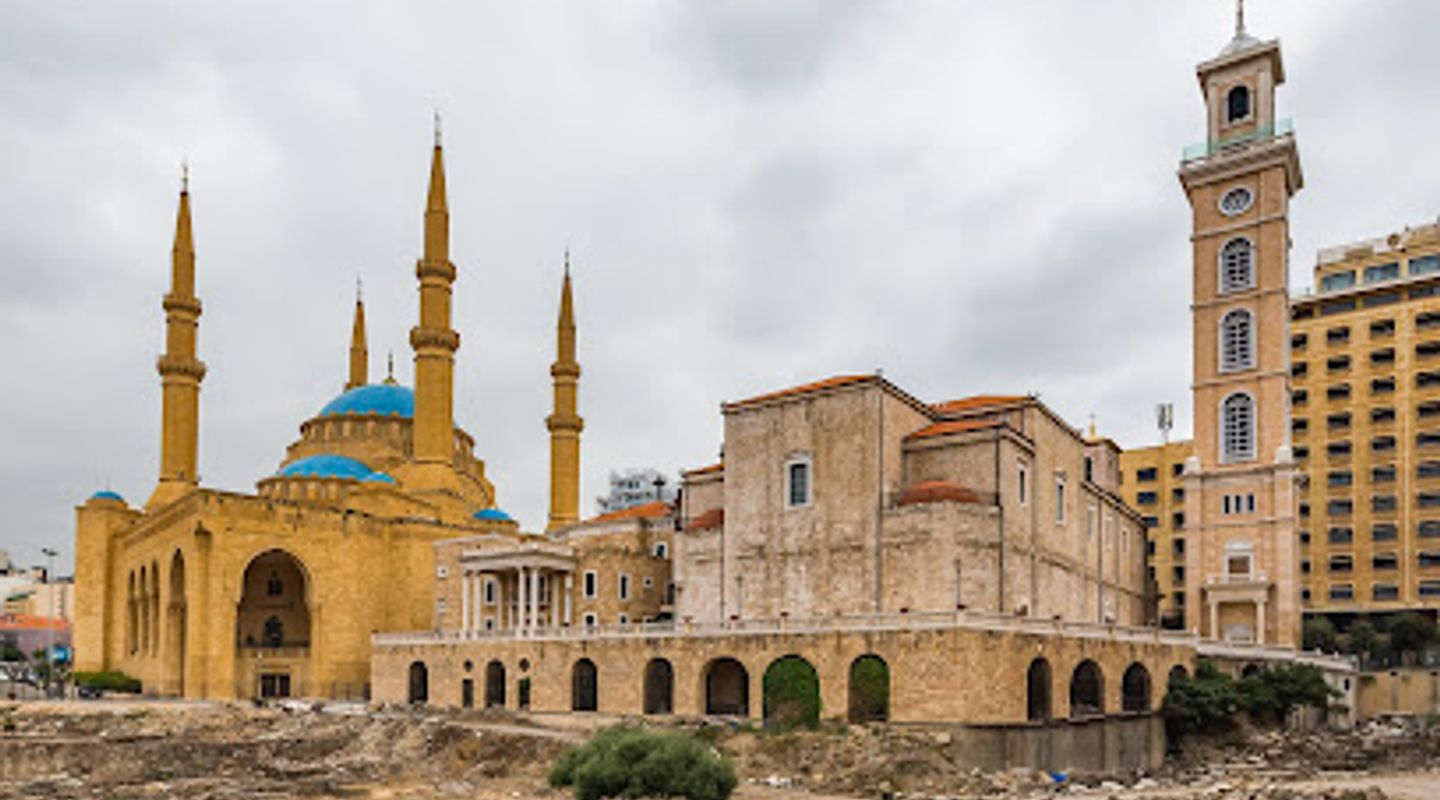
Saint George Maronite Cathedral, located in downtown Beirut, is a stunning example of Neoclassical architecture and a significant religious center for the Maronite community. Inspired by the Basilica di Santa Maria Maggiore in Rome, the cathedral stands as a testament to the city's rich history and the enduring spirit of its people.
Opening hours
- Mon6:30 am–5 pm
- Tue6:30 am–5 pm
- Wed6:30 am–5 pm
- Thu6:30 am–5 pm
- Fri6:30 am–5 pm
- Sat6:30 am–7 pm
- Sun6:30 am–2 pm
Opening hours as listed on the venue’s Google Business Profile. Hours can change for services and special events, so check with the venue before you go.
- Address
- VGW4+343, Beirut
- Phone
- Website
Getting there
Walking
Public Transport
Taxi
Discover more about Saint George Maronite Cathedral
Overview
Saint George Maronite Cathedral is the cathedral of the Maronite Catholic Archeparchy of Beirut, standing as a prominent religious and historical landmark in the heart of the city. Its construction, which began in 1884 and concluded in 1894, was inspired by the Basilica di Santa Maria Maggiore in Rome, showcasing a Neoclassical facade, interior, and plan designed by Italian architect Giuseppe Maggiore. The cathedral was built on the site of an earlier church dating back to 1755, which served the Maronite community.The cathedral's interior features a nave and two lateral aisles separated by rows of columns. The nave is adorned with a coffered ceiling with gilded and a double wooden structure, covered with golden leaves on a beige background, while the walls are decorated with stucco and marble. Above the main altar is a canopy with four columns. The cathedral also holds significance as the place where Pope John Paul II visited in 1997.Throughout its history, Saint George Maronite Cathedral has faced numerous challenges. It was heavily damaged during the Lebanese Civil War (1975-1990), suffering plunder and defacement. Restoration efforts began in 1997, and the cathedral was re-inaugurated in April 2000, regaining its original Renaissance cruciform shape. Significant archaeological remains, including a Hellenistic structure and part of the Roman Decumanus Maximus colonnaded street, were discovered and preserved beneath the forecourt. In 2016, a new campanile was inaugurated, standing 72 meters high. The cathedral also sustained damage during the Beirut explosions on August 4, 2020.Today, Saint George Maronite Cathedral stands as a symbol of faith, resilience, and cultural identity for the Maronite community in Beirut. It welcomes visitors to admire its architecture, explore its history, and experience its serene atmosphere.
Evendo Review Centre
 Google
Guest reviews
Explore Saint George Maronite Cathedral on the map
A handpicked selection of must-see spots near Saint George Maronite Cathedral, mapped for you.
Get your free copy of our complete guide to Saint George Maronite Cathedral, delivered straight to you.
Everything on this page, from opening hours and how to get there to Eve’s tips and the best time to go, in one PDF you can read offline, print or share.
Already have an account? Sign in
Your Saint George Maronite Cathedral guide is ready.
We'll send it to · Not you? Sign out

Getting your guide ready…
We are putting together a fresh copy of the Saint George Maronite Cathedral guide. This can take up to a minute.
This can take a few moments. If your browser asks, choose Allow so the download can start. You'll find the guide in your Downloads folder.
Nothing happened? Download it again
Sorry, the guide is taking longer than usual. Please try again in a minute, or get it by email instead.
Other nearby places you may find interesting
The closest places of the same kind, if this one is not quite what you had in mind.
-
-

-
-
-


Swipe for more places
More to explore near Saint George Maronite Cathedral
-
 Best experiences near Saint George Maronite Cathedral
-
 Best hotels near Saint George Maronite Cathedral
-
 Best landmarks near Saint George Maronite Cathedral
-
 Best attractions near Saint George Maronite Cathedral
-
 Best shops near Saint George Maronite Cathedral
-
 Best restaurants near Saint George Maronite Cathedral
-
 Best bars near Saint George Maronite Cathedral


Do you manage this location?
Take control to get all the benefits, like improved information, better appearance, and stronger visibility across AI-powered discovery.
Explore more

Explore more of Beirut
Discover the enchanting blend of history, culture, and modernity in Beirut, Lebanon's vibrant capital, known for its scenic beauty, delicious cuisine, and bustling nightlife.
Explore Beirut
Explore more of Lebanon
Discover Lebanon: A land of ancient history, vibrant culture, stunning landscapes, and delicious cuisine, nestled on the Mediterranean coast.
Explore Lebanon