Background

Fort Thüngen (Musée Dräi Eechelen): The Three Acorns Fort

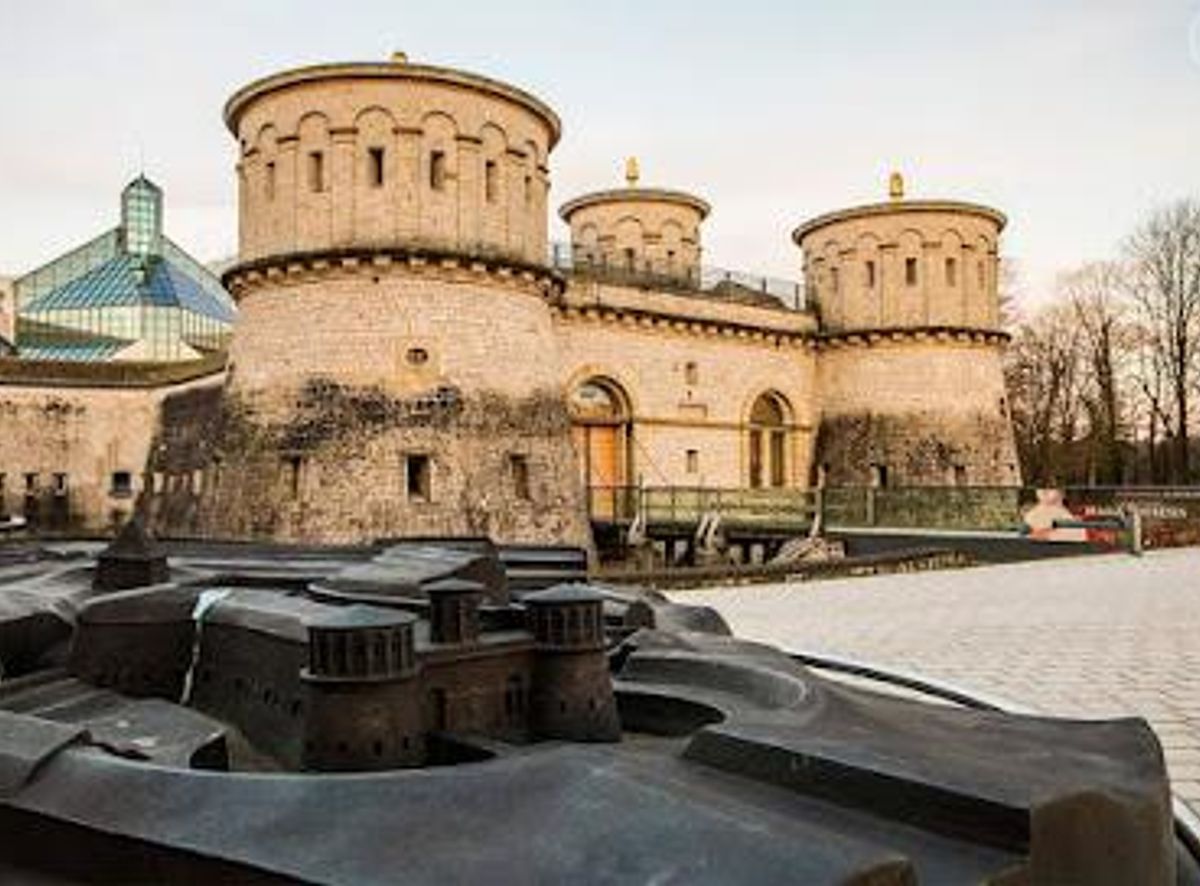
Historic 18th‑century Fort Thüngen (“Three Acorns”)—now Musée Dräi Eechelen—reveals Luxembourg’s fortress heritage through restored casemates, towers, and immersive exhibits.

Perched in Dräi Eechelen Park within Luxembourg City’s Kirchberg district, Fort Thüngen—nicknamed “Three Acorns” due to its three acorn‑topped towers—is a restored 18th‑century Austrian/Prussian fortification that now houses Musée Dräi Eechelen, chronicling Luxembourg’s history from the medieval era through the early 20th century.

A brief summary to Fort Thüngen

  • FK5, Luxembourg, Clausen, LU

Local tips

  • Visit on Wednesday evening for extended hours (open until ~20:00) to enjoy quieter exploration and golden light views.
  • Bring sturdy shoes—some areas involve uneven underground galleries and stairs.
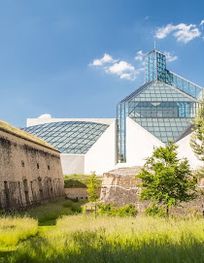
  • Combine your visit with nearby sites like MUDAM and Philharmonie; all are accessible via tram/bus at Philharmonie‑Mudam stop.
  • Take advantage of free audio guides in multiple languages to enhance the historical experience.
widget icon

Do you manage this location?

Take control to get all the benefits, like improved information, better appearance, and stronger visibility across AI-powered discovery. Learn more

Activate your presence

Unlock the Best of Fort Thüngen

Buy tickets

    No tickets available

Book tours with entry

    No tours available

Book tours without entry

    No tours available

Getting There

  • Entrance & Admission

    Admission is free at Musée Dräi Eechelen—no ticket needed.

  • Hours & Timing

    Open Tuesday, Thursday–Sunday 10 AM–6 PM; Wednesday until ~8 PM; closed Mondays—plan for evening visit if possible.

  • Transport & Access

    Accessible via bus/tram (Philharmonie‑Mudam stop) or funicular; nearby Parking Trois Glands if driving.

Discover more about Fort Thüngen

Fort Thüngen, known locally as Dräi Eechelen (Three Acorns), stands in Dräi Eechelen Park on the Kirchberg plateau of Luxembourg City. Constructed by the Austrians around 1732‑1733 to reinforce Luxembourg’s fortress defences, it was enlarged by the Prussians in 1836 and again in 1859‑1860 ([m3e.public.lu](https://m3e.public.lu/en/forts/fort-thuengen.html?utm_source=openai), [en.wikipedia.org](https://en.wikipedia.org/wiki/Fort_Th%C3%BCngen?utm_source=openai)).The site originally incorporated the earlier Redoute du Parc designed by Vauban, with Fort Thüngen featuring a distinctive arrow‑shaped redoubt, a crenellated gallery roughly 1.8 m wide, and a network of underground passages with 71 mine chambers—many of which survive to this day ([m3e.public.lu](https://m3e.public.lu/en/forts/fort-thuengen.html?utm_source=openai), [fondskirchberg.public.lu](https://fondskirchberg.public.lu/en/vivre-kirchberg/institutions-culturelles/3eechelen.html?utm_source=openai)). In the mid‑19th century, the Prussians excavated the earthen core to create nearly 953 m2 of casemates housing up to 500 soldiers, adding the three towers crowned by stone acorns—giving the fort its name ([m3e.public.lu](https://m3e.public.lu/en/forts/fort-thuengen.html?utm_source=openai), [fondskirchberg.public.lu](https://fondskirchberg.public.lu/en/vivre-kirchberg/institutions-culturelles/3eechelen.html?utm_source=openai)).Following the 1867 Treaty of London, most of the fort was dismantled between 1870 and 1874; only the acorn‑topped towers and some foundational structures remained, later buried beneath earth and greenery. The site was redesigned as a public park by Parisian landscape architect Édouard André ([m3e.public.lu](https://m3e.public.lu/en/forts/fort-thuengen.html?utm_source=openai), [fondskirchberg.public.lu](https://fondskirchberg.public.lu/en/vivre-kirchberg/institutions-culturelles/3eechelen.html?utm_source=openai)).Rediscovered and studied in the early 1990s, Fort Thüngen was fully restored in accordance with international conservation standards. In 2012, it reopened as Musée Dräi Eechelen, Luxembourg’s fortress museum. The museum occupies the restored redoubt and its casemates, presenting over 600 objects illustrating Luxembourg’s evolution from the Burgundian conquest of 1443 up to the construction of the Adolphe Bridge in 1903, through immersive underground galleries and multimedia exhibits ([en.wikipedia.org](https://en.wikipedia.org/wiki/Mus%C3%A9e_Dr%C3%A4i_Eechelen?utm_source=openai), [m3e.public.lu](https://m3e.public.lu/en/musee/historique-batiment.html?utm_source=openai)).Today, Fort Thüngen serves as a singular survivor of Luxembourg’s famed fortress system, offering panoramic views of the surrounding cityscape and an evocative journey through centuries of history—from military architecture to national identity—all within an atmospheric, partially subterranean museum experience.
Mobile App

Your all‑in‑one travel companion app

Explore expert travel guides, compare and book tours, experiences, hotels, and more—all from the palm of your hand. Download now for seamless trip planning wherever your wanderlust takes you.


More about Dudelange

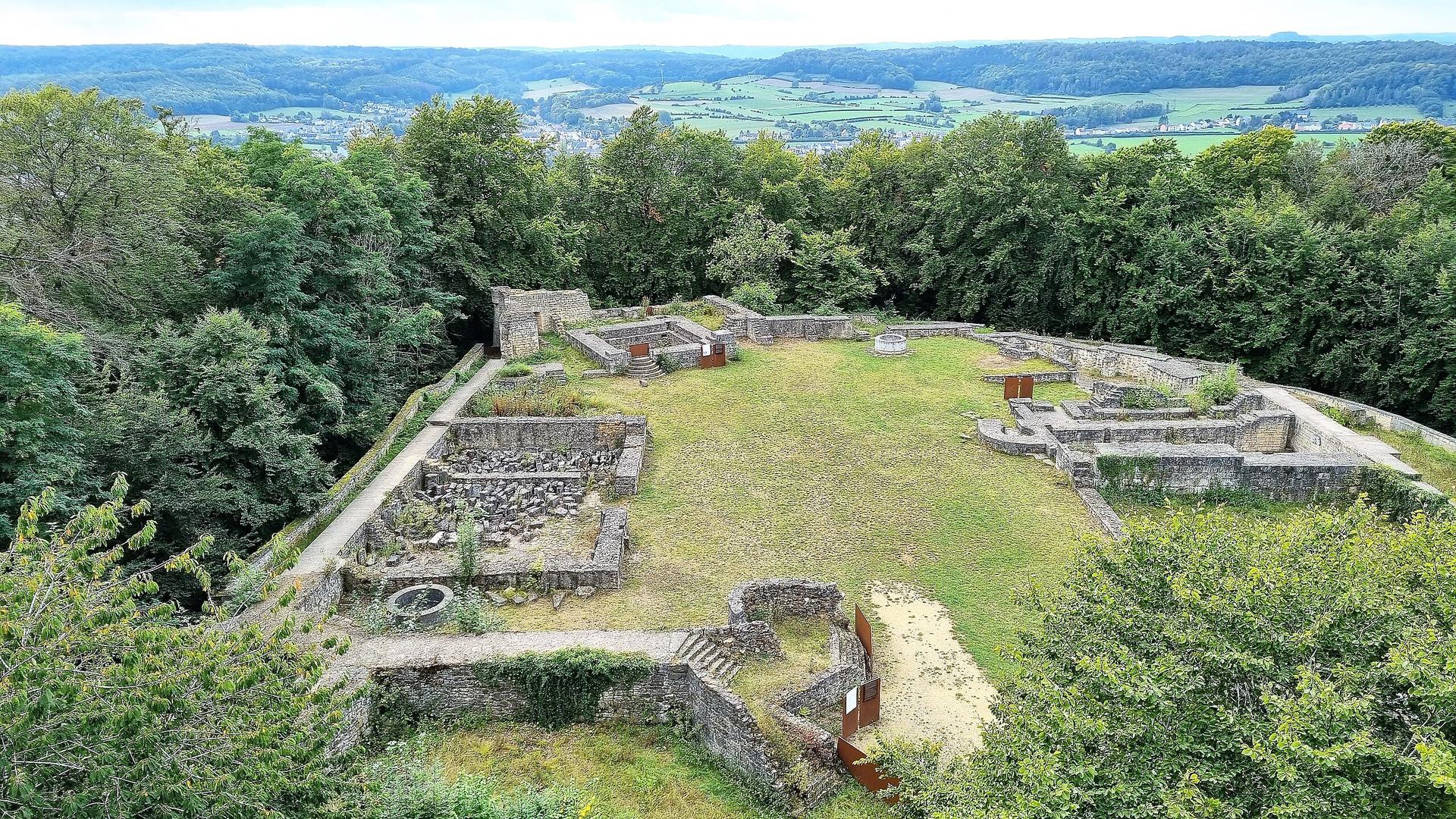
File:Dudelange, château du Mont Saint-Jean (101).jpg - Wikimedia Commons

Dudelange, Luxembourg: A charming blend of history, culture, and nature. Explore historic sites, vibrant arts, and scenic natural reserves in this delightful city.

Tell me more about Dudelange
Select Currency