
St Per's Kyrkoruin, Uppland Travel Guide
A compact, atmospheric 12th‑century stone ruin whose tall central tower still marks Sigtuna’s medieval heart and invites close visual study.
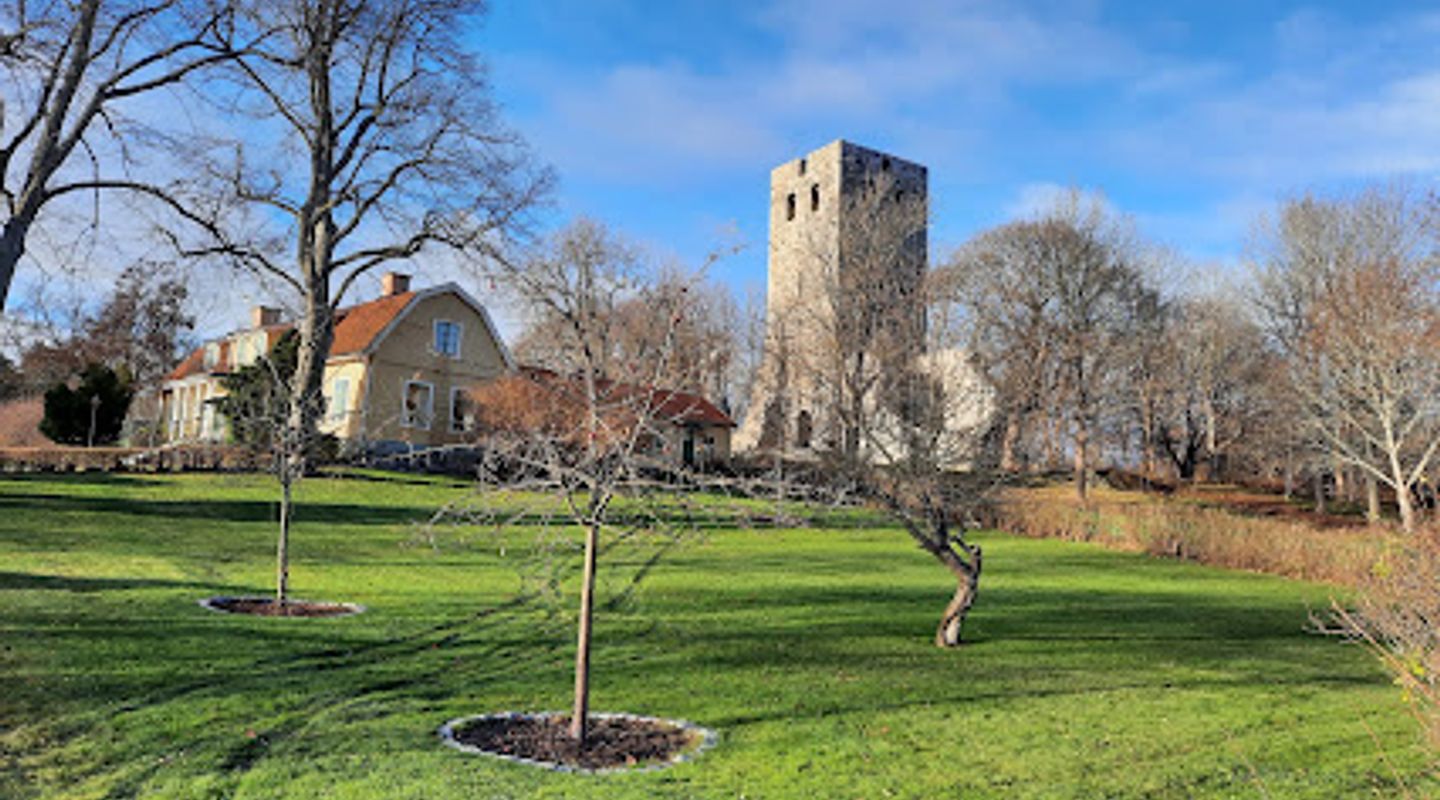
Sankt Pers kyrkoruin is the remains of a monumental 12th‑century stone church that still anchors Sigtuna’s medieval townscape; its tall, square central tower, fragmentary nave walls and weathered sandstone convey a sense of early royal and ecclesiastical ambition in Sweden’s oldest town. Set on a slight rise beside the parsonage, the ruin is an evocative mix of carved masonry, mossed joints and open sky, well suited to short contemplative visits or historical photography.
A brief summary to St Per's Kyrkoruin
- Sankt Persgatan, Sigtuna, 193 32, SE
- Click to display
- Duration: 0.25 to 1 hours
- Free
-
 Outdoor
- Mobile reception: 4 out of 5

Know before you go
Hi, I'm Eve. Here are a few practical things to know before exploring St Per's Kyrkoruin.
- Wear sturdy shoes—ground around the ruin can be uneven and grassy, especially after rain.
- Bring a telephoto or mid‑range lens to capture carved masonry details and the tower’s openings without entering fenced areas.
- Visit at golden hour for warm light on the sandstone and stronger silhouettes against the sky.
- Respect conservation fences and information boards; parts of the ruin may be closed off for safety or preservation.
Do you manage this location?
Take control to get all the benefits, like improved information, better appearance, and stronger visibility across AI-powered discovery. Learn more about listing your business on Evendo
Activate your presenceExplore St Per's Kyrkoruin on the Map
A handpicked selection of must-see spots near St Per's Kyrkoruin, mapped for you.
Getting There
-
Regional bus + short walk
Public bus from Märsta railway hub to central Sigtuna takes roughly 20–30 minutes depending on timetable; services typically run every 20–60 minutes and have step‑free access on modern vehicles but may be less frequent evenings and Sundays. Expect a 5–10 minute walk over paved town streets from the bus stop to the ruin; terrain is level but includes narrow historic lanes. Single adult fares are generally in the range of 30–60 SEK one way depending on ticket type and operator.
-
Car
Driving from the wider region to central Sigtuna takes about 15–30 minutes from the nearby motorway depending on origin; parking is available in town but spaces can be limited during summer weekends. Parking usually involves municipal pay zones and short walks across cobbled or paved streets; be aware that some town centre roads are narrow and parking restrictions apply.
-
Train to Märsta + bus
Take a regional train from Stockholm to Märsta (approximately 25–30 minutes), then a local bus towards Sigtuna (10–20 minutes); combined transfer time typically totals 40–60 minutes. Train fares depend on operator and ticket class (expect roughly 60–120 SEK single trip from central Stockholm including connecting fares). Services run frequently during daytime but reduce in late evenings and on public holidays.
For the on-the-go comforts that matter to you
-
 Information Boards
-
 Seating Areas
-
 Trash Bins
Discover more about St Per's Kyrkoruin
An ancient monument in the heart of Sigtuna
Sankt Pers kyrkoruin sits on a small elevated plot at the western edge of the medieval core of Sigtuna, its heavy, square central tower still projecting above the low timber roofs of the town. The ruin dates to the early 1100s and was once a major stone church built in the era when royal authority and the new Christian church were being established in Sweden. What you see today—thick masonry walls, high window openings and the stump of the central tower—are the survivors of a much grander building that dominates the memory of the town’s formative centuries.Architecture and construction: stone, sequence, mystery
Archaeological study suggests the church was built in stages during the 12th century: an eastern section with choir and the central tower appeared first, followed by a nave and western tower elements. The use of worked sandstone and the scale of the central tower mark the ruin out as exceptional for a small town; its proportions and details invite questions about patrons, craftsmen and intended functions. The tower has multiple high-set openings and evidence of wooden fittings, and surviving masonry shows repairs and later reuse of stone—an architectural palimpsest rather than a single moment frozen in time.The ruin’s role in medieval Sigtuna
Sankt Per was part of a compact cluster of medieval stone churches and ecclesiastical sites in Sigtuna, a town founded in the Viking age and important for early Swedish kingship and minting. For centuries the church stood as both religious centre and visible sign of authority; scholars debate whether it served primarily as a cathedral, a royal church, or a votive foundation with connections to seafaring patrons. Whatever its original function, the ruin today testifies to Sigtuna’s role as an early focal point for power, worship and long‑distance craft networks that brought dressed stone and masonry skill to Uppland.Material traces and conservation
Close inspection rewards patience: coarse lime mortar, worn tooling marks on sandstone blocks, traces of later patching and the layered sky visible through former window apertures. Over centuries the site provided building stone for the town and fell into ruin by the early modern period; conservation work in recent decades has stabilised the remains and made them safe to view. The ruin is interpreted through on‑site panels and by local museums, and its materials and weathered surfaces are an instructive field laboratory for those interested in medieval building techniques and long‑term decay processes.Atmosphere and seasonal character
The ruin’s character changes with light and season: in sharp winter air the pale stone reads like a carved map of centuries, while green summer ivy and grass soften the skeleton and frame views of the town and surrounding birch trees. Rain brings out the colour of the sandstone and the smell of damp mortar; in late afternoon the tower casts long shadows across the grassy plot. The modest footprint of the site makes visits brief but repeatedly rewarding—each visit focuses attention on material detail, silhouette and the silence of an open ruin in a living town.Nearby context and interpretive value
Sankt Pers kyrkoruin is sited beside the old parsonage and within walking distance of other medieval remains, runic stones and a small museum collection that together map Sigtuna’s early urban and ritual landscape. The ruin functions as a tangible anchor for understanding how stone churches were used to project authority and identity in the region; for photographers and history‑minded visitors it offers a concentrated encounter with craft, liturgy and civic ambition preserved in fragmentary form.












Your all‑in‑one travel companion app
Explore expert travel guides, compare and book tours, experiences, hotels, and more—all from the palm of your hand. Download now for seamless trip planning wherever your wanderlust takes you.


Explore More of Uppland
Looking beyond St Per's Kyrkoruin? Discover Uppland for broader travel guides, local hot-spots, and regional highlights.
Explore Uppland