

Gamla staden, Kalmar Travel Guide
Wander the medieval streets of Kalmar's original heart, where ancient walls and serene churchyards reveal layers of Sweden's trading past beside mighty Kalmar Castle.
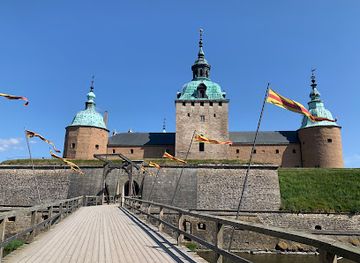
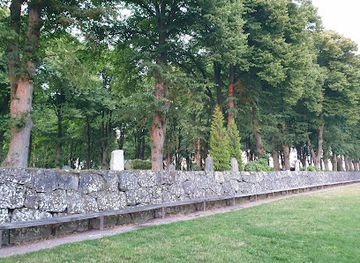
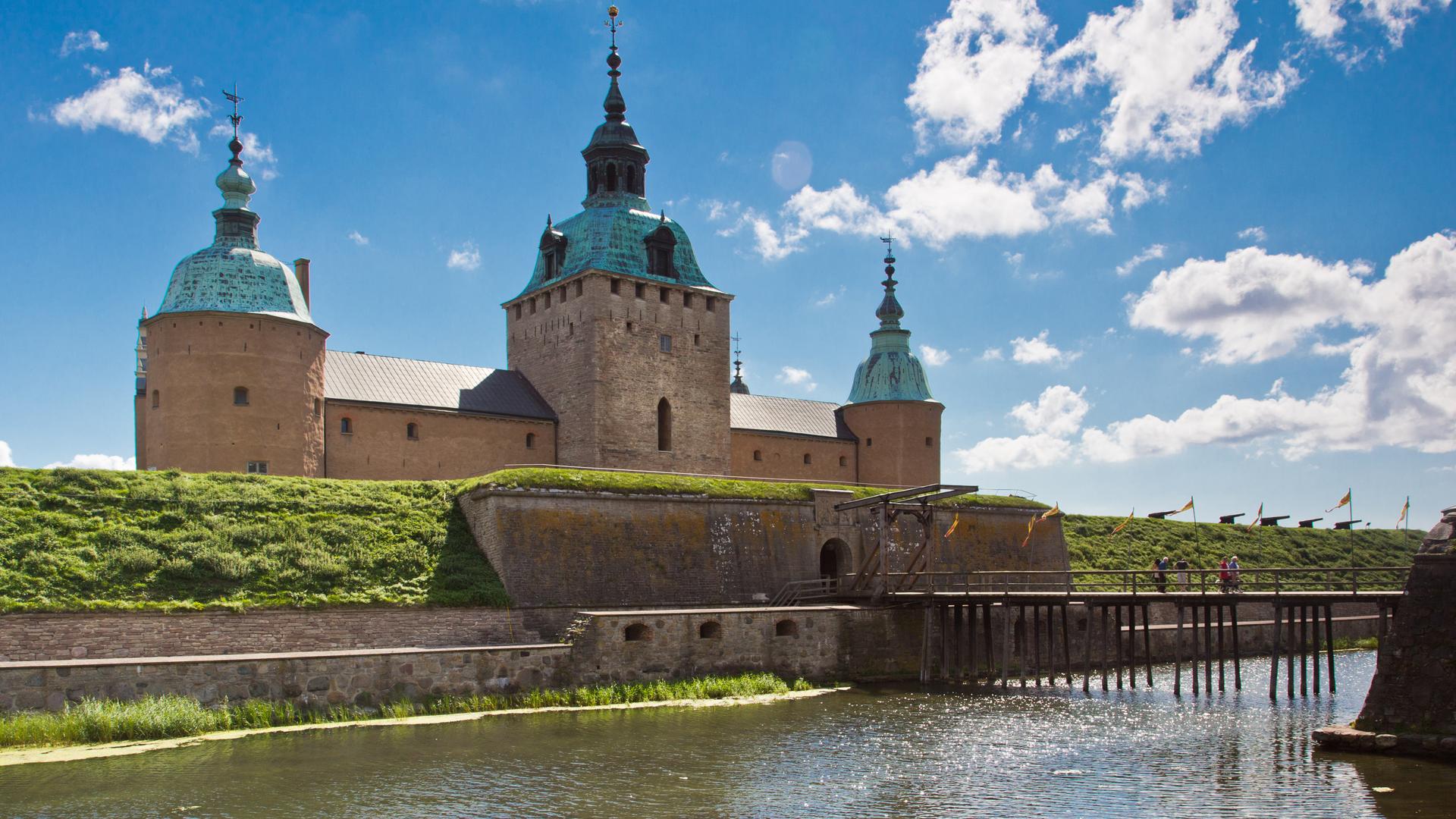
Gamla Stan in Kalmar preserves the medieval heart of one of Sweden's oldest cities, featuring winding cobblestone alleys, remnants of ancient city walls, and charming 18th- and 19th-century houses amid the ruins of a once-thriving settlement from the 1200s. Adjacent to Kalmar Castle, this historic district evokes the era when Kalmar was a key trading hub and political center, with visible traces of its layered past including the site of the old churchyard and borgar estates. Today, it offers a serene stroll through time, blending atmospheric stone structures with lush green spaces around Gamla kyrkogården.
A brief summary to Gamla staden
- Kalmar, 392 33, SE
- Duration: 0.5 to 1.5 hours
- Free
-
 Outdoor
- Mobile reception: 5 out of 5

Know before you go
Hi, I'm Eve. Here are a few practical things to know before exploring Gamla staden.
- Visit Gamla kyrkogården for a peaceful pause amid wildflowers and historical plaques marking the site's long spiritual legacy.
- Trace visible remnants of the old city wall along paths for a tangible connection to 13th-century defenses.
- Explore at dusk when soft lighting enhances the golden hues of stone houses and creates evocative shadows.
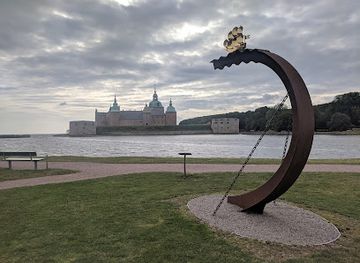
- Combine with a Kalmar Castle visit, as the districts adjoin seamlessly for a full historical immersion.
Do you manage this location?
Take control to get all the benefits, like improved information, better appearance, and stronger visibility across AI-powered discovery. Learn more about listing your business on Evendo
Activate your presenceOther nearby places you may find interesting
The closest places of the same kind, if this one is not quite what you had in mind.

Explore Gamla staden on the Map
A handpicked selection of must-see spots near Gamla staden, mapped for you.
Getting There
-
Walking
From Kalmar Centralstation, walk 20-25 minutes along smooth sidewalks and pedestrian paths toward the castle area; fully accessible with no steep inclines, suitable year-round.
-
Bus
Take city bus line 10 or 12 from Resecentrum to Slottet stop, 10-15 minutes travel time with services every 15-30 minutes; single ticket 25-35 SEK, exact change or app payment required.
-
Bicycle
Rent bikes from city stations near the harbor, 10-12 minutes pedal on dedicated lanes; free for first hour via app, helmet recommended, secure racks available nearby.
-
Taxi
Hail taxi from train station rank, 5-8 minutes ride; 100-150 SEK depending on traffic, available 24/7 but wait times longer off-peak.
For the on-the-go comforts that matter to you
-
 Seating Areas
-
 Trash Bins
-
 Drinking Water
-
 Information Boards
Discover more about Gamla staden
Medieval Origins and Urban Growth
Gamla Stan emerged in the early 1200s as Kalmar's primary settlement on the mainland, parallel to the island community on Slottsholmen. As Kalmar Castle construction began in the late 13th century under Magnus Ladulås, residents relocated here, fostering a bustling urban core protected by early city walls and towers. This era marked Kalmar as a vital trading port along ancient routes in Kalmarsund, drawing merchants and supporting institutions like a Dominican monastery and a helgeandshus.The district's layout reflected medieval prosperity, with dense wooden buildings clustered around central sites. Its strategic position near the castle made it a hub for commerce and defense, enduring raids such as the 1123 Norwegian ledung attack led by Sigurd Jorsalafare.Decline Through Fire and War
Catastrophic events reshaped Gamla Stan. The devastating fire of 1647 razed much of the wooden structures, accelerating plans to relocate the city to Kvarnholmen, initiated by Axel Oxenstierna in 1639. During the Skåne War in 1677, Danish assaults further demolished the area, ending its role as the city center. Bykyrkan, or St. Nikolaikyrkan, stood at the heart until its destruction in 1678, leaving Gamla kyrkogården as a poignant grassy expanse amid ruins.Post-relocation, the site lay largely abandoned, its buried medieval layers preserved underground, occasionally revealed through archaeological digs.Revival in the 18th Century
From the late 1700s, affluent borgare families redeveloped Gamla Stan into elegant malmgårdar, or country estates, introducing stone and timber houses that define its current character. By the 1800s, the neighborhood solidified with winding gränder, low-profile buildings, and preserved wall fragments, creating a picturesque contrast to the fortified new city.This phase blended rural charm with urban echoes, as some structures like Berghs trähus were salvaged from the old site and relocated, carrying forward fragments of the past.Architectural Layers and Atmosphere
Wander narrow lanes flanked by weathered stone walls and pastel-hued wooden facades, where remnants of the medieval muren snake through the landscape. Gamla kyrkogården provides a tranquil anchor, its open green space dotted with historical markers evoking the district's spiritual core. The built environment mixes 18th-century simplicity with subtle industrial touches from later adaptations.Sunlight filters through tree canopies, casting shadows on uneven cobblestones, while the proximity to Kalmar Castle adds a majestic backdrop without overwhelming the intimate scale.Cultural Echoes of Kalmar's Golden Age
Though no longer the political stage for events like the 1397 Kalmar Union—formed nearby at the castle—Gamla Stan embodies the city's medieval stature. Its streets whisper of Hansan trade rivalries, Vasatid renovations, and gritty sieges like the Kalmar War of 1611-1613. Today, it stands as a living archive, where every corner invites reflection on Sweden's formative centuries.Archaeological insights continue to uncover artifacts, reinforcing its status as a window into pre-industrial Kalmar.












Your all‑in‑one travel companion app
Explore expert travel guides, compare and book tours, experiences, hotels, and more—all from the palm of your hand. Download now for seamless trip planning wherever your wanderlust takes you.


Explore More of Kalmar
Looking beyond Gamla staden? Discover Kalmar for broader travel guides, local hot-spots, and regional highlights.
Explore Kalmar
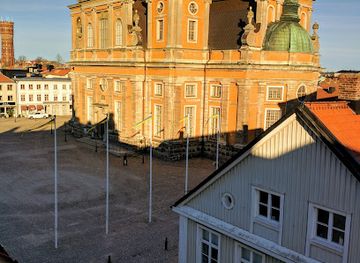
Kalmar's intimate 17th-century square, ringed by Karolinska stone houses and the oldest wooden survivor, where history unfolds in quiet architectural harmony.
Charming 1864 villa hotel in Kalmar's park district, steps from the castle, blending historic allure with garden serenity and castle views.
