
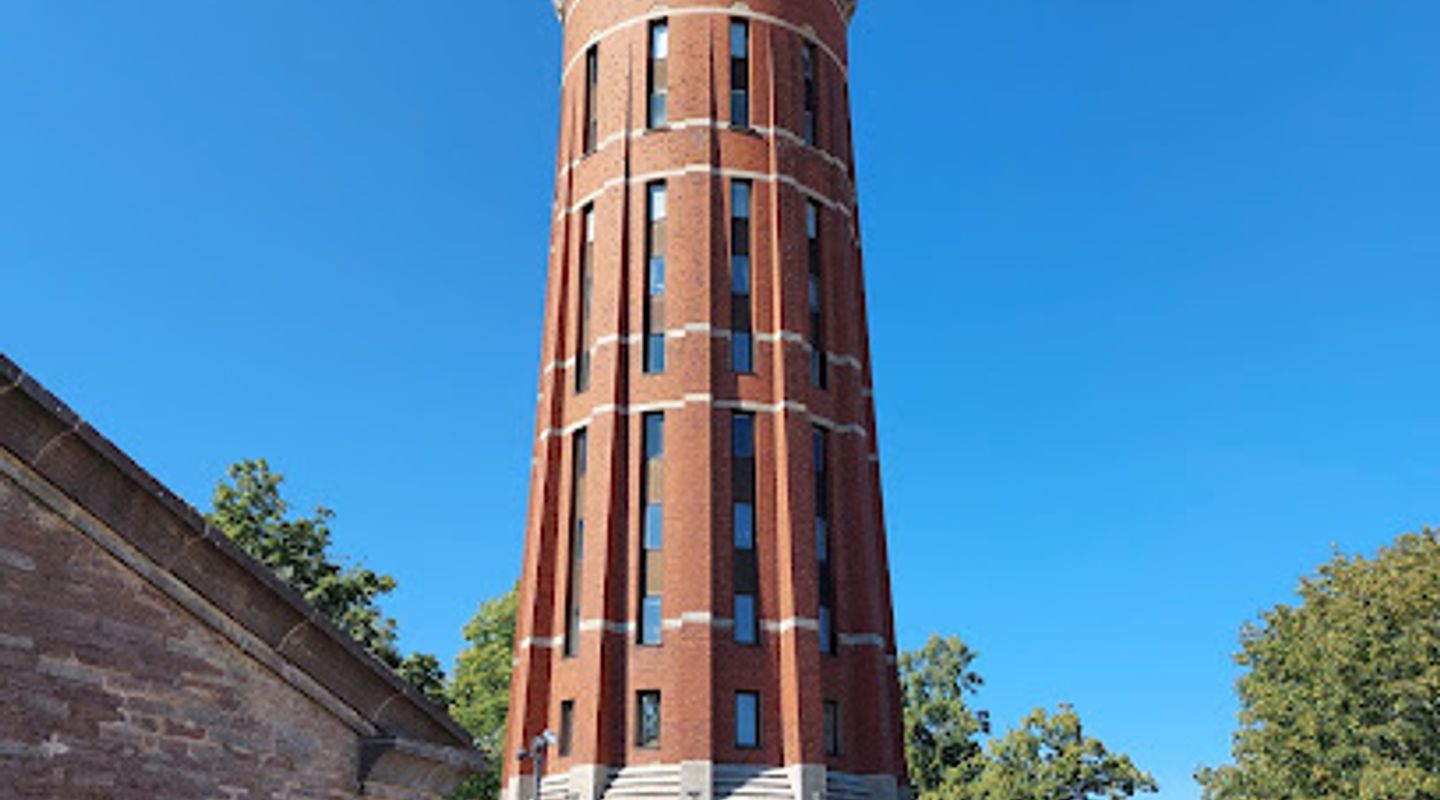
Old Water Tower, Kalmar Travel Guide
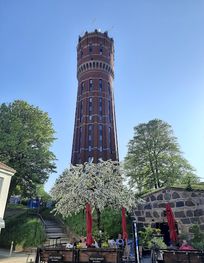
A late-19th-century brick water tower on Kvarnholmen—an industrial relic turned residential landmark that punctuates Kalmar’s historic skyline.
The Old Water Tower on Larmgatan is Kalmar’s tall, brick sentinel—built around the turn of the 20th century to serve city firefighting and water needs, later decommissioned and sensitively converted into apartments. Rising from Kvarnholmen with strong vertical lines and a steep roof, the tower is a local landmark that links Kalmar’s industrial-era practicalities with the atmospheric historic centre nearby.
A brief summary to Old Water Tower
- Larmgatan 13, Kalmar, 392 32, SE
- Duration: 0.25 to 1 hours
- Free
-
 Outdoor
- Mobile reception: 4 out of 5

Know before you go
Hi, I'm Eve. Here are a few practical things to know before exploring Old Water Tower.
- Respect private residences: the tower now contains apartments so views are exterior only and avoid peering into windows.
- Visit in late afternoon for warm light on the brickwork and glimpses across rooftops toward the sea.
- Combine a stop here with a walk around Kvarnholmen to see the tower in context with Kalmar Castle, the cathedral and the city park.
Do you manage this location?
Take control to get all the benefits, like improved information, better appearance, and stronger visibility across AI-powered discovery. Learn more about listing your business on Evendo
Activate your presenceOther nearby places you may find interesting
The closest places of the same kind, if this one is not quite what you had in mind.
Explore Old Water Tower on the Map
A handpicked selection of must-see spots near Old Water Tower, mapped for you.
Unlock the Best of Old Water Tower
Buy tickets
-
No tickets available
Book tours with entry
-
No tours available
Book tours without entry

Getting There
-
Bus
City bus service from Kalmar central bus station: frequent departures take about 10–20 minutes to the Kvarnholmen area depending on timetable; services run less often late evenings and Sundays; a single ticket costs roughly 30–45 SEK per adult when purchased on board or via the regional app.
-
Train + Walk
Regional train to Kalmar central station followed by a 10–20 minute flat walk across the town centre to Kvarnholmen; the train leg from nearby regional towns typically takes 20–60 minutes with tickets around 50–150 SEK depending on origin and advance purchase; walking terrain is paved and suitable for most mobility levels.
-
Taxi / Ride-hail
Local taxi from Kalmar city centre to Larmgatan typically takes 6–12 minutes with variable traffic; fares usually range from 120–220 SEK depending on time and exact pickup point; available 24/7 though late-night service may cost extra.
For the on-the-go comforts that matter to you
-
 Seating Areas
-
 Information Boards
-
 Trash Bins
Discover more about Old Water Tower
An industrial-era sentinel reborn
The Old Water Tower in Kalmar was constructed during the late 19th century and brought into use around 1900 as a practical civic work: a water reservoir designed to improve firefighting capacity and supply for the town. Its tall, narrow profile and sturdy masonry reflect utility first—an engineering monument that became an unmistakable part of Kalmar’s skyline. The structure remained in service until the early 1970s, when a newer supply installation replaced it and the tower’s original function came to an end.From utility to domestic architecture
After being taken out of commission the tower avoided demolition and instead underwent a transformation in the late 20th century. Internally reconfigured, it became residential — an unusual adaptive reuse that preserved the exterior mass and roofline while giving the interior a new life as apartments. The conversion kept the tower’s vertical character intact, so from the street it still reads as an industrial relic despite its domestic present.How it looks and what makes it distinctive
The tower stands as a tall, cylindrical or polygonal brick volume capped with a steep roof; its height and simple silhouette make it visible from several points on Kvarnholmen. Small, regularly spaced windows puncture the façade, offering rhythm and scale against the tower’s broad masonry surfaces. Its materiality—brick and traditional roof coverings—ties it visually to Kalmar’s older built fabric while the tower’s scale gives it a landmark quality within the lower-rise harbour quarter.Setting within Kvarnholmen and the townscape
Placed on Kvarnholmen, the tower sits close to Kalmar’s historical core where the castle, cathedral and compact streets form a coherent urban ensemble. The tower reads as part of the city’s layered history: medieval fortifications, 17th–19th-century civic architecture and later industrial infrastructure. In evening light the building can pick up warm tones, and when lit it contributes to the atmospheric silhouette around the old harbour and city park.Everyday experience and sensory notes
Approach the tower and you’ll notice the solid, resonant quality of its brick exterior and the narrow street scale nearby. Sounds are typically those of a quiet residential quarter—footsteps, distant harbour activity, gull calls in warmer months. From higher windows the view opens across rooftops toward the sea and the Öland Bridge farther east, offering framed slices of Kalmar’s maritime setting that contrast with the tower’s compact footprint.Why it matters now
The Old Water Tower is a local example of practical heritage: an industrial-utility building that was retained and adapted rather than removed. It stands as a record of turn-of-the-century municipal investment in public utilities and as an instance of how historic infrastructure can be repurposed sensitively for contemporary city life. As such it contributes to the texture and narrative of Kalmar’s Kvarnholmen, where layers of defensive, civic and domestic architecture are read together.












Your all‑in‑one travel companion app
Explore expert travel guides, compare and book tours, experiences, hotels, and more—all from the palm of your hand. Download now for seamless trip planning wherever your wanderlust takes you.


Explore More of Kalmar
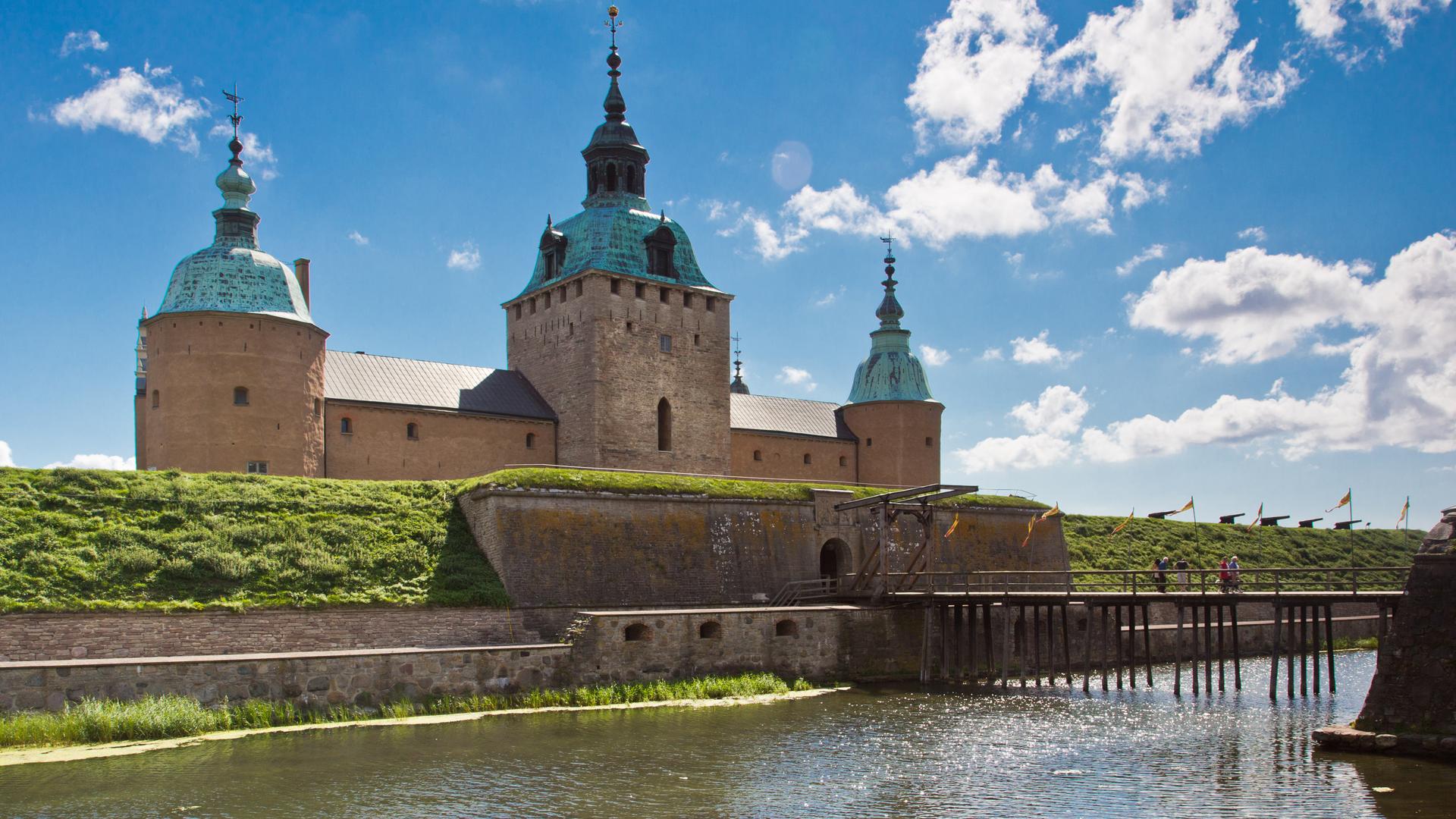
Looking beyond Old Water Tower? Discover Kalmar for broader travel guides, local hot-spots, and regional highlights.
Explore Kalmar
Discover Urshult's last original windmill: a storm-surviving stolpkvarn evoking Småland's rural soul amid serene fields and forests.
Kalmar's iconic trio of 17th-century wooden houses, stepping down in size along a cobblestone lane— a photogenic emblem of Sweden's humble historic heart.
