The Opposite Sphere (Rostbollen) Travel Guide
Free Guide: A monumental weathered‑steel sphere—Luleå’s rusted icon that fuses industrial history with striking sculptural scale.


A brief summary of The Opposite Sphere (Rostbollen)
A monumental weathered‑steel sphere—Luleå’s rusted icon that fuses industrial history with striking sculptural scale.
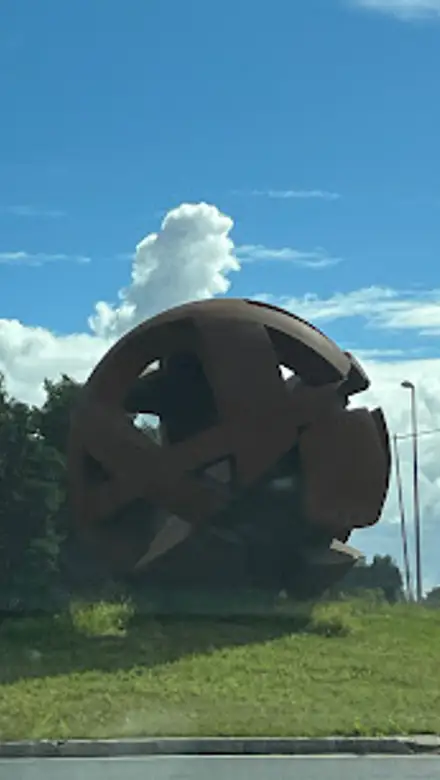
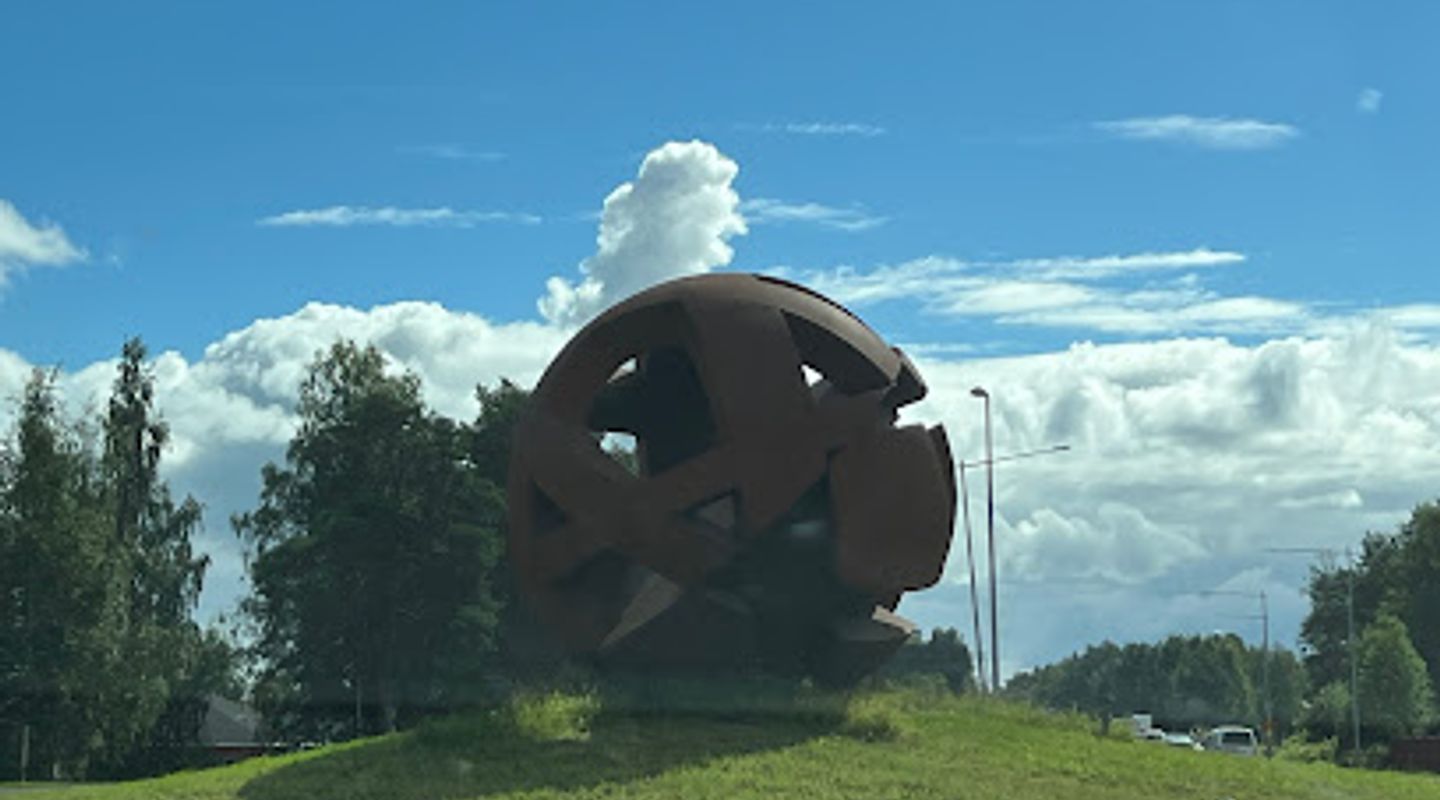
A monumental weathered-steel sphere known locally as “Rostbollen”, The Opposite Sphere rises from a traffic roundabout at Notviken in Luleå. Created by the artist collective Kilen, the 8 m diameter, near-20‑ton sculpture references the city’s steel and industrial past while punctuating a coastal suburban landscape with a raw, rusted silhouette. It’s an arresting public artwork you can view at any hour and photograph from multiple angles.
On-site amenities
 Seating areas
 Information boards
 Trash bins
Opening hours
- Every dayOpen 24 hours
Opening hours as listed on the venue’s Google Business Profile. Hours can change for services and special events, so check with the venue before you go.
- Address
- 973 42 Luleå
- Website
Getting there
By car
Local bus
Bicycle or e‑scooter
Discover more about The Opposite Sphere (Rostbollen)
Origins and makers
The Opposite Sphere is a collaborative public sculpture conceived by the Luleå artist collective Kilen and installed in the late 2000s; credited makers include Jan‑Erik Falk, Eva Gun Jensen, Dan Lestander and Ricky Sandberg. The work was commissioned as part of the municipality’s programme of public art to give visual identity to an entry point of the city. Built from corten steel, the piece deliberately uses a rusted surface to anchor the object in the region’s industrial narrative and shoreline weathering processes.
Scale and material presence
At roughly eight metres across and weighing close to twenty tonnes, the sphere is both monumental and elemental. Its thick weathering steel shell develops a deep orange‑brown patina that changes gradually with seasons and light; from a distance the sculpture reads as a warm orb against the pale Arctic sky, while up close its textured plates, seams and subtle paneling show the human craft behind the mass.
Site and spatial conversation
Sited within a roundabout at Notviken, the sphere engages in a sculptural dialogue with its surroundings rather than sitting within a traditional park. It forms a focal point for passing traffic and the coastline beyond, visually connecting the built environment with Luleå’s maritime edge. The compact, engineered setting emphasises the object’s geometry: when approached from different angles the silhouette and reflections shift, so each viewpoint reads as a new composition.
Symbolism and local meaning
Locally nicknamed Rostbollen, the work references regional steelmaking and the patina of time; its oxidised surface is a deliberate aesthetic and symbolic device, suggesting endurance, transformation and the interplay of industry and nature. The sphere’s simple, almost archetypal form invites multiple readings — from planetary to industrial — and its presence in the entry landscape signals a civic willingness to place contemporary art in everyday urban infrastructure.
Experience and sensory notes
The sculpture is best appreciated through close visual study and photographic exploration. In low winter light the rust tones deepen and the form becomes monumentally graphic against snow and pale skies; in summer the warm metal picks up long‑angled sunset hues. There’s no formal enclosure: the sculptural voice is provided entirely by scale, surface and situation, so the soundscape of traffic, wind and sea plays as part of the encounter.
Conservation and construction details
Constructed from corten (weathering) steel, the sphere’s finish is intended to be stable and low maintenance, the patina acting as a protective layer once established. The sculpture sits on a prepared base within the roundabout and was engineered to withstand coastal winds and freeze–thaw cycles. As public art located in the municipal right‑of‑way it forms part of Luleå’s managed outdoor collection and is visible year‑round without admission or restricted hours.
Evendo Review Centre
 Google
Guest reviews
Best time to go
Quietest: Jan, Feb & Nov · before 6am or from 11pm
Busy times are Evendo estimates for a typical year, to help you plan. Actual crowds vary with events, school holidays and the weather.
Explore The Opposite Sphere (Rostbollen) on the map
A handpicked selection of must-see spots near The Opposite Sphere (Rostbollen), mapped for you.
Get your free copy of our complete guide to The Opposite Sphere (Rostbollen), delivered straight to you.
Everything on this page, from opening hours and how to get there to Eve’s tips and the best time to go, in one PDF you can read offline, print or share.
Already have an account? Sign in
Your The Opposite Sphere (Rostbollen) guide is ready.
We'll send it to · Not you? Sign out

Getting your guide ready…
We are putting together a fresh copy of the The Opposite Sphere (Rostbollen) guide. This can take up to a minute.
This can take a few moments. If your browser asks, choose Allow so the download can start. You'll find the guide in your Downloads folder.
Nothing happened? Download it again
Sorry, the guide is taking longer than usual. Please try again in a minute, or get it by email instead.
Other nearby places you may find interesting
The closest places of the same kind, if this one is not quite what you had in mind.
-
-
-
-
-


Swipe for more places
More to explore near The Opposite Sphere (Rostbollen)
-
 Best experiences near The Opposite Sphere (Rostbollen)
-
 Best hotels near The Opposite Sphere (Rostbollen)
-
 Best landmarks near The Opposite Sphere (Rostbollen)
-
 Best attractions near The Opposite Sphere (Rostbollen)
-
 Best shops near The Opposite Sphere (Rostbollen)
-
 Best restaurants near The Opposite Sphere (Rostbollen)
-
 Best bars near The Opposite Sphere (Rostbollen)


Do you manage this location?
Take control to get all the benefits, like improved information, better appearance, and stronger visibility across AI-powered discovery.
Explore more

Explore more of Norrbotten
Discover Norrbotten, Sweden's northern gem, where nature's wonders meet rich Sami culture. Experience the Midnight Sun, Northern Lights, and unique winter activities.
Explore Norrbotten
Explore more of Sweden
Discover Sweden's breathtaking landscapes, vibrant cities, and rich cultural heritage. From the Northern Lights to historic castles, experience the essence of Scandinavia.
Explore Sweden