

Yildirim (Bursa) Travel Guide - Free
Explore Yildirim in Bursa with Evendo's free guide. Find the best shops, historic streets, restaurants, and gems on web or mobile.


Yıldırım in Bursa reveals Ottoman mosques, Emir Sultan, Cumalıkızık village, hillside views and everyday local life east of the historic city centre.
Ottoman Foundations and Mountain Slopes
Yıldırım occupies the eastern side of Bursa, rising from the urban plain towards the wooded foothills of Uludağ. It is commonly understood both as a large metropolitan district and as a collection of older quarters, villages and expanding residential areas. Its identity is closely tied to the early Ottoman capital: the district takes its name from Sultan Bayezid I, known as Yıldırım, while the Yıldırım Mosque and the nearby Emir Sultan complex preserve the area’s religious and architectural importance. Streets around these monuments combine Ottoman-era religious buildings with later apartment blocks, local shops and the everyday traffic of a substantial residential district.Read more about Yildirim
Emir Sultan, Yeşil and Cumalıkızık
Local Life on the Eastern Edge of Bursa
Best attractions in Yildirim
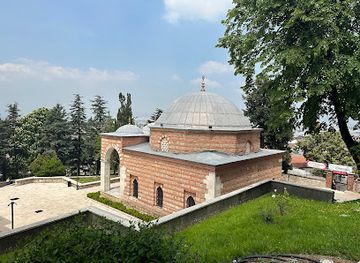
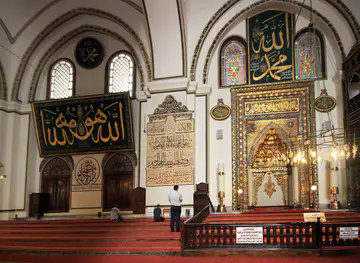
Yıldırım’s attractions form an eastern arc of Bursa’s early Ottoman heritage. The Green Mosque, with its richly decorated interior, and the Green Tomb opposite are the district’s best-known architectural visit, while the surrounding complex gives a sense of how worship, charity and dynastic ceremony were organised. Emir Sultan offers a different atmosphere: its tomb, mosque, cemetery and public surroundings remain an active devotional centre and an important local gathering place. Farther east, Cumalıkızık provides a village-scale experience, with narrow lanes, traditional timber-framed houses and views towards the lower slopes of Uludağ. The district’s ordinary streets are part of the appeal, linking historic foundations with bakeries, tea gardens, small shops and modern apartment neighbourhoods. Visitors should treat the area as a sequence of connected places rather than a compact museum quarter, particularly when planning the separate journey to Cumalıkızık.
-
Tourist attraction
Koza Han
Explore the historic Koza Han in Bursa, a vibrant silk market offering exquisite products and rich cultural experiences.
13 min drive · 4.3 km from neighbourhood centre
-
Tourist attraction
Tophane Clock Tower
Discover the historical charm and stunning views at Bursa's iconic Tophane Clock Tower, a must-see tourist attraction in Turkey.
14 min drive · 4.8 km from neighbourhood centre
-
National park
Uludag National Park
Experience the breathtaking beauty and adventure of Uludag National Park in Bursa, Turkey, a haven for nature lovers and outdoor enthusiasts alike.
29 min drive · 9.7 km from neighbourhood centre
-
Tourist attraction
İnkaya Historical Plane Tree
Discover the beauty and history of the İnkaya Historical Plane Tree, a serene landmark in Bursa that offers a glimpse into Turkey's natural and cultural heritage.
25 min drive · 8.3 km from neighbourhood centre


Best landmarks in Yildirim
Yıldırım’s principal landmarks express the district’s role in the formation of Ottoman Bursa. The Yıldırım Mosque is the surviving focal point of Bayezid I’s mosque complex, while the Green Mosque and Green Tomb form a celebrated early fifteenth-century ensemble associated with Sultan Mehmed I. Their tilework, carved surfaces and carefully composed courtyards make them important examples of Bursa’s Ottoman architectural language. Emir Sultan Mosque and the adjoining tomb are significant both as buildings and as a continuing place of pilgrimage linked to Emir Sultan. In Cumalıkızık, the landmark is less a single monument than the preserved village fabric: narrow lanes, projecting upper storeys, timber, brick and stone houses, and small façades arranged for daily domestic life. Together these places show how dynastic architecture, religious devotion and rural settlement shaped Yıldırım’s eastern landscape.
-
Tourist attraction
Green Tomb
Explore the Green Tomb in Bursa, Turkey – a breathtaking blend of Ottoman architecture and serene gardens, perfect for a peaceful getaway.
11 min drive · 3.6 km from neighbourhood centre
-
Museum
Sultan's Mansion Museum
Discover the grandeur of Ottoman heritage at the Sultan's Mansion Museum, an exquisite blend of history, architecture, and culture in Bursa.
14 min drive · 4.6 km from neighbourhood centre
-
Historical landmark
Yıldırım Beyazıt Tomb
Explore the Yıldırım Beyazıt Tomb, a historic landmark in Bursa showcasing Ottoman architecture and rich cultural heritage.
8 min drive · 2.7 km from neighbourhood centre
-
Monument
Yıldırım Beyazıt Statue
Experience the majesty of Bursa at the Yıldırım Beyazıt Statue, a monument celebrating Ottoman heritage and historical significance.
8 min drive · 2.6 km from neighbourhood centre



Explore Yildirim on the map
A handpicked selection of must-see spots in Yildirim, mapped for you.
Best hotels in Yildirim
Best restaurants in Yildirim
Eating in Yıldırım ranges from everyday Bursa cooking in neighbourhood lokantas to tea, pastries and simple breakfasts around the historic quarters. The district is particularly useful for trying Bursa’s famous culinary traditions in an ordinary local setting, including İskender kebab and other grilled-meat dishes, while bakeries and small restaurants provide inexpensive meals between visits. Around Emir Sultan and the Green complex, food businesses serve residents, worshippers and visitors, though the area is not defined by a single restaurant street. Cumalıkızık adds a village dimension, with breakfast-oriented venues and local produce sold in or near traditional houses; offerings can be seasonal and change over time. Bursa’s chestnut products, dairy foods, breads and sweets also appear across the wider district. Look for busy establishments with a strong local clientele, and remember that dining rhythms may follow Turkish meal times rather than an international visitor’s schedule.
-
Turkish
Paçacı Hüsnü
Discover authentic Turkish flavors at Paçacı Hüsnü in Yıldırım – a culinary haven serving traditional delights with local charm.
8 min drive · 2.7 km from neighbourhood centre
-
Restaurant
Bursa Şelale Park
Discover Bursa Şelale Park: A perfect blend of nature and exquisite dining with a focus on breakfast and chophouse delights.
8 min drive · 2.7 km from neighbourhood centre
-
Turkish
Yüce Hünkar
Experience authentic Turkish cuisine at Yüce Hünkar in Bursa – where tradition meets flavor in every dish.
10 min drive · 3.5 km from neighbourhood centre
-
Restaurant
Kebapçi
Experience authentic Turkish kebabs at Kebapçi in Bursa - a culinary delight reflecting local flavors and warm hospitality.
3 min walk · 0.2 km from neighbourhood centre


Best bars in Yildirim
Yıldırım is primarily residential and religious in character, so its evening life is centred more on tea gardens, cafés, family restaurants and neighbourhood meeting places than on a concentrated bar or nightclub scene. Around Emir Sultan and the Green complex, evenings can remain active with worshippers, local families and visitors, but the atmosphere is generally respectful rather than party-focused. Cumalıkızık is quieter after daytime visitors depart, with little reason to expect a conventional nightlife strip in the village lanes. Visitors seeking extensive late-night entertainment will find a broader selection elsewhere in Bursa, particularly in the central and newer commercial districts, rather than within the historic parts of Yıldırım. For a local evening, choose a tea house or café on a main neighbourhood street, keep sound levels moderate near homes and religious sites, and confirm current opening arrangements locally rather than relying on assumptions about late service.
-
 Bar
Rodop Hüseyin
Discover the vibrant atmosphere of Rodop Hüseyin, a must-visit bar in Bursa offering local drinks and a lively ambiance perfect for socializing.
7 min drive · 2.3 km from neighbourhood centre
-
Bar
Çatı Katı
Experience the vibrant nightlife of Bursa at Çatı Katı, a rooftop bar offering stunning views and a diverse drink menu, perfect for all tourists.
12 min drive · 3.9 km from neighbourhood centre
-
Grill
Sezgin Izgara
Discover the rich flavors of grilled cuisine at Sezgin Izgara, a must-visit restaurant in Yıldırım, Bursa, perfect for food lovers and tourists alike.
5 min drive · 1.6 km from neighbourhood centre
-
Bar
Nurşam tekstil
Discover the local nightlife at Nurşam Tekstil, a vibrant bar in Yıldırım, Bursa, where culture and hospitality meet.
5 min drive · 1.6 km from neighbourhood centre


Best nightclubs in Yildirim
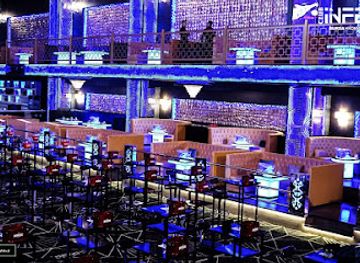
Yıldırım is primarily residential and religious in character, so its evening life is centred more on tea gardens, cafés, family restaurants and neighbourhood meeting places than on a concentrated bar or nightclub scene. Around Emir Sultan and the Green complex, evenings can remain active with worshippers, local families and visitors, but the atmosphere is generally respectful rather than party-focused. Cumalıkızık is quieter after daytime visitors depart, with little reason to expect a conventional nightlife strip in the village lanes. Visitors seeking extensive late-night entertainment will find a broader selection elsewhere in Bursa, particularly in the central and newer commercial districts, rather than within the historic parts of Yıldırım. For a local evening, choose a tea house or café on a main neighbourhood street, keep sound levels moderate near homes and religious sites, and confirm current opening arrangements locally rather than relying on assumptions about late service.
-
Night club
Club Inferno Mania Bursa
Discover the electrifying nightlife of Bursa at Club Inferno Mania, where music, dance, and vibrant energy come together for an unforgettable experience.
29 min drive · 9.8 km from neighbourhood centre
-
Night club
Noche Club
Discover the electrifying nightlife at Noche Club in Bursa, where unforgettable experiences and pulsating rhythms await every night.
25 min drive · 8.2 km from neighbourhood centre
-
Night club
Turistik Köşküm Night Club
Turistik Köşküm Night Club: Dive into Bursa's lively nightlife with great music, dancing, and a vibrant atmosphere.
15 min drive · 5.0 km from neighbourhood centre
-
Night club
Yeni Hisar Gazinosu
Discover Bursa's nightlife at Yeni Hisar Gazinosu - a vibrant night club offering live music, dancing, and a taste of local culture.
12 min drive · 4.0 km from neighbourhood centre


Best shops in Yildirim
Shopping in Yıldırım is mainly local and practical, with neighbourhood markets, bakeries, grocers, small clothing shops and household businesses serving residents rather than a large concentration of international retail. Around the religious complexes, visitors may find modest stalls and shops selling prayer items, sweets, snacks and everyday goods, while Cumalıkızık has small-scale stalls and village-oriented sales associated with produce, preserves, breakfast foods and handmade items. The commercial character changes from one quarter to another: broad urban roads support ordinary retail, whereas the lanes near historic houses are more closely tied to visitors and local hospitality. Bursa’s chestnuts and chestnut-based sweets are familiar regional products, but stock and presentation vary by shop and season. The most interesting purchases are usually edible or locally made rather than luxury goods, and visitors should distinguish permanent businesses from temporary market stalls when planning a shopping stop.
-
Tourist attraction
Koza Han
Experience the rich heritage of Bursa at Koza Han, a historical silk market offering exquisite products and a vibrant atmosphere.
13 min drive · 4.3 km from neighbourhood centre
-
Shopping mall
Sur Yapı Marka
Explore Sur Yapı Marka in Bursa - a vibrant shopping destination featuring diverse brands, delightful dining, and exciting entertainment for all.
30 min drive · 10 km from neighbourhood centre
-
Shopping mall
Anatolium Alışveriş Merkezi
Experience an unforgettable shopping adventure at Anatolium Alışveriş Merkezi, Bursa's premier destination for retail, dining, and entertainment.
29 min drive · 9.6 km from neighbourhood centre
-
Shopping mall
Zafer Plaza
Discover the ultimate shopping experience at Zafer Plaza in Bursa, where modern retail meets delightful dining and entertainment options.
14 min drive · 4.6 km from neighbourhood centre


Yildirim essentials
Getting There
Getting Around
Safety
Emergency Situations
Do's and Don'ts
Local Tips

From Eve
Local phrases worth knowing
You don't need to get them perfect. A few words go a long way, and locals appreciate the effort.
Basics
| English | Local | Say it |
|---|---|---|
| Hello | Merhaba | [Mer-ha-ba] |
| Goodbye | Hoşçakal | [Hosh-cha-kal] |
| Yes | Evet | [Eh-vet] |
| No | Hayır | [Ha-yur] |
| Please/You're welcome | Lütfen | [Loot-fen] |
| Thank you | Teşekkür ederim | [Te-shek-kur ed-er-im] |
| Excuse me/Sorry | Özür dilerim | [O-zur di-le-rim] |
| How are you? | Nasılsınız? | [Na-sul-sin-uz] |
| Fine. And you? | İyiyim. Ya siz? | [Ee-yee-yim. Ya siz?] |
| Do you speak English? | İngilizce konuşuyor musunuz? | [Ing-i-liz-je ko-noo-shu-yor mus-un-uz] |
| I don't understand | Anlamıyorum | [An-la-mi-yor-um] |
Eating & Drinking
| English | Local | Say it |
|---|---|---|
| I'd like to see the menu, please | Menüyü görmek istiyorum, lütfen | [Men-oo-yu gur-mek is-tee-yor-um, loot-fen] |
| I don't eat meat | Ben et yemem | [Ben et ye-mem] |
| Cheers! | Şerefe! | [She-re-fe] |
| I would like to pay, please | Ödemek istiyorum, lütfen | [O-de-mek is-tee-yor-um, loot-fen] |
Emergencies
| English | Local | Say it |
|---|---|---|
| Help! | Yardım edin! | [Yar-dum ed-in] |
| Go away! | Uzaklaşın! | [Oo-za-kla-shin] |
| Call the Police! | Polisi arayın! | [Po-li-si a-ra-yin] |
| Call a doctor! | Doktor çağırın! | [Dok-tor cha-ir-in] |
| I'm lost | Kayboldum | [Kay-bol-dum] |
| I'm ill | Hastayım | [Has-ta-yum] |
Shopping
| English | Local | Say it |
|---|---|---|
| I'd like to buy... | Satın almak istiyorum... | [Sat-un al-mak is-tee-yor-um] |
| I'm just looking | Sadece bakıyorum | [Sa-de-je ba-ku-yor-um] |
| How much is it? | Kaç lira? | [Kach lee-ra] |
| That's too expensive | Çok pahalı | [Chok pa-ha-luh] |
| Can you lower the price? | Fiyatı indirebilir misiniz? | [Fee-yat-uh in-de-re-bi-lir mis-in-iz] |
Time & Numbers
| English | Local | Say it |
|---|---|---|
| What time is it? | Saat kaç? | [Sa-at kach] |
| It's one o'clock | Saat bir | [Sa-at beer] |
| Half past (10) | On buçuk | [On boo-chuk] |
| Morning | Sabah | [Sa-bah] |
| Afternoon | Öğleden sonra | [O-led-en son-ra] |
| Evening | Akşam | [Ak-sham] |
| Yesterday | Dün | [Dun] |
| Today | Bugün | [Boo-gun] |
| Tomorrow | Yarın | [Ya-run] |
| 1 | Bir | [Beer] |
| 2 | İki | [Ee-kee] |
| 3 | Üç | [Ooch] |
| 4 | Dört | [Dort] |
| 5 | Beş | [Besh] |
| 6 | Altı | [Al-tuh] |
| 7 | Yedi | [Yeh-dee] |
| 8 | Sekiz | [Se-keez] |
| 9 | Dokuz | [Do-kooz] |
| 10 | On | [On] |
Transport & Directions
| English | Local | Say it |
|---|---|---|
| Where's a/the...? | ...nerede? | [...ne-re-de] |
| What's the address? | Adres nedir? | [Ad-res ne-deer] |
| Can you show me (on the map)? | (Harita üzerinde) bana gösterebilir misiniz? | [(Ha-ree-ta oo-ze-rin-de) ba-na gur-ste-re-bi-lir mis-in-iz] |
| When's the next (bus)? | Sonraki (otobüs) ne zaman? | [Son-ra-ki (o-to-bus) ne za-man] |
| A ticket (to ....) | Bilet (....'e) | [Bee-let (...'e)] |
History of Yildirim
The District Named for Yıldırım Bayezid
Yıldırım’s modern name commemorates Sultan Bayezid I, known in Ottoman history as Bayezid Yıldırım, or Bayezid the Thunderbolt. The area lies east of Bursa’s older central quarters, towards the foothills and routes leading into the wider mountain landscape. During the early Ottoman period, this eastern side of the city became associated with religious foundations, settlements and agricultural communities that supported the developing capital. The district’s later metropolitan identity grew around these older villages and endowment lands, but its name continues to connect the contemporary urban area with the reign of one of the first Ottoman rulers to make Bursa a major imperial centre.
Mosques and Foundations of the Early Ottoman Capital
The Yıldırım Mosque, generally dated to the 1390s, formed part of the complex commissioned by Bayezid I and helped establish the eastern hills as an important religious landscape. Nearby Emir Sultan became a centre of devotion after the fourteenth-century Sufi figure Emir Sultan was buried in Bursa, and the complex developed around his tomb and associated religious buildings. These foundations were more than isolated monuments: their kitchens, schools, baths, cemeteries and charitable services shaped local settlement and connected the district to the social infrastructure of the Ottoman capital.
The Green Complex and Ottoman Renewal
After the Ottoman defeat at Ankara in 1402 and the subsequent interregnum, Bursa remained an important dynastic centre. Sultan Mehmed I commissioned the Green Mosque and Green Tomb in the early fifteenth century, completing the complex in 1421. Its glazed tiles, carved decoration and carefully planned religious and charitable buildings expressed the restoration of Ottoman authority. The complex also strengthened the eastern approach to Bursa as a ceremonial and spiritual zone. Today, the Green buildings preserve one of the clearest architectural statements of the city’s transition from regional Ottoman capital to a more established imperial centre.
Cumalıkızık and the Village Landscape
The villages on the lower slopes east of Bursa, including Cumalıkızık, formed part of the rural network supporting the early Ottoman city. Cumalıkızık retains an unusually coherent group of traditional houses and narrow lanes, with buildings using local stone, timber framing and brick. Its village form illustrates how settlement, agriculture and the capital’s urban institutions were connected. Together with Bursa’s historic khans, külliyes and other sites, Cumalıkızık was included in the UNESCO World Heritage listing in 2014. The designation recognises not only individual buildings but also the relationship between early Ottoman urban foundations and their surrounding settlements.
Metropolitan Expansion and a Lived-In District
During the twentieth century, Bursa expanded beyond its historic core as industry, migration and new housing transformed the urban plain and lower slopes. Older villages and religious quarters were absorbed into a much larger metropolitan district, while apartment construction and transport corridors altered the scale of daily life. Yıldırım now combines protected and locally valued heritage with dense residential neighbourhoods, commercial streets and continuing development. This contrast explains its character: Ottoman complexes and village houses survive within an active urban setting, rather than being separated from contemporary Bursa.
Yildirim in Photos
Browse through our photo collection highlighting the charm and character of the destination.
Neighbourhoods near Yildirim
The closest neighbourhoods to Yildirim, if you have time for more than one stop.
-
-


Swipe for more neighbourhoods
Explore more

Explore more of Bursa
Bursa blends Ottoman heritage, silk-trade arcades and Uludağ landscapes, with grand mosques, historic baths, lively markets and celebrated İskender kebab.
Explore Bursa