

The Royal Crescent, Bath Travel Guide
Georgian perfection in stone: 150 metres of architectural harmony overlooking Bath's parkland landscape.
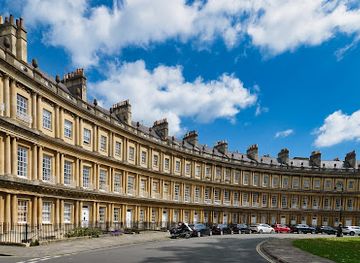
The Royal Crescent is a sweeping arc of 30 Grade I listed Georgian townhouses in Bath, England, designed by John Wood the Younger and built between 1767 and 1774. Stretching 150 metres with 114 Ionic columns, it stands as one of Britain's finest examples of 18th-century urban design. The uniform honey-coloured stone facade conceals remarkably varied interiors, reflecting the creative freedom given to original builders. Today, No. 1 operates as a museum showcasing Georgian life, while the central houses form the luxurious Royal Crescent Hotel & Spa. The crescent overlooks Royal Victoria Park and remains a UNESCO World Heritage landmark.
A brief summary to The Royal Crescent
- Bath, BA1 2LR, GB
- Click to display
- Duration: 0.75 to 3 hours
- Free
-
 Outdoor
- Mobile reception: 5 out of 5

Know before you go
Hi, I'm Eve. Here are a few practical things to know before exploring The Royal Crescent.
- Visit No. 1 Royal Crescent museum in the morning to avoid afternoon crowds and experience the Georgian interiors with fewer visitors. The museum provides authentic period furnishings and knowledgeable guides explaining 18th-century domestic life.
- Explore the rear of the Crescent from the access road behind to see the striking contrast between the uniform facade and the chaotic jumble of differing roof heights and building depths—a perfect illustration of Georgian town planning pragmatism.
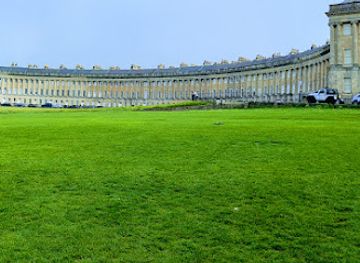
- Stand on the upper lawn and observe the ha-ha (the sunken ditch) to understand how Georgian designers created invisible barriers that preserved uninterrupted views across the landscape without interrupting the eye.
- Visit Royal Victoria Park opposite the Crescent for panoramic views back across the facade, particularly during golden hour when the honey-coloured Bath stone glows warmly in the afternoon light.
- Look for the distinctive primrose yellow door and windows at No. 22, a charming reminder of Miss Wellesley-Colley's 1972 rebellion against uniformity that ultimately became accepted as part of the Crescent's character.
Do you manage this location?
Take control to get all the benefits, like improved information, better appearance, and stronger visibility across AI-powered discovery. Learn more about listing your business on Evendo
Activate your presenceOther nearby places you may find interesting
The closest places of the same kind, if this one is not quite what you had in mind.
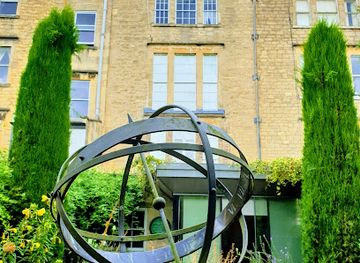
Explore The Royal Crescent on the Map
A handpicked selection of must-see spots near The Royal Crescent, mapped for you.
Unlock the Best of The Royal Crescent
Buy tickets
-
No tickets available
Book tours with entry


Getting There
-
Bus
Multiple bus routes serve Bath city centre, located approximately 800 metres south of the Royal Crescent. Services 1, 2, 3, and 4 run frequently (every 10–15 minutes during peak hours) from the city centre to stops near the Crescent. Journey time from Bath Spa railway station is approximately 15–20 minutes. Buses no longer enter the Crescent itself due to a 2017 council ban on coaches and buses to reduce disruption to residents. Single fares cost approximately £1.80–£2.50 GBP depending on distance.
-
Walking
The Royal Crescent is a 15–20 minute walk from Bath city centre and Bath Spa railway station. From the station, head north through the city centre via Stall Street and Milsom Street, then continue uphill toward the Upper Town. The final approach involves climbing modest gradients through residential streets. The route is well-signposted and entirely on paved pavements. The walk is accessible for most fitness levels, though the uphill sections may challenge those with mobility limitations.
-
Taxi or Ride-Hailing
Taxis and ride-hailing services (Uber, local firms) are available throughout Bath. Journey time from the city centre or railway station is approximately 5–10 minutes depending on traffic. Fares typically range from £8–£15 GBP. Taxis can drop passengers at nearby streets, though the Crescent itself has restricted access. Parking is extremely limited in the immediate vicinity; most visitors are advised to use park-and-ride facilities or city car parks located 10–15 minutes' walk away.
-
Car with Parking
The Royal Crescent has no dedicated visitor parking. The nearest public car parks are located 400–600 metres away in the Upper Town (Lansdown car park) or city centre (various multi-storey facilities). Parking costs approximately £1.50–£2.50 GBP per hour or £8–£12 GBP for a full day, depending on the facility. Bath's park-and-ride services (located on the city outskirts) offer cheaper all-day parking (approximately £2 GBP) plus frequent shuttle bus service into the city centre. Coaches and tour buses are prohibited from the Crescent itself.
For the on-the-go comforts that matter to you
-
 Restrooms
-
 Food Options
-
 Seating Areas
-
 Information Boards
-
 Visitor Center
Discover more about The Royal Crescent
A Revolutionary Vision in Stone
When John Wood the Younger laid the foundation stone on 19 May 1767, he envisioned something unprecedented in British architecture: a crescent-shaped terrace of attached townhouses that would harmonise perfectly with the natural landscape. Built between 1767 and 1774, the Royal Crescent emerged as the first of its kind—a sweeping arc of 30 Grade I listed houses stretching 150 metres across the northwestern edge of Bath. The design represented a bold departure from conventional urban planning, introducing the concept of "rus in urbe" (the country in the city), where residents could enjoy expansive views over parkland while living in the heart of a fashionable spa town. Each house rises approximately 50 feet, crowned with slate roofs and punctuated by dormer windows. The facade presents an almost hypnotic uniformity: 114 Ionic columns, each 30 inches in diameter and reaching 47 feet in height, march across the first floor in perfect rhythm, supported by a rusticated ground level that grounds the composition with classical restraint.The Ingenious Deception of Facades and Interiors
What makes the Royal Crescent architecturally fascinating is the deliberate contrast between its public face and private reality. Wood the Younger stipulated exacting specifications for every external detail—the column proportions, window arrangements, white woodwork, and overall symmetry—yet granted each original purchaser complete freedom to design the interior and rear elevation. This pragmatic approach produced what locals describe as "Queen Anne fronts and Mary-Anne backs": while the crescent presents a monumentally consistent honey-coloured stone facade, the rear reveals a chaotic jumble of differing roof heights, window placements, and building depths. The central house, No. 16, stands distinguished by its doubled Ionic columns and wider windows, marking the crescent's geometric heart. In front of the entire composition lies a ha-ha—a sunken ditch with a vertical stone-faced inner wall and sloped, turfed outer face—an invisible barrier that prevents animals from reaching the upper lawn while preserving uninterrupted views toward the River Avon and, later, Royal Victoria Park.Wartime Damage and Restoration
The Royal Crescent's architectural integrity was severely tested during the Second World War. In April 1942, Bath endured devastating bombing raids as part of the Baedeker Raids, with incendiary bombs striking Nos. 2 and 17, completely gutting their interiors. The front lawns sustained sizeable bomb craters, and blast damage rippled through neighbouring properties. Rather than demolish the damaged houses, the Council took them into public ownership and undertook extensive interior reconstruction, preserving the irreplaceable facades. This commitment to restoration set a precedent for the crescent's long-term stewardship. Remarkably, the front lawns had previously served a different wartime purpose: between 1942 and 1957, residents cultivated 72 allotments producing scarce vegetables during food rationing, transforming the elegant Georgian setting into a practical community resource.From Residential Grandeur to Hotel Elegance
For nearly two centuries, the Royal Crescent remained exclusively residential, home to wealthy landowners, minor gentry, and notable figures including composer Joseph Haydn, who famously described it as "a building more magnificent than any I had seen." The social composition of residents shifted gradually over the 19th century, with some houses converted into seminaries for young ladies and lodging houses. The transformation into hospitality began in 1950 when No. 16 became a guest house, subsequently merged with No. 15 to establish the Royal Crescent Hotel. The hotel expanded through the acquisition of adjoining pavilions and coach houses within the gardens, creating a luxury property that now comprises 18 uniquely designed suites, each named after a historical figure or artistic personality associated with Bath. The hotel's interiors were meticulously restored in 1978 to reflect the grandeur of the Georgian era while incorporating modern comforts.Museum and Living Heritage
No. 1 Royal Crescent operates as a museum owned and maintained by the Bath Preservation Trust, offering visitors an intimate glimpse into 18th-century Georgian domestic life. The rooms are furnished with period pieces selected by a distinguished committee including curators from the Victoria and Albert Museum, arranged to reflect the distinction between male and female domains and informed by historical records of the house's occupants. The restoration work, completed in the late 1960s, included raising first-floor window sills to their original height, reconstructing lost joinery, and installing a new back staircase. Archaeological discoveries have added further layers to the site's significance: in 2003, remains of a Roman wall were uncovered behind the crescent, along with evidence of possible Iron and Bronze Age settlement on the front lawn, suggesting human occupation spanning millennia.Cultural Icon and Modern Legacy
The Royal Crescent gained its "Royal" designation at the end of the 18th century following a visit from Prince Frederick, Duke of York and Albany, who purchased No. 16. In 1987, the crescent became part of Bath's UNESCO World Heritage Site designation, recognising its exceptional universal value as a masterpiece of urban design. The facade has inspired architects globally, most notably Robert Tor Russell, who drew upon its proportions when designing Connaught Place in New Delhi in 1921. In modern times, the crescent has served as a filming location for prestigious productions including the 2007 adaptation of Jane Austen's Persuasion, the 2008 historical drama The Duchess, and the popular Regency romance series Bridgerton. A notable 1972 incident saw resident Miss Wellesley-Colley paint her front door and windows primrose yellow, defying two enforcement orders and a public enquiry before the council finally relented, allowing the unconventional colour to remain as a small testament to individual expression within a harmonious whole.












Your all‑in‑one travel companion app
Explore expert travel guides, compare and book tours, experiences, hotels, and more—all from the palm of your hand. Download now for seamless trip planning wherever your wanderlust takes you.


Explore More of Bath
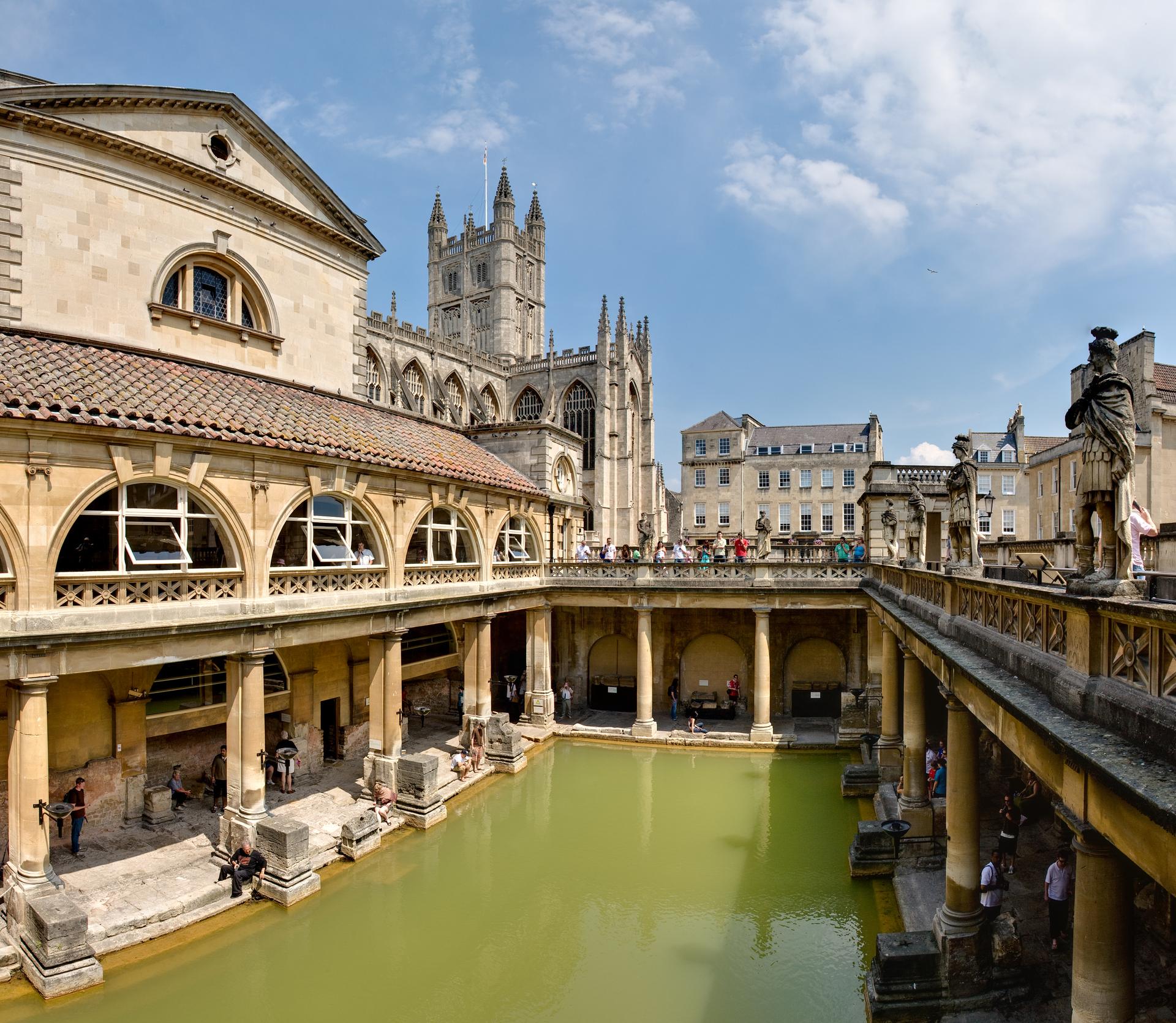
Looking beyond The Royal Crescent? Discover Bath for broader travel guides, local hot-spots, and regional highlights.
Explore Bath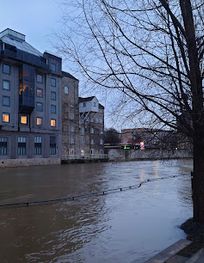
A vibrant, sustainable waterside regeneration reconnecting Bath’s city centre with its historic river heritage and green public spaces.
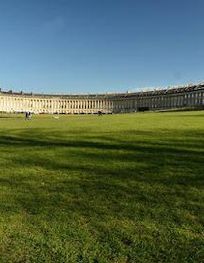
Experience Bath’s Royal Crescent, a stunning Georgian crescent with iconic Ionic columns, historic charm, and sweeping parkland views.
