Stormont Estate, Belfast Travel Guide
Free Guide: Northern Ireland's iconic seat of power set within 224 acres of historic parkland and natural beauty.


A brief summary of Stormont Estate
Northern Ireland's iconic seat of power set within 224 acres of historic parkland and natural beauty.
Stormont Estate is a sprawling 224-acre public park in east Belfast, home to the iconic Parliament Buildings and the seat of the Northern Ireland Assembly. Built on grounds established by Reverend John Cleland in the early 19th century, the estate features beautiful gardens, woodland walks, fitness trails, children's playgrounds, and historic monuments. The Parliament Buildings themselves, designed by Sir Arnold Thornely and opened in 1932, showcase Greek Classical architecture and offer free guided tours Monday to Friday. The estate is a major cultural and political landmark, blending natural beauty with significant historical importance.
On-site amenities
 Restrooms
 Drink options
 Food options
 Seating areas
 Picnic areas
 Trash bins
 Information boards
 Visitor centre
Opening hours
- Mon9 am–5 pm
- Tue9 am–5 pm
- Wed9 am–5 pm
- Thu9 am–5 pm
- Fri9 am–5 pm
- SatClosed
- SunClosed
Opening hours as listed on the venue’s Google Business Profile. Hours can change for services and special events, so check with the venue before you go.
- Address
- Stormont Ct, Belfast BT4 3LP
- Phone
- Website
Getting there
Bus from Belfast City Centre
Car from Belfast City Centre
Hop-on Hop-off City Sightseeing Tour
Walking from Massey Avenue Entrance
Discover more about Stormont Estate
A Landscape Shaped by History and Governance
Stormont Estate occupies 224 acres of carefully maintained parkland on the eastern outskirts of Belfast, representing one of Northern Ireland's most significant cultural and political destinations. The site's history stretches back to the early 19th century when Reverend John Cleland established the original estate following an advantageous marriage. The original house, initially called 'Storm Mount' and described in the 1830s as a 'large plain house with very little planting about it,' was dramatically transformed in 1858 into 'Stormont Castle' when it was redesigned in the fashionable Scottish Baronial style by local architect Thomas Turner. The castle featured distinctive architectural elements including turrets, battlements, bartizans with conical caps, and ornate iron cresting, along with grand interior spaces such as a 64-foot ballroom and multiple reception rooms. Though the Cleland family departed in 1893, the estate's destiny changed forever in 1921 when the demesne was acquired as the site for the new Northern Ireland Parliament.
The Parliament Buildings: A Monument to Civic Ambition
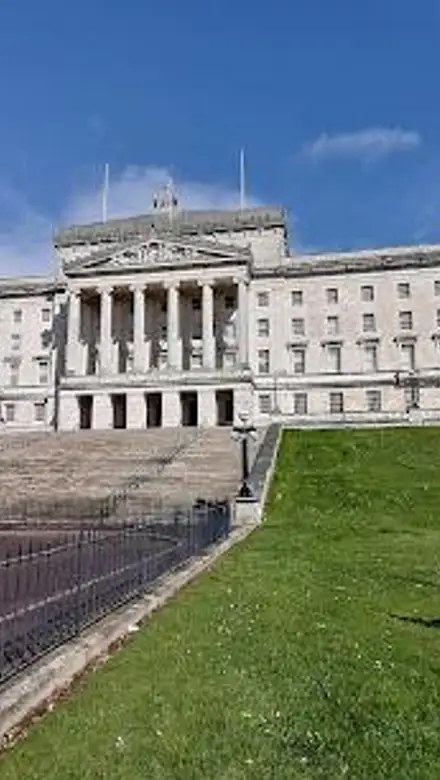
The Parliament Buildings themselves represent a remarkable architectural achievement and symbol of Northern Ireland's constitutional identity. Designed by the acclaimed architect Sir Arnold Thornely and officially opened on 16 November 1932 by Edward, Prince of Wales (later King Edward VIII), the building embodies Greek Classical tradition rendered in Portland stone mounted on a granite base quarried from the Mourne Mountains. The structure's dimensions carry profound symbolic meaning: it measures 365 feet wide, representing one foot for each day of the year, and stands 92 feet high. The building comprises six floors with six entrance pillars, each representing one of Northern Ireland's six counties. The construction cost approximately £1.7 million when completed in 1932—a substantial investment during economically challenging times. The avenue leading to the Parliament Buildings, known as Prince of Wales Avenue or the 'Royal Mile,' is lined with 305 red-twigged lime trees planted in the 1920s, creating a magnificent processional approach that stretches one mile from the estate gates to the building's front steps. Inside, the Great Hall features a life-size statue of James Craig, 1st Viscount Craigavon, and the building contains almost 2,000 meters of corridors across its six floors.
Grounds and Natural Features
Beyond the Parliament Buildings, Stormont Estate functions as a major public park and green space, recognised with the prestigious Green Flag award for its environmental management. The estate encompasses two woodland walks: a longer 4-kilometre route and a shorter 2-kilometre option, both winding through mature woodland that provides tranquil natural respite. A 1.6-kilometre fitness trail features outdoor gym equipment at various points, catering to health-conscious visitors. The grounds include beautifully maintained gardens with terraced flower beds, picnic areas equipped with barbecue facilities, and a children's adventure playground near the Upper Newtownards Road entrance featuring climbing frames, slides, and swings. The estate also contains historic buildings, statues, memorials, and World War II heritage sites, including original barrage balloon anchors that protected government buildings during wartime bombing campaigns. Dog owners benefit from 'The Bullfield,' a specially enclosed area where dogs can roam off-leash with accompanying seating and picnic facilities.
Political Significance and Contemporary Role
Stormont's political importance intensified following the Government of Ireland Act 1920, which created a separate parliament for Northern Ireland. The building served as the home of the Parliament of Northern Ireland from 1932 until the imposition of direct rule from Westminster. Following the Good Friday Agreement in 1998 and the end of 'Na Trioblóidí' (The Troubles), Stormont became the seat of the newly established Northern Ireland Assembly, marking a transformative moment in the region's political evolution. Today, the Parliament Buildings remain the working home of the Northern Ireland Assembly and Executive, continuing their role as the centre of devolved governance and democratic debate. The building's enduring presence symbolises Northern Ireland's journey through constitutional change, political turbulence, and ultimately toward power-sharing democracy.
Visitor Experience and Accessibility
The estate welcomes visitors year-round, with the Parliament Buildings open to the public from 9:00 AM to 4:00 PM Monday to Friday (except public holidays). Free guided tours lasting 45 minutes to one hour are available when the Assembly is in session, typically at 11:00 AM and 2:00 PM on weekdays, with extended hourly tours between 11:00 AM and 3:00 PM during July and August. Tours provide comprehensive insights into the building's architecture, parliamentary history, and Northern Ireland's political development, allowing visitors to view the Great Hall, historic Senate Chamber, and sit in Members' seats within the Assembly Chamber. All visitors undergo standard security screening before entering. A coffee shop and gift shop on the ground floor serve refreshments and local crafts. The entire Stormont Estate remains free to access, with ample parking available at multiple locations including the main gates on Upper Newtownards Road and near the children's playground. Public transport access is convenient via Metro bus services 20a and 23, which run regularly to the estate.
Evendo Review Centre
 Google
Guest reviews
Best time to go
Quietest: Jan, Feb & Dec · before 6am or at 8pm
Busy times are Evendo estimates for a typical year, to help you plan. Actual crowds vary with events, school holidays and the weather.
Explore Stormont Estate on the map
A handpicked selection of must-see spots near Stormont Estate, mapped for you.
Get your free copy of our complete guide to Stormont Estate, delivered straight to you.
Everything on this page, from opening hours and how to get there to Eve’s tips and the best time to go, in one PDF you can read offline, print or share.
Already have an account? Sign in
Your Stormont Estate guide is ready.
We'll send it to · Not you? Sign out

Getting your guide ready…
We are putting together a fresh copy of the Stormont Estate guide. This can take up to a minute.
This can take a few moments. If your browser asks, choose Allow so the download can start. You'll find the guide in your Downloads folder.
Nothing happened? Download it again
Sorry, the guide is taking longer than usual. Please try again in a minute, or get it by email instead.
Other nearby places you may find interesting
The closest places of the same kind, if this one is not quite what you had in mind.
-
-
-
-
-


Swipe for more places
More to explore near Stormont Estate

 Best experiences near Stormont Estate
 Best hotels near Stormont Estate
 Best landmarks near Stormont Estate
 Best attractions near Stormont Estate
 Best shops near Stormont Estate
 Best restaurants near Stormont Estate
 Best bars near Stormont Estate
Do you manage this location?
Take control to get all the benefits, like improved information, better appearance, and stronger visibility across AI-powered discovery.
Explore more

Explore more of Belfast
Discover Belfast, a city of history, culture, and modern charm, where the legacy of the Titanic meets vibrant street life and stunning natural beauty.
Explore Belfast
Explore more of United Kingdom
Discover the United Kingdom: A blend of rich history, stunning landscapes, and vibrant cities, offering a unique travel experience for every visitor.
Explore United Kingdom