Gefrin Travel Guide
Free Guide: Explore the ancient royal palace of Northumbria’s Anglo-Saxon kings, where history, culture, and whisky unite in a scenic Northumberland setting.


A brief summary of Gefrin
Explore the ancient royal palace of Northumbria’s Anglo-Saxon kings, where history, culture, and whisky unite in a scenic Northumberland setting.
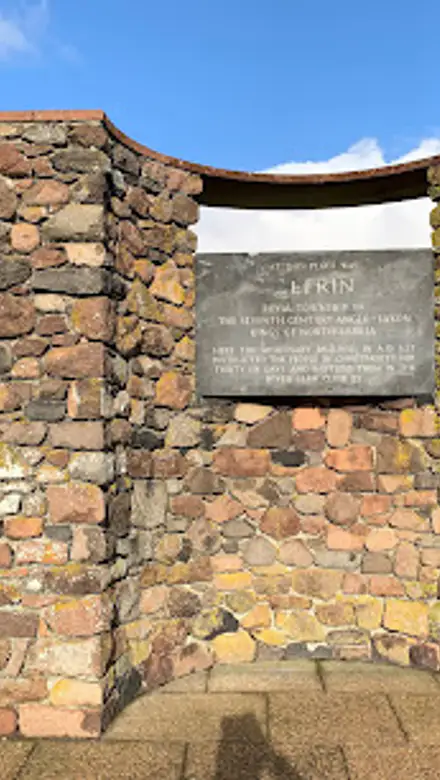
Ad Gefrin, located near Yeavering in Northumberland, is the site of a remarkable 7th-century Anglo-Saxon royal palace complex. Once the summer residence of Northumbrian kings and queens, it played a pivotal role in early medieval history, including the first Christian conversions in northern England. Excavated in the mid-20th century, the site reveals timber halls, a unique wooden grandstand, and support buildings, now preserved and interpreted by the Gefrin Trust.
On-site amenities
 Restrooms
 Seating areas
 Information boards
 Visitor centre
 Drink options
 Food options
 Trash bins
Opening hours
- Every dayOpen 24 hours
Opening hours as listed on the venue’s Google Business Profile. Hours can change for services and special events, so check with the venue before you go.
- Address
- B6351, Yeavering, Wooler NE71 6TH
- Website
Getting there
Car
Bus
Walking
Discover more about Gefrin
Historical Significance of Ad Gefrin
Ad Gefrin, known today as Yeavering, was a seasonal royal settlement and summer palace for the kings and queens of the Anglo-Saxon kingdom of Northumbria during the 7th century. This site was home to notable rulers such as Aethelfrith, Edwin, Aethelburga, and the saintly King Oswald and his brother Oswy. It was here that some of the most important events in early northern English history unfolded, including the first Christian baptisms in the region, as recorded by the Venerable Bede in his Ecclesiastical History of the English People around AD 731. Bishop Paulinus, accompanying Queen Aethelburga, baptized many converts in the nearby River Glen, marking a turning point in the religious landscape of Northumbria.
Archaeological Discoveries and Site Layout
The site was rediscovered in 1949 after aerial photography revealed cropmarks indicating a large complex. Excavations led by archaeologist Brian Hope-Taylor between 1953 and 1962 uncovered an extensive timber palace complex featuring multiple large halls, a unique wooden grandstand used for assemblies, and various support buildings. These structures illustrate the scale and sophistication of the royal court and its functions, which included governance, hospitality, and cultural activities. Despite the impressive remains, few personal artifacts were found, highlighting the transient nature of the royal court’s visits.
Cultural Flourishing During Northumbria’s Golden Age
Ad Gefrin was at the heart of Northumbria’s Golden Age, a period from the early 7th to the late 8th century marked by extraordinary cultural and artistic achievements. This era produced masterpieces such as the Lindisfarne Gospels and the Ruthwell Cross, alongside influential scholars like Bede and Alcuin. The royal court at Ad Gefrin was a hub for diplomacy, celebration, and the exchange of ideas, attracting people from across Europe, Scandinavia, and North Africa. It was a place where generosity and hospitality defined leadership, rather than mere wealth or geography.
Modern Preservation and Visitor Experience
Today, the archaeological site is managed by the Gefrin Trust, which ensures its preservation through careful conservation and ongoing research. Nearby in Wooler, the Ad Gefrin Anglo-Saxon Museum and Whisky Distillery opened in 2023, offering visitors an immersive experience that brings the history of the site to life. The museum showcases the royal court’s story, local crafts, and artifacts, while the distillery produces whisky using Northumbrian barley, linking past and present cultural traditions. This innovative combination makes Ad Gefrin a unique destination blending archaeology, history, and local heritage.
Landscape and Setting
Set within a picturesque river valley near the rolling Cheviot Hills on the edge of Northumberland National Park, Ad Gefrin’s location offers a tranquil and scenic environment. The rural landscape contrasts with the once-bustling royal court, providing a sense of the continuity of history amid natural beauty. The nearby River Glen, where early Christian baptisms took place, remains a poignant feature of the site’s spiritual and cultural legacy.
Legacy and Continuing Research
Ongoing archaeological investigations, including those by Durham University in partnership with the Gefrin Trust, continue to reveal new insights into the site’s layout, chronology, and the lives of those who maintained the palace between royal visits. Ad Gefrin remains a vital link to understanding the formation of medieval England and the cultural heritage of Northumbria’s early kings and queens.
Evendo Review Centre
 Google
Guest reviews
Best time to go
Quietest: Jan, Feb & Dec · before 6am
Busy times are Evendo estimates for a typical year, to help you plan. Actual crowds vary with events, school holidays and the weather.
Explore Gefrin on the map
A handpicked selection of must-see spots near Gefrin, mapped for you.
Get your free copy of our complete guide to Gefrin, delivered straight to you.
Everything on this page, from opening hours and how to get there to Eve’s tips and the best time to go, in one PDF you can read offline, print or share.
Already have an account? Sign in
Your Gefrin guide is ready.
We'll send it to · Not you? Sign out

Getting your guide ready…
We are putting together a fresh copy of the Gefrin guide. This can take up to a minute.
This can take a few moments. If your browser asks, choose Allow so the download can start. You'll find the guide in your Downloads folder.
Nothing happened? Download it again
Sorry, the guide is taking longer than usual. Please try again in a minute, or get it by email instead.
Other nearby places you may find interesting
The closest places of the same kind, if this one is not quite what you had in mind.
-
-
-
-
-


Swipe for more places
More to explore near Gefrin

 Best experiences near Gefrin
 Best hotels near Gefrin
 Best landmarks near Gefrin
 Best attractions near Gefrin
 Best shops near Gefrin
 Best restaurants near Gefrin
 Best bars near Gefrin
Do you manage this location?
Take control to get all the benefits, like improved information, better appearance, and stronger visibility across AI-powered discovery.
Explore more
Explore more of Berwickshire
Discover Berwickshire: A blend of coastal beauty, historic landmarks, and charming villages in Scotland's serene southeastern corner.
Explore Berwickshire
Explore more of United Kingdom
Discover the United Kingdom: A blend of rich history, stunning landscapes, and vibrant cities, offering a unique travel experience for every visitor.
Explore United Kingdom