Nunney Castle
A French-influenced medieval fortress where a Hundred Years' War veteran built his legacy in stone.
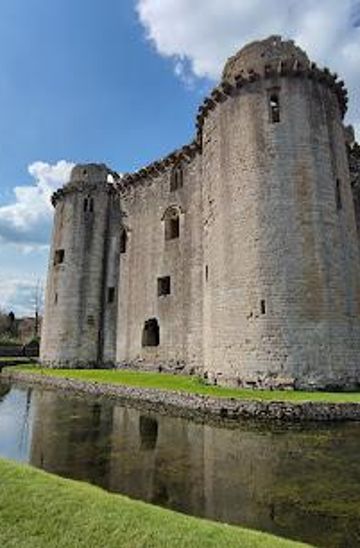
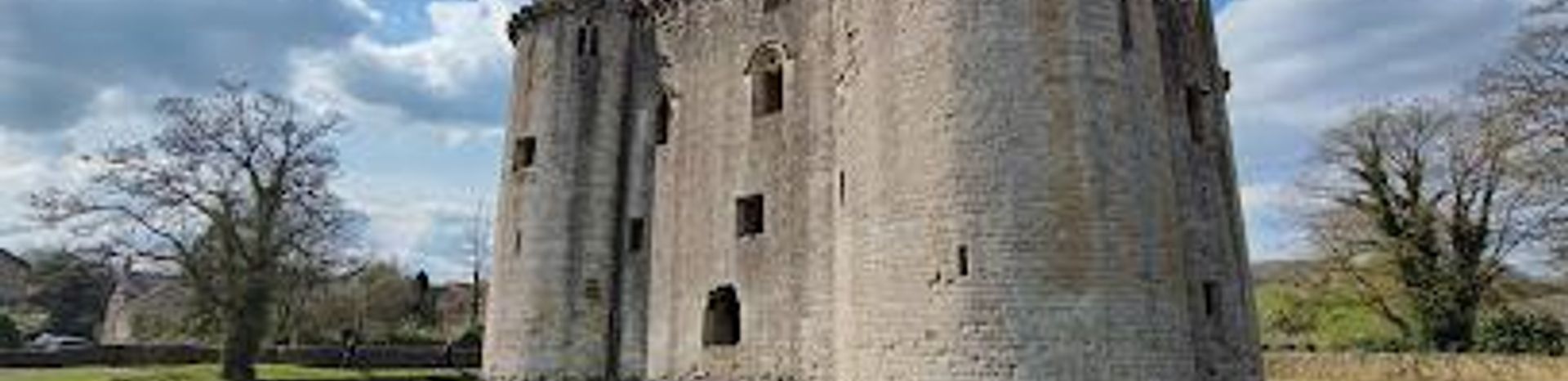
A striking medieval moated castle dating from the 1370s, Nunney Castle stands as one of Somerset's most architecturally impressive fortifications. Built by Sir John de la Mare, a knight returning from the Hundred Years' War, this quadrangular stronghold features a dramatic central tower with four round corner turrets, all encircled by a wide moat. Though damaged during the English Civil War siege of 1645, the castle's distinctive French-influenced design remains remarkably well-preserved. Now managed by English Heritage, it offers free access and stands as a testament to 14th-century military ambition and architectural innovation.
A brief summary to Nunney Castle
- Nunney Castle, Castle St, Frome, Nunney, BA11 4LW, GB
- Click to display
- Click to display
- Duration: 0.75 to 2 hours
- Free
-
 Outdoor
- Mobile reception: 4 out of 5

Know before you go
Hi, I'm Eve. Here are a few practical things to know before exploring Nunney Castle.
- Visit during late afternoon when sunlight illuminates the castle's stone facades and creates dramatic shadows across the moat—ideal for photography and experiencing the castle's atmospheric presence.
- Bring binoculars to examine the decorative window tracery and machicolations on the upper storeys, where fine architectural details reveal the castle's sophisticated design and possible connection to master craftsmen.
- Walk the perimeter of the moat to appreciate the castle's strategic positioning at the village's lowest point and to observe how the water defences would have functioned historically.
- Visit the adjacent Moat & Turret café for refreshments before or after exploring the castle, offering a convenient stop without leaving the immediate area.
- Allow time to explore Nunney village itself, which retains medieval character and charm, including the 1824 Guard House lock-up and historic street layouts that complement the castle experience.
Do you manage this location?
Take control to get all the benefits, like improved information, better appearance, and stronger visibility across AI-powered discovery. Learn more
Activate your presenceGetting There
-
Car
From Frome town centre, follow signs toward Nunney village, approximately 3 miles south. The castle is located on Castle Street in the village centre. Free parking is available on the side road adjacent to the castle ruins and near the Moat & Turret café. The journey takes approximately 10–15 minutes depending on traffic.
-
Bus
Local bus services operate from Frome to Nunney village, with journey times of 20–30 minutes depending on the route and service frequency. Services are limited, particularly on Sundays and bank holidays. Check local transport schedules before travelling, as frequency varies seasonally. The castle is a short walk from the village bus stop.
-
Walking
From Frome town centre, the walk to Nunney Castle is approximately 3 miles and takes 50–70 minutes depending on fitness level and route chosen. The walk follows country lanes and footpaths through Somerset countryside. The final approach to the castle involves some gentle uphill walking through the village. Wear appropriate footwear for potentially muddy or uneven terrain, particularly in wet weather.
-
Cycling
Nunney is accessible by bicycle from Frome, approximately 3 miles away via country lanes. The journey takes 15–25 minutes depending on fitness and route. The village itself has limited cycle infrastructure, but the castle is easily reached by bike. Secure bicycle parking is not formally provided at the castle, so plan accordingly.
For the on-the-go comforts that matter to you
-
 Food Options
-
 Drink Options
-
 Trash Bins
-
 Information Boards
Discover more about Nunney Castle
A Knight's Ambitious Fortress
Nunney Castle emerged from the ambitions of Sir John de la Mare, a knight who had amassed considerable wealth fighting in the Hundred Years' War alongside English forces in France. Returning to Somerset with royal favour, de la Mare obtained a licence to crenellate in 1373, transforming his existing manor house into a formidable stone fortress. The castle's construction between 1373 and 1383 represented more than mere military necessity—it was a statement of power and status in an era of social upheaval. The Peasants' Revolt of 1381 and lingering threats of civil disorder made fortified residences attractive to the emerging professional class of knights and administrators. De la Mare himself served as sheriff of both Somerset and Wiltshire, positions that demanded both authority and defensibility.Architectural Innovation and French Influence
The castle's design provokes considerable academic debate among historians. Its distinctive quadrangular plan, featuring a rectangular tower-keep measuring 60 feet by 24 feet internally and standing 54 feet tall, is surrounded by four round corner towers capped with conical roofs. The walls, constructed from Lias Oolite ashlar stone, reach eight feet in thickness and are crowned with prominent machicolations—defensive projections allowing archers to fire downward. Though once considered a conservative design built primarily to guard against French invasion, modern scholars such as Robert Liddiard and Matthew Johnson now regard Nunney as a bold, striking composition comparable to contemporary castles at Herstmonceux and Saltwood. The castle's fenestration—particularly the cusped, perpendicular-style window tracery on the upper storeys—suggests possible involvement by master mason Henry Yevele, whose work graced royal buildings across England. The decorative elements hint that de la Mare had access to the finest craftsmen of his age, a privilege likely extended by royal patronage.Layout and Defensive Features
The castle's interior arrangement reflects both practical necessity and hierarchical living. The ground floor housed the kitchen and service areas, their locations still identifiable by faint traces of chimneys and fireplaces. The first floor likely contained either additional service rooms or the great hall—historians remain uncertain of the exact configuration. The second floor almost certainly held the hall, where the lord would have entertained guests and conducted estate business. The uppermost floor provided private living quarters for the castle's owners, with a chapel accessible from the south tower. Narrow, inconveniently tight staircases wound through the corner towers, their tight spirals still visible within the conical turrets. The castle was defended by a modest entrance reached via drawbridge across a surrounding moat, which originally extended right to the castle's base. Beyond the moat lay a simple 12-foot-high bailey wall of minimal defensive value, while on the eastern side Nunney Brook served as a natural line of defence. The moat itself, initially 10 feet deep and difficult to drain, represented the castle's most formidable obstacle to attackers.Transformation and Modernisation
By the late 16th century, Nunney Castle had passed to the Prater family, wealthy Londoners who purchased the property around 1560. Richard Prater undertook extensive modernisation, recognising that the castle's original design, while impressive, offered limited comfort by contemporary standards. Large windows replaced the narrow medieval openings, flooding the interior with light. A grand spiral staircase was installed within one of the towers, improving circulation. A Catholic altar was added—a detail that would prove significant during the religious and political turmoil of the Civil War. A revetment, or terrace, was constructed around the inside of the moat, reducing its width to 25 feet while creating a more usable space. These changes transformed Nunney from a primarily defensive stronghold into a more comfortable aristocratic residence, though its martial character remained unmistakable.Siege and Ruin
Nunney Castle's only military action occurred in September 1645, during the English Civil War. The Prater family, staunch Royalists and Catholics, had remained loyal to King Charles I as Parliamentary forces gained the upper hand. On 18 September, a Parliamentary army under Lord Fairfax and Oliver Cromwell surrounded the castle with two regiments of soldiers and cannons. Richard Prater, the castle's owner, refused to surrender, defiantly hoisting a flag bearing a Catholic crucifix above the battlements to taunt the besiegers. For two days the garrison held firm, but the bombardment inflicted severe damage on the north side of the castle, breaching the walls. The inevitable surrender followed, though the Prater family survived and eventually regained their property under Charles II's restoration. The castle was never fully repaired after the siege, though the walls remained largely intact. The north wall, weakened by cannon fire, finally collapsed on Christmas Day 1910—a dramatic end to nearly 265 years of gradual decline. In 1926, the castle was transferred to state guardianship, and the moat was carefully re-excavated and restored to its medieval dimensions.A Monument to Ambition
Today, Nunney Castle stands as a compelling monument to 14th-century ambition and architectural achievement. Though ruined, its dramatic central tower and four corner turrets remain remarkably well-preserved, their forms still commanding the village landscape from the lowest point in the surrounding terrain. The moat, restored to its full width, encircles the castle in a shimmering ring, creating one of Somerset's most picturesque medieval scenes. Nikolaus Pevsner, the renowned architectural historian, described Nunney as 'aesthetically the most impressive castle in Somerset'—a judgment that remains valid today. The castle's blend of military function and aristocratic display, its French-influenced design, and its dramatic history make it an essential destination for anyone seeking to understand medieval fortification and the ambitions of the knights who built them.Explore the best of what Nunney Castle has to offer















More about Wiltshire
Discover Wiltshire: Home to Stonehenge, stunning landscapes, and charming villages, this county offers a perfect blend of history, nature, and quintessential English charm.
Tell me more about Wiltshire