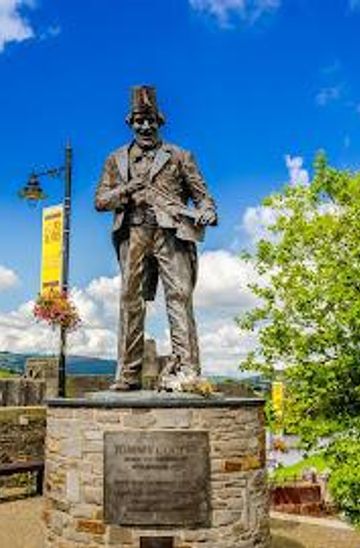
Tommy Cooper Statue
A bronze monument to the fez-wearing magician who made millions laugh with tricks that went beautifully wrong.
A striking 2.7-metre bronze sculpture honouring Caerphilly's most celebrated son, the legendary comedian and magician Tommy Cooper. Created by sculptor James Done and unveiled in 2008 by Sir Anthony Hopkins, the statue depicts Cooper in his iconic pose wearing his trademark fez, with a magic wand in hand. Located on The Twyn square near Caerphilly Castle, this public monument celebrates the life and legacy of the entertainer who became a household name through his unique blend of comedy, magic tricks, and physical humour.
A brief summary to Tommy Cooper Statue
- The Twyn, Caerphilly, CF83 1JL, GB
- Click to display
- Duration: 0.25 to 1 hours
- Free
-
 Outdoor
- Mobile reception: 5 out of 5
- Monday 12 am-12 am
- Tuesday 12 am-12 am
- Wednesday 12 am-12 am
- Thursday 12 am-12 am
- Friday 12 am-12 am
- Saturday 12 am-12 am
- Sunday 12 am-12 am

Know before you go
Hi, I'm Eve. Here are a few practical things to know before exploring Tommy Cooper Statue.
- Visit early morning or late afternoon for the best light for photography, as the bronze catches the sun beautifully and casts dramatic shadows across The Twyn square.
- Combine your visit with Caerphilly Castle, located just across the square, to experience the town's two most iconic landmarks in one trip.
- The Twyn Community Centre nearby hosts local events and exhibitions; check for any Tommy Cooper-related displays or heritage talks during your visit.
- Wear comfortable shoes, as the surrounding area invites exploration of historic Caerphilly, including nearby cafes and the town's market heritage sites.
- Read the information panel on the plinth to learn about Cooper's life, career, and the story of how the statue came to be erected by his admirers.
Do you manage this location?
Take control to get all the benefits, like improved information, better appearance, and stronger visibility across AI-powered discovery. Learn more
Activate your presenceOther nearby places you may find interesting

Getting There
-
Train from Cardiff
Direct trains run regularly from Cardiff Central Station to Caerphilly Station, approximately 20–25 minutes. From Caerphilly Station, it is a 10–15 minute walk downhill through the town centre to The Twyn. Trains operate throughout the day with frequent service; check Transport for Wales for current timetables and fares (typically £4–8 return).
-
Bus from Cardiff
Multiple bus services connect Cardiff city centre to Caerphilly town centre, with journey times of 30–45 minutes depending on traffic and route. Services run regularly throughout the day. The bus station is a short walk from The Twyn. Fares typically range from £2–5 return; check local bus operator schedules for current services.
-
Car from Cardiff or South Wales
Caerphilly is approximately 10 miles north of Cardiff, accessible via the A469 or A468. Journey time from Cardiff city centre is 20–30 minutes depending on traffic. Parking is available on surrounding streets near The Twyn and in nearby car parks; some are free, others charge modest hourly rates (typically £1–2 per hour). The location is clearly signposted from the town centre.
-
Walking within Caerphilly
The Twyn is in the heart of Caerphilly town centre, easily reached on foot from the train or bus stations. The walk is approximately 10–15 minutes through level, pedestrian-friendly streets with clear signage. The area is accessible year-round and suitable for all mobility levels, though the plinth itself has a single step.
For the on-the-go comforts that matter to you
-
 Restrooms
-
 Drink Options
-
 Food Options
-
 Seating Areas
-
 Information Boards
-
 Visitor Center
Discover more about Tommy Cooper Statue
A Tribute to Comedy's Greatest Showman
This bronze sculpture stands as a permanent tribute to Tommy Cooper, one of Britain's most beloved entertainers. The 2.7-metre-tall figure, created by sculptor James Done, captures Cooper in a moment of performance, complete with his signature red fez and magic wand. The statue rests upon a natural stone and granite plinth, positioned prominently on The Twyn square in the heart of Caerphilly town centre. The monument was unveiled on 23 February 2008 in a ceremony performed by Sir Anthony Hopkins, himself a devoted admirer of Cooper's work and patron of the Tommy Cooper Society.From Caerphilly to International Stardom
Thomas Frederick Cooper was born on 19 March 1921 in Llwyn Onn Street, Caerphilly, during an era when heavy industry dominated South Wales. The pollution from coal mining and steel production affected his health, prompting his family to relocate to Exeter when he was just three years old. Despite leaving his birthplace so young, Cooper never forgot his Welsh roots. His talent for entertainment emerged during his seven years of service with the British Army during the Second World War, when he performed for fellow soldiers. The iconic fez that became his trademark was born from necessity during a performance in Cairo, when he borrowed the hat from a passing waiter—a spontaneous moment that produced such riotous laughter it became part of his permanent stage persona.The Magic of Failed Tricks and Physical Comedy
Cooper's distinctive comedic style centred on the art of appearing to fail spectacularly. His act combined short, silly jokes, exaggerated clumsiness, and magic tricks that seemed to go hilariously wrong, though sometimes they would culminate in a clever reveal showing they had worked perfectly all along. After his military service, he developed his conjuring skills and became a member of The Magic Circle. His television debut in 1947 launched him to prominence, and by the 1970s he had become one of the biggest names in British entertainment, performing regularly in West End theatres and hosting his own television series. His physical presence—standing 6 feet 4 inches tall with large hands and an expressive face—made him instantly recognisable and perfectly suited to his brand of visual comedy.A Tragic End and Lasting Legacy
Cooper's life was marked by both triumph and tragedy. Despite his success, heavy smoking and drinking took their toll on his health. On 15 April 1984, at the age of 63, he suffered a fatal heart attack during a live television broadcast from Her Majesty's Theatre in London's West End—an event watched by millions and remembered as a shocking moment in British television history. His death only deepened his legend, transforming him into a cultural icon whose influence extended far beyond his lifetime.The Society's Mission and Public Recognition
In 2003, devoted fans established the Tommy Cooper Society with the ambitious goal of erecting a statue in his hometown. After years of fundraising, the society raised £45,000 to commission this bronze sculpture. The unveiling ceremony in 2008 drew crowds to The Twyn, with Sir Anthony Hopkins delivering a witty tribute that included an uncanny impersonation of Cooper himself. Hopkins compared Cooper to comedy legends Charlie Chaplin and Buster Keaton, describing him as "the comedian's comedian" for his masterful self-mockery and unique ability to blend pathos with humour. Today, the statue stands as a symbol of Caerphilly's cultural heritage, sharing the town's identity with its famous castle and distinctive cheese.Explore the best of what Tommy Cooper Statue has to offer















More about South Glamorgan
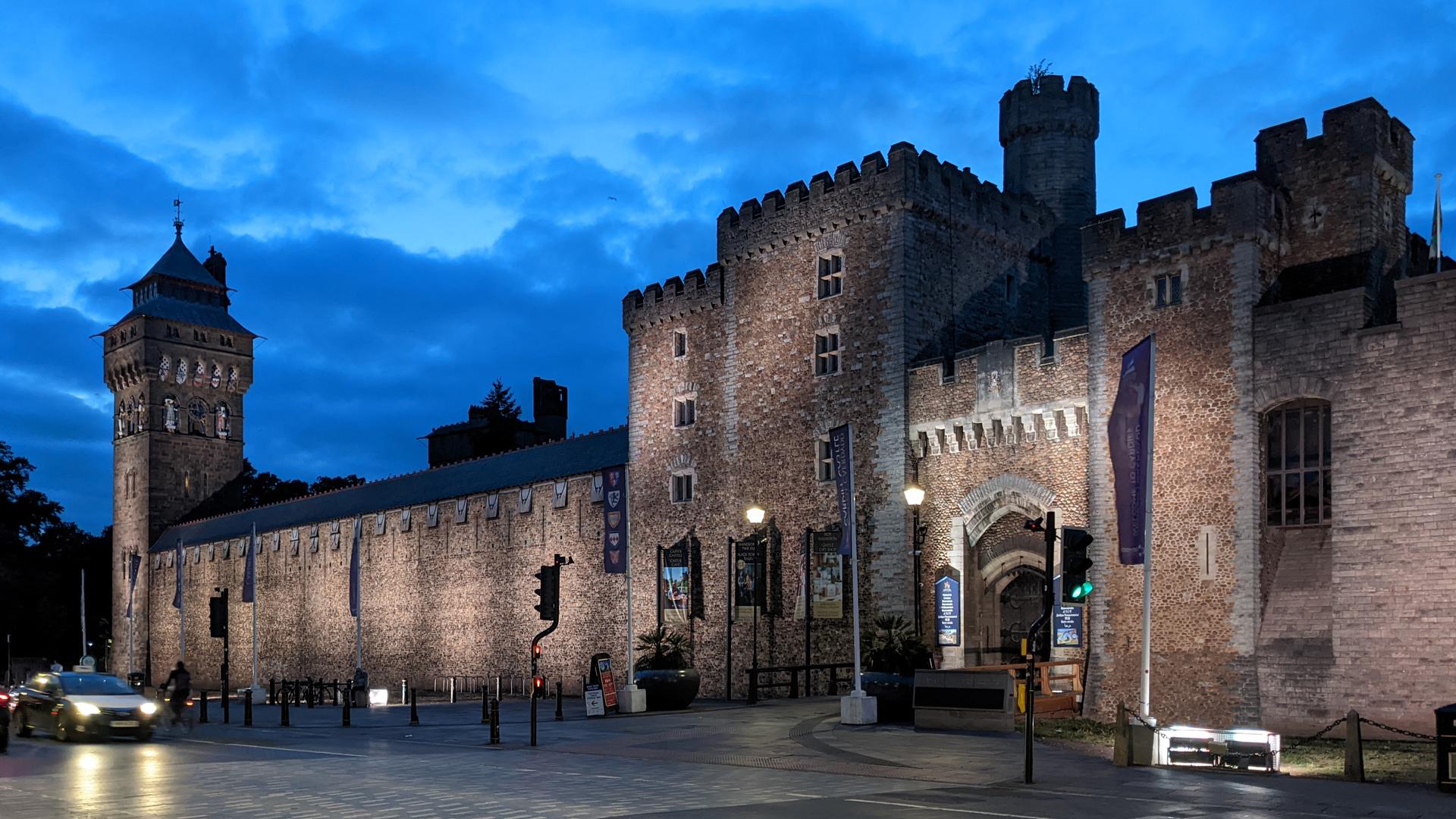
Explore South Glamorgan: a perfect blend of vibrant city life, historic landmarks, stunning coastlines, and rich cultural experiences in the heart of Wales.
Tell me more about South Glamorgan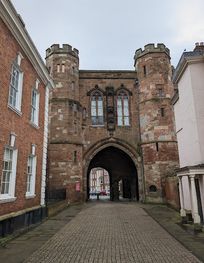
Explore Edgar Tower, a medieval fortified gatehouse guarding Worcester Cathedral’s historic precincts with timeless stone architecture and rich history.
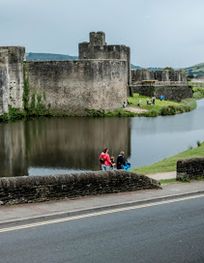
Wales' mightiest fortress, featuring a leaning tower that outranks Pisa and a newly restored Great Hall.