
Westminster College, Cambridge Travel Guide
Historic theological college blending Victorian architecture with contemporary faith education in Cambridge's academic heart.
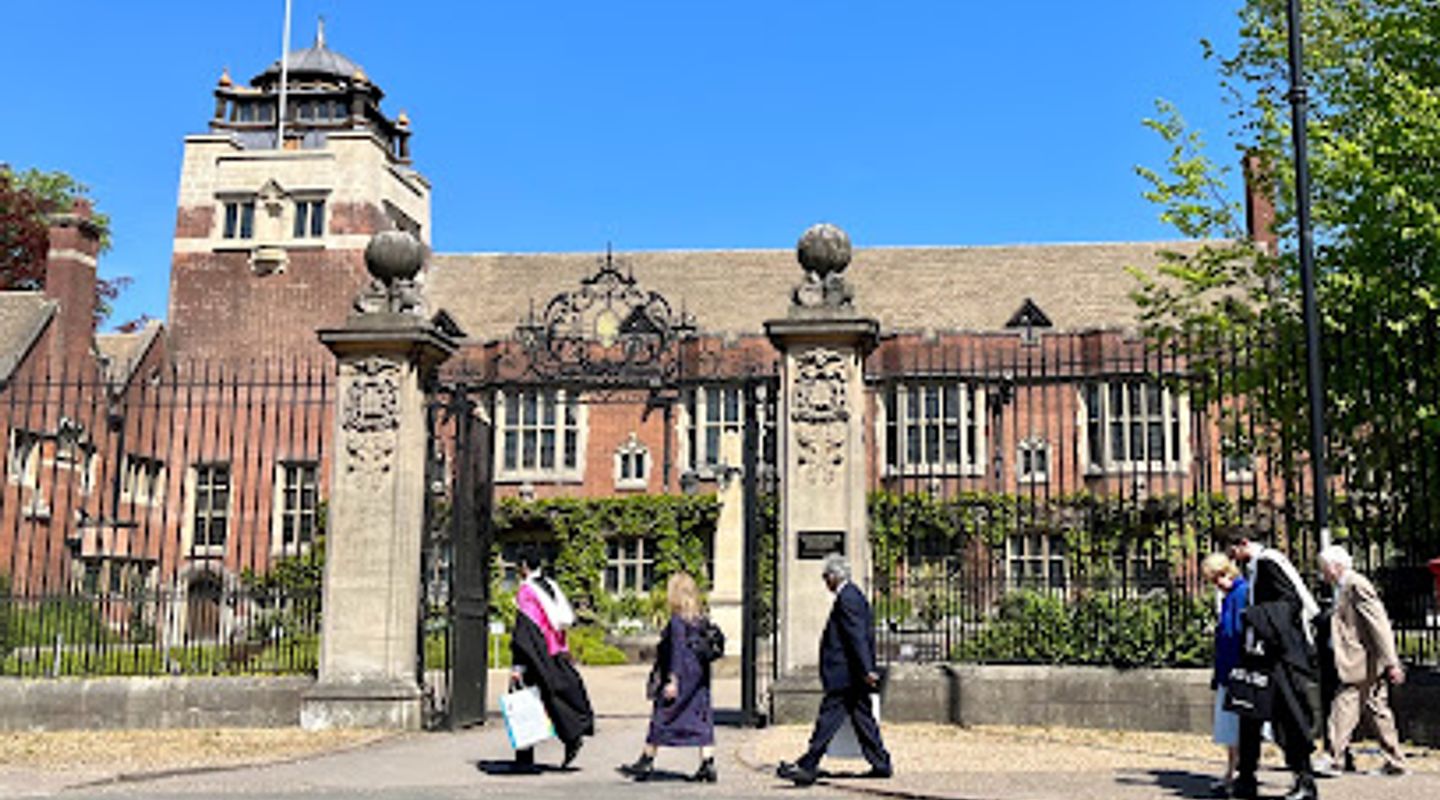
A historic theological college nestled on Madingley Road in Cambridge, Westminster College blends Victorian architecture with modern academic purpose. Founded in 1844 and relocated to Cambridge in 1899, this United Reformed Church institution trains ministers while hosting the Woolf Institute and Faraday Institute. The striking Henry Hare-designed building features a chapel with Douglas Strachan stained glass windows and sits steps from the University of Cambridge, offering visitors a glimpse into Cambridge's rich theological heritage and a peaceful academic sanctuary.
A brief summary to Westminster College
- Westminster College, Madingley Rd, Cambridge, CB3 0AA, GB
- Click to display
- Click to display
- Free
-
 Mixed
Mixed
- Mobile reception: 4 out of 5

Know before you go
Hi, I'm Eve. Here are a few practical things to know before exploring Westminster College.
- Visit the chapel to view the Douglas Strachan stained glass windows and the 1929 apse decoration—among Cambridge's finest ecclesiastical artworks, often overlooked by general visitors.
- The college sits on a busy intersection of Cambridge's ring road; approach via the quieter pedestrian entrance near the Woolf Institute building for a more peaceful arrival experience.
- Combine a visit with nearby Kettle's Yard art gallery (3 minutes' walk) and the Museum of Cambridge (3 minutes' walk) for a rich cultural morning exploring theology, art, and local history.
- The college's location provides excellent access to Cambridge's colleges and the River Cam; allow time to explore the surrounding academic precinct on foot after your visit.
- Check ahead for any public events or chapel services; the college occasionally hosts lectures and interfaith dialogues through the Woolf Institute that welcome visitors.
Do you manage this location?
Take control to get all the benefits, like improved information, better appearance, and stronger visibility across AI-powered discovery. Learn more about listing your business on Evendo
Activate your presenceOther nearby places you may find interesting
The closest places of the same kind, if this one is not quite what you had in mind.

Explore Westminster College on the Map
A handpicked selection of must-see spots near Westminster College, mapped for you.
Getting There
-
Walking from Cambridge City Centre
From Cambridge city centre, walk northwest along Bridge Street and continue onto Grange Road, then turn onto Madingley Road. The journey takes approximately 20–25 minutes on foot. The route is well-lit and passes through residential Cambridge neighbourhoods with clear pavements. This is the most direct pedestrian approach and allows you to experience the surrounding academic precinct.
-
Bus from City Centre
Take bus routes 18 or 118 from Emmanuel Street or Drummer Street bus station heading towards Madingley. Journey time is approximately 10–15 minutes depending on traffic. Buses run regularly throughout the day (typically every 15–30 minutes). Single fares cost around GBP 1.50–2.00. Alight at the Madingley Road stop near Westminster College.
-
Taxi or Ride-Share from Cambridge Station
From Cambridge Railway Station, a taxi or ride-share journey to Westminster College takes approximately 10–15 minutes depending on traffic conditions. Typical fares range from GBP 12–18. The college is clearly marked on navigation apps and drivers are familiar with the location on Madingley Road.
-
Cycling from City Centre
Cambridge is highly cycle-friendly. From the city centre, cycling to Westminster College via Grange Road and Madingley Road takes approximately 8–12 minutes. The route follows established cycle paths and quiet residential roads. Bike racks are available at the college. This is a popular option for visitors familiar with Cambridge's cycling infrastructure.
For the on-the-go comforts that matter to you
-
 Restrooms
-
 Food Options
-
 Seating Areas
-
 Information Boards
-
 Visitor Center
Discover more about Westminster College
A Theological Institution with Deep Roots
Westminster College stands as one of Cambridge's most distinctive educational institutions, serving as a theological college of the United Reformed Church since 1899. Originally founded in London in 1844, the college relocated to Cambridge following a generous gift of land from two Scottish sisters and biblical scholars, Agnes Smith Lewis and Margaret Dunlop Gibson. This move marked a pivotal moment in the college's history, establishing it within one of the world's most prestigious academic cities. Today, the college maintains its primary mission of training ministers for ordination while welcoming students pursuing theological study through various formats, from full-time residential programmes to part-time and distance learning options.Architectural Distinction and Campus Character
The college's striking Victorian Gothic building, designed by renowned architect Henry Hare and constructed between 1897 and 1899, dominates its prominent position on Madingley Road. The structure exemplifies late nineteenth-century ecclesiastical design, with its distinctive stonework and commanding presence along Cambridge's ring road. The college chapel, dedicated in 1921, represents a particularly notable feature, housing eleven exquisite stained glass windows created by celebrated artist Douglas Strachan. The chapel's apse decoration, completed in 1929 by W. Jowsey, adds further artistic richness to the interior. The dining hall ceiling displays logos of Presbyterian churches, reflecting the institution's denominational heritage. Beyond the main college building, the campus now encompasses the Woolf Institute of Abrahamic Faiths and the Faraday Institute for Science and Religion, both established on the Westminster site since 2017, expanding the college's intellectual mission into interfaith dialogue and science-theology engagement.Academic Community and Contemporary Practice
Westminster College currently serves approximately fifty students, a diverse cohort pursuing theological education through multiple pathways. The college employs five academic staff members covering traditional theological disciplines: Systematic Theology, Church History, Old Testament Studies, New Testament Studies, and Pastoral Studies. While historically most students completed four-year programmes including an internship year in local churches, the college has evolved to accommodate contemporary educational needs. Many students now pursue degrees on a part-time basis or through distance learning, balancing theological study with other professional and personal commitments. Degrees are awarded through partnerships with Anglia Ruskin University and Cambridge University, lending academic credibility and breadth to the college's offerings.Integration Within Cambridge's Academic Landscape
Although Westminster College is not formally part of the University of Cambridge, it maintains close institutional ties through the Cambridge Theological Federation, an affiliation of seven religious colleges working collaboratively with the university. This arrangement allows Westminster students access to university facilities and resources while maintaining the college's independent identity and theological focus. The federation model represents a distinctive feature of Cambridge's academic ecosystem, where theological education flourishes within a broader university context. The college's location on Madingley Road places it within walking distance of numerous University of Cambridge colleges, including Trinity College, King's College, and St John's College, creating a vibrant intellectual neighbourhood.Cultural and Literary Connections
Westminster College maintains an affiliation with Frederick Buechner, the acclaimed American writer and Presbyterian theologian, whose literary and spiritual contributions have influenced generations of theological students. The college awards an annual prize for Excellence in Writing named in Buechner's honour, recognising the importance of articulate theological expression and literary craft within ministerial training. This commitment to the intersection of theology and literature reflects the college's understanding that effective ministry requires not only doctrinal knowledge but also the ability to communicate spiritual truths through compelling narrative and thoughtful prose.












Your all‑in‑one travel companion app
Explore expert travel guides, compare and book tours, experiences, hotels, and more—all from the palm of your hand. Download now for seamless trip planning wherever your wanderlust takes you.


Explore More of Cambridge
Looking beyond Westminster College? Discover Cambridge for broader travel guides, local hot-spots, and regional highlights.
Explore Cambridge
Explore Balkerne Gate, Britain's largest surviving Roman gateway, a monumental symbol of Colchester’s ancient Roman heritage and architectural mastery.

Earthwork remains of medieval Cambridge Castle offering open city views from a compact grass mound.
