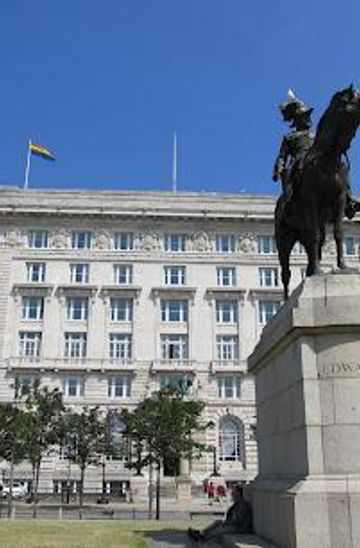
Cunard Building: Liverpool’s Maritime Heritage Icon
A majestic waterfront landmark embodying Liverpool’s rich maritime history and Cunard’s legacy of luxury ocean travel.
The Cunard Building, a Grade II listed landmark completed in 1917, stands proudly on Liverpool’s historic waterfront as a symbol of the city’s maritime legacy. Originally the headquarters of the Cunard Line, it showcases a blend of Italian Renaissance and Greek Revival architecture. Once the bustling nerve centre for transatlantic ocean liner operations, today it houses offices and cultural spaces, linking Liverpool’s rich past with its vibrant present.
A brief summary to Cunard Building
- Liverpool, GB
- Duration: 0.5 to 2 hours
- Free
-
 Outdoor
- Mobile reception: 4 out of 5

Know before you go
Hi, I'm Eve. Here are a few practical things to know before exploring Cunard Building.
- Visit during daylight hours to fully appreciate the building’s detailed exterior and waterfront views.
- Explore nearby attractions such as the Royal Liver Building and the Port of Liverpool Building to complete the Three Graces experience.
- Check out the British Music Experience inside the building for a cultural complement to the maritime history.
- Bring a camera to capture the striking architectural details and the vibrant waterfront atmosphere.
Do you manage this location?
Take control to get all the benefits, like improved information, better appearance, and stronger visibility across AI-powered discovery. Learn more
Activate your presenceGetting There
-
Train
From Liverpool Lime Street station, take a taxi or local bus for a 10-15 minute ride to the waterfront area where the Cunard Building is located. Train services run frequently with tickets costing around £3-£5.
-
Bus
Several city buses serve the Pier Head area near the Cunard Building, including routes 10, 17, and 26. Travel time from central Liverpool is approximately 15-20 minutes, with single fares around £2.50. Note that bus frequency may reduce on weekends.
-
Taxi
Taxis from Liverpool city centre to the Cunard Building typically take 10 minutes depending on traffic, costing approximately £6-£10. This is a convenient option for groups or travelers with luggage.
For the on-the-go comforts that matter to you
-
 Restrooms
-
 Drink Options
-
 Food Options
-
 Seating Areas
-
 Information Boards
Discover more about Cunard Building
Architectural Grandeur Reflecting Maritime Prestige
The Cunard Building was constructed between 1914 and 1917 during Liverpool’s heyday as a global trade and maritime hub. Designed by William Edward Willink and Philip Coldwell Thicknesse, its architecture is a grand fusion of Italian Renaissance and Greek Revival styles, inspired by the Farnese Palace in Rome. The exterior’s imposing Portland stone facade and the lavish use of Italian marble inside articulate the building’s purpose as a shoreside counterpart to Cunard’s elegant ocean liners. This stately structure is one of Liverpool’s famed Three Graces, anchoring the city’s iconic waterfront skyline.Heart of Transatlantic Travel and Maritime Operations
For over fifty years, the Cunard Building served as the headquarters for the Cunard Steamship Company, a leader in transatlantic passenger and cargo shipping since 1839. It was here that the company managed its fleet of luxurious liners, including the legendary Queen Mary and Queen Elizabeth, which played pivotal roles during both World Wars. The building’s offices bustled with over a thousand staff, coordinating everything from ship design to passenger services. The grand ticket hall and first-class waiting lounges reflected the elegance and sophistication synonymous with Cunard’s brand.Historical Significance and Wartime Resilience
Throughout the 20th century, the Cunard Building witnessed key historical moments. During World War II, its sub-basement served as an air raid shelter, protecting staff and preserving operations amid wartime challenges. The Cunard fleet’s contribution to the war effort was so significant that Winston Churchill credited Cunard ships with shortening the conflict by a year. After Cunard relocated its headquarters to Southampton in 1967, the building transitioned to new uses but retained its symbolic importance as a testament to Liverpool’s maritime heritage.Modern-Day Role and Cultural Presence
Today, the Cunard Building accommodates various offices, including parts of Liverpool City Council, and cultural venues such as the British Music Experience. Its Grade II listed status ensures the preservation of its architectural and historical value for future generations. The building remains an integral part of Liverpool’s waterfront, where the legacy of Cunard continues to be celebrated. The sight of Cunard’s modern luxury liners saluting the building as they sail into Liverpool is a poignant reminder of the enduring bond between the city and the sea.Setting Among Liverpool’s Waterfront Icons
Positioned centrally among the Three Graces alongside the Royal Liver Building and the Port of Liverpool Building, the Cunard Building contributes to one of the most famous waterfronts in the world. This area encapsulates Liverpool’s rich maritime past, industrial heritage, and architectural splendor. Visitors can admire the building’s majestic facade while exploring the vibrant surroundings filled with museums, shops, and cultural attractions that celebrate the city’s global connections and storied history.Legacy of Luxury and Innovation in Ocean Travel
The Cunard Building symbolizes more than just a physical headquarters; it represents a golden age of transatlantic travel marked by luxury, innovation, and reliability. Cunard’s ships were renowned for their speed, safety, and elegance, setting standards in maritime travel that resonate to this day. The building’s design and function embodied these values, serving as a beacon of Liverpool’s pivotal role in connecting continents and cultures through the power of the sea.Explore the best of what Cunard Building has to offer















More about Lancashire
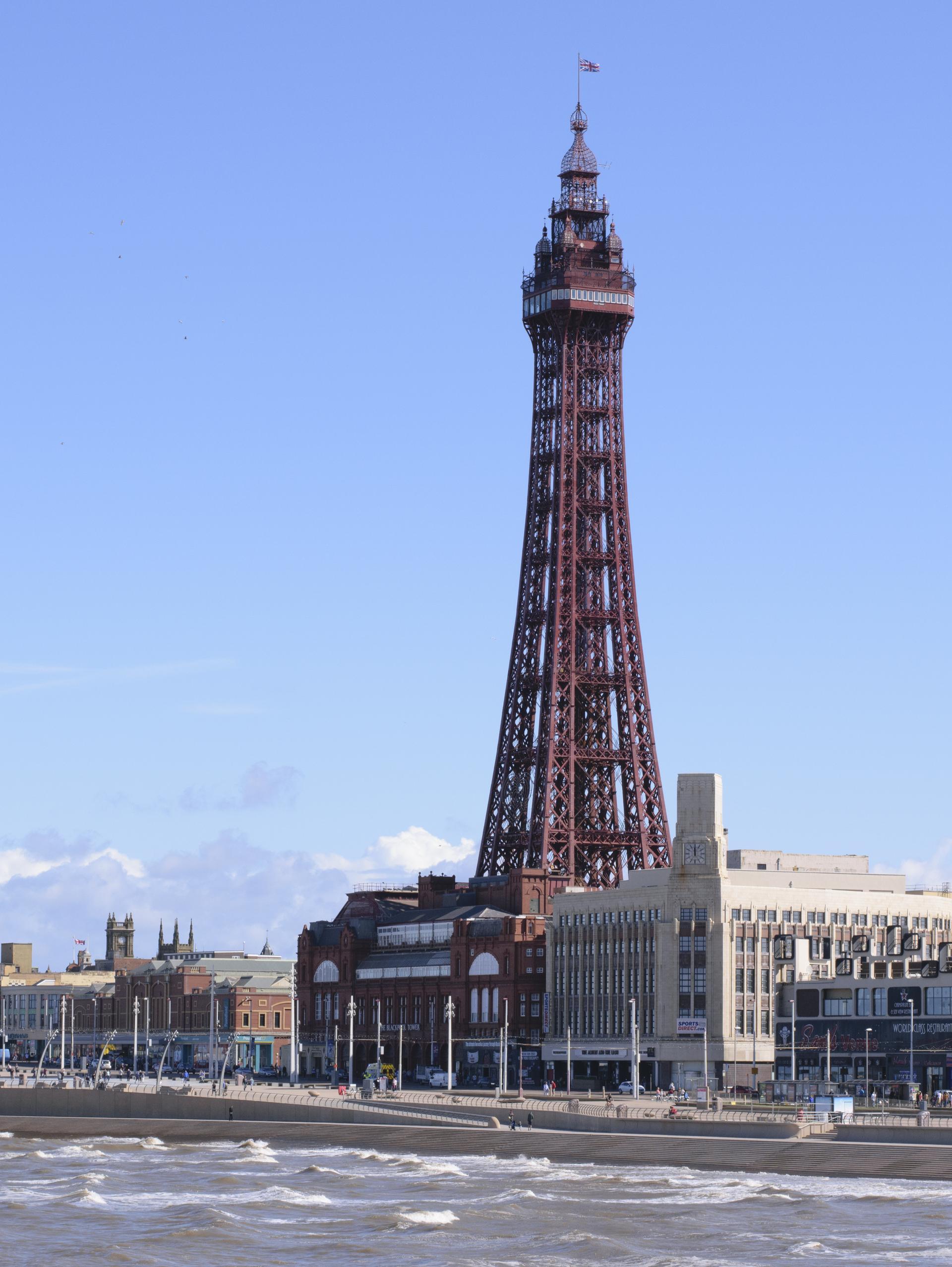
Discover Lancashire: A perfect blend of stunning landscapes, rich history, and vibrant culture in the heart of England's northwest.
Tell me more about Lancashire