James Clerk Maxwell Statue, Edinburgh Travel Guide
A bronze homage to James Clerk Maxwell on Edinburgh’s elegant George Street, celebrating the father of modern electromagnetism and colour photography.
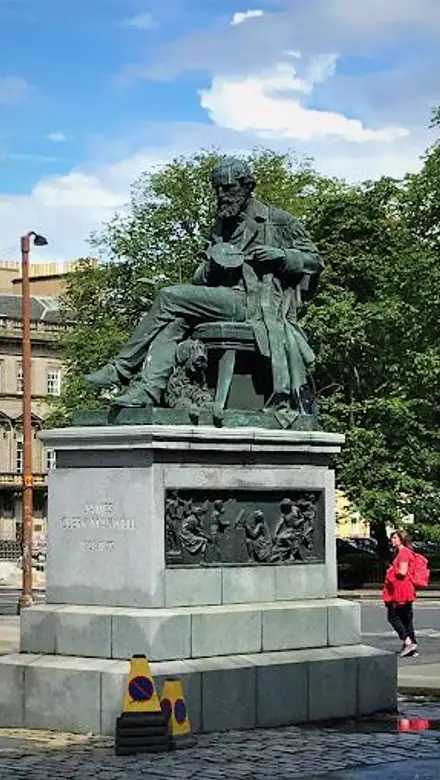
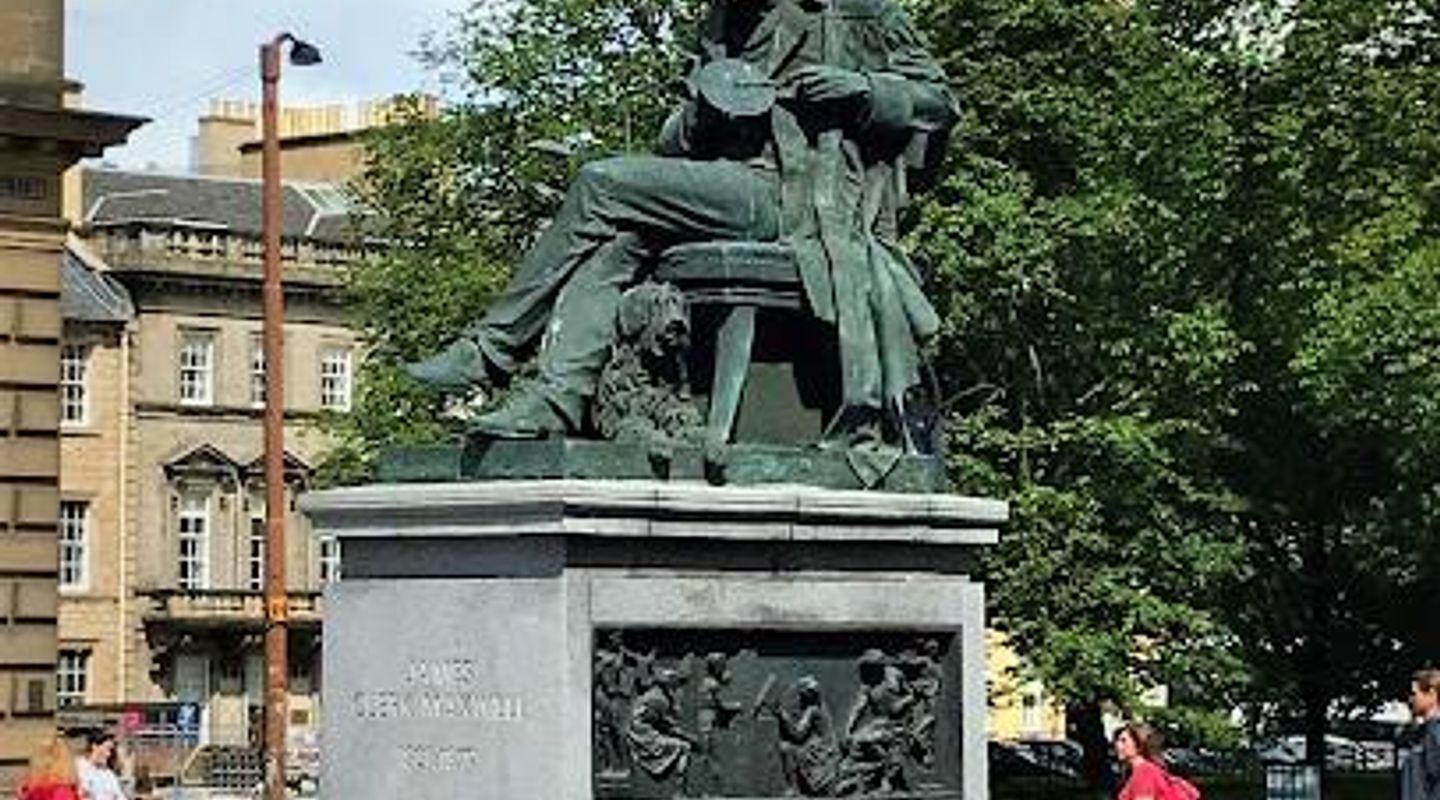
The James Clerk Maxwell Statue stands proudly on George Street in Edinburgh, commemorating one of Scotland's greatest physicists and a pioneer of electromagnetic theory. Sculpted by Alexander Stoddart and unveiled in 2008, the bronze statue depicts Maxwell with his dog Toby and a spinning colour top, symbolizing his groundbreaking work in colour photography and electromagnetism. The statue is a modest yet profound tribute located in Edinburgh’s elegant New Town, surrounded by Georgian architecture and vibrant city life.
A brief summary to James Clerk Maxwell Statue
- 22-26 George St, Edinburgh, EH2 2PQ, GB
- Click to display
- Click to display
- Duration: 0.25 to 1 hours
- Free
-
 Outdoor
- Mobile reception: 5 out of 5

Know before you go
Hi, I'm Eve. Here are a few practical things to know before exploring James Clerk Maxwell Statue.
- Visit during daylight hours to fully appreciate the statue’s details and the surrounding Georgian architecture.
- Combine your visit with a walk along George Street to explore its shops, historic buildings, and vibrant dining scene.
- Look for the plaque on the statue’s plinth displaying Maxwell’s electromagnetic equations for a deeper understanding of his work.
- Explore nearby landmarks such as St Andrew Square and the Royal Society of Edinburgh to enrich your cultural experience.
Do you manage this location?
Take control to get all the benefits, like improved information, better appearance, and stronger visibility across AI-powered discovery. Learn more about listing your business on Evendo
Activate your presenceOther nearby places you may find interesting
The closest places of the same kind, if this one is not quite what you had in mind.

Explore James Clerk Maxwell Statue on the Map
A handpicked selection of must-see spots near James Clerk Maxwell Statue, mapped for you.
Unlock the Best of James Clerk Maxwell Statue
Buy tickets
-
No tickets available
Book tours with entry
-
No tours available
Book tours without entry

Getting There
-
Bus
Take Lothian Buses routes 3, 23, or 27 to stops near St Andrew Square, about a 5-10 minute walk to the statue. Buses run frequently every 10-15 minutes. A single fare costs approximately £1.80 GBP.
-
Tram
Use the Edinburgh Trams service to St Andrew Square tram stop, located about 300 meters from the statue. Trams operate every 7-10 minutes, with tickets priced around £1.80 GBP for a single journey.
-
Walking
From Princes Street, it is a pleasant 10-15 minute walk along George Street to the statue. The terrain is flat and accessible, suitable for wheelchairs and strollers.
For the on-the-go comforts that matter to you
-
 Restrooms
-
 Drink Options
-
 Food Options
-
 Seating Areas
-
 Information Boards
Discover more about James Clerk Maxwell Statue
A Tribute to a Scientific Giant
The James Clerk Maxwell Statue, situated at 22-26 George Street in Edinburgh, honors the legacy of one of the most influential physicists in history. Born in Edinburgh in 1831, Maxwell formulated the classical theory of electromagnetic radiation, laying the groundwork for modern physics. His equations unified electricity, magnetism, and light, influencing technologies such as radio, television, radar, and mobile communications. The statue, created by sculptor Alexander Stoddart and unveiled in 2008, captures Maxwell holding a spinning colour top, a nod to his pioneering work on colour perception and the first colour photograph produced in 1861.Artistic and Symbolic Details
This bronze sculpture features Maxwell seated with his faithful dog Toby at his feet, symbolizing loyalty and companionship. The plinth of the statue is inscribed with Maxwell’s four famous electromagnetic equations, emphasizing his scientific contributions. Side reliefs depict Isaac Newton and Albert Einstein as classical philosophers, illustrating Maxwell’s place between these two scientific titans. Einstein himself credited Maxwell’s work as foundational, famously stating that his theory of relativity owed its origins to Maxwell’s equations.Setting in Edinburgh’s New Town
The statue occupies a prominent position on George Street, the grand central thoroughfare of Edinburgh’s New Town, an 18th-century urban development known for its Georgian architecture and elegant proportions. George Street links St Andrew Square and Charlotte Square, hosting a vibrant mix of upscale boutiques, restaurants, historic buildings, and cultural landmarks. The street’s wide layout and classical façades provide a dignified backdrop for the statue, blending history, science, and urban sophistication.George Street’s Historical and Cultural Context
Originally designed as a residential street in the 1760s, George Street evolved through the Victorian era into a bustling commercial and banking district. Many of its grand buildings were designed by notable architects such as David Bryce. Today, it remains a focal point for shopping, dining, and nightlife, while preserving its architectural heritage. The statue of Maxwell adds a layer of intellectual and cultural significance, reminding visitors of Edinburgh’s rich scientific heritage.Commemorative Importance and Legacy
Maxwell’s contributions are commemorated not only by this statue but also by a museum at his birthplace on India Street and various plaques around the city. The James Clerk Maxwell Foundation continues to preserve his legacy. The statue’s presence on George Street serves as a daily reminder of Maxwell’s profound impact on science and technology, bridging the gap between past discoveries and modern innovations.Visitor Experience and Atmosphere
Visitors to the statue can appreciate its artistic craftsmanship while soaking in the lively atmosphere of George Street. The location offers a blend of tranquility amid urban bustle, where the statue’s modest scale invites reflection on Maxwell’s towering intellectual achievements. Surrounded by the elegant Georgian streetscape, it is a compelling spot for those interested in science, history, and Edinburgh’s cultural fabric.More to explore near James Clerk Maxwell Statue













Your all‑in‑one travel companion app
Explore expert travel guides, compare and book tours, experiences, hotels, and more—all from the palm of your hand. Download now for seamless trip planning wherever your wanderlust takes you.


Explore More of Edinburgh

Looking beyond James Clerk Maxwell Statue? Discover Edinburgh for broader travel guides, local hot-spots, and regional highlights.
Explore Edinburgh