

Fleshmarket Cl Travel Guide
Free Guide: Medieval alley steeped in history, where Edinburgh's butcher's market once thrived and literary inspiration still echoes.


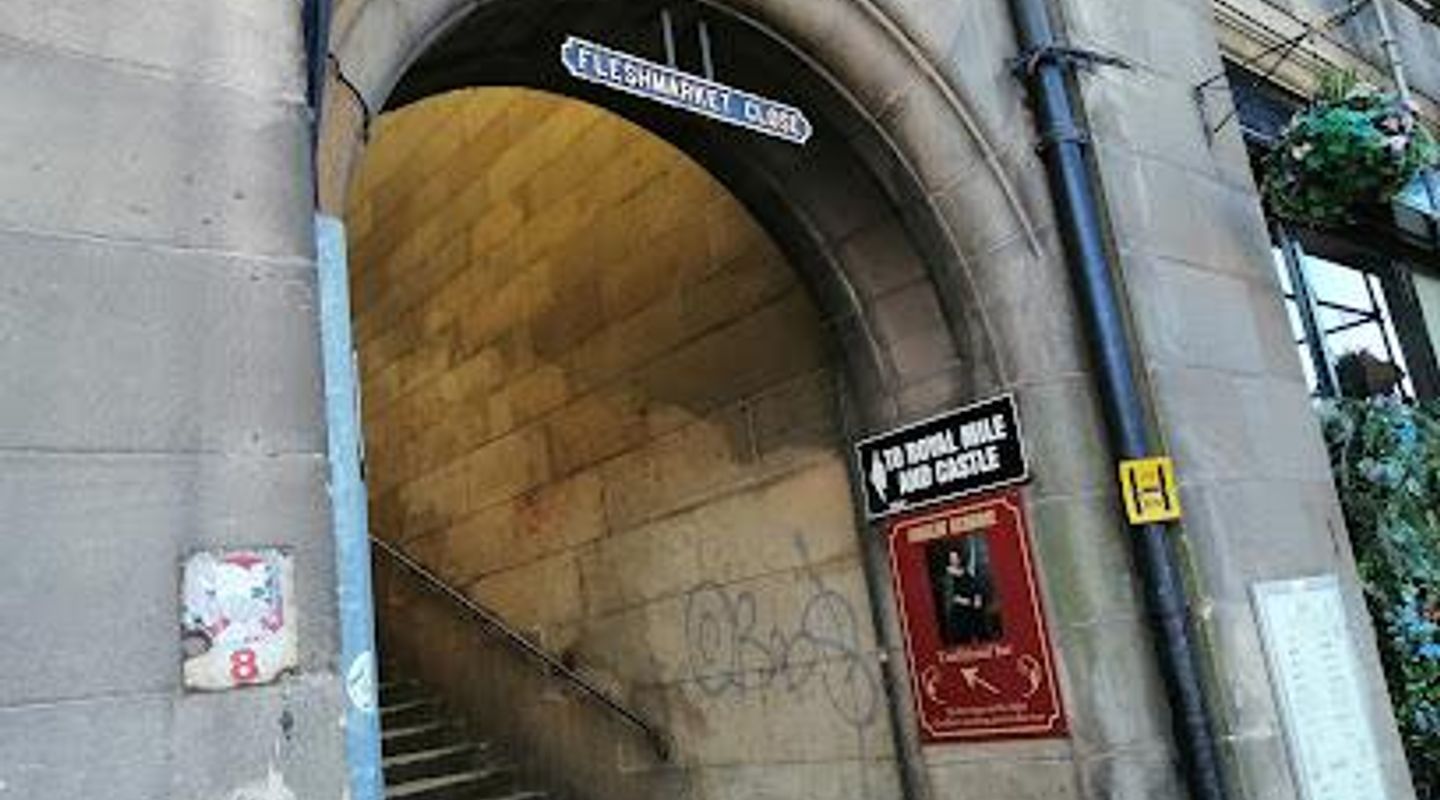
A brief summary of Fleshmarket Cl
Medieval alley steeped in history, where Edinburgh's butcher's market once thrived and literary inspiration still echoes.
Fleshmarket Close is a narrow medieval alley in Edinburgh's Old Town that descends steeply from Cockburn Street to Market Street near Waverley Station. Named after the historic meat market and slaughterhouse once located there, this atmospheric close features Scottish baronial revival architecture and remains one of the city's most evocative passages. The lane inspired Ian Rankin's fifteenth Inspector Rebus novel and continues to captivate visitors with its shadowy corners and rich historical character.
On-site amenities
 Food options
 Drink options
 Restrooms
 Information boards
- Address
- Edinburgh
Getting there
On foot from Royal Mile
On foot from Waverley Station
Bus from city center
Taxi or ride-share from city center
Discover more about Fleshmarket Cl
A Medieval Passage Through Time
Fleshmarket Close is a narrow alley of medieval origin that winds through Edinburgh's Old Town, connecting Cockburn Street with Market Street near Edinburgh Waverley Station. This steep, atmospheric lane represents one of the city's most distinctive urban features—a close, or narrow passageway, that descends into the gullies flanking the Royal Mile. The close's name derives from its historical function as the site of Edinburgh's meat market and slaughterhouse, a vital component of the city's food supply chain for centuries.
The Butcher's Market and Medieval Commerce
During its operational years as a meat market, Fleshmarket Close served a grimly practical purpose in the city's urban design. Meat would be hung along the alley's sides, and blood would naturally drain down the steep incline of the lane, flowing toward the valley to the north of the city. This primitive but effective system of waste management was typical of medieval urban planning, where geography and gravity solved sanitation challenges. The close was named after the significant commercial activity that defined it, following the Edinburgh tradition of naming closes after the trades and businesses based within them or the notable people who resided there.
Architectural Character and Victorian Revival
The buildings visible along Fleshmarket Close today predominantly reflect Scottish baronial revival style, an architectural movement that dominated Edinburgh from 1840 to 1920. This distinctive aesthetic, with its castle-like features and romantic historical references, transformed the appearance of the Old Town during the Victorian era. The architecture creates the close's characteristic shadowy, evocative atmosphere—narrow passages between tall stone buildings that seem to transport visitors back through centuries of Edinburgh's history.
Literary and Cultural Significance
Fleshmarket Close gained renewed prominence in contemporary culture when Scottish crime writer Ian Rankin chose it as the title of his fifteenth Inspector Rebus novel, published in 2004. The novel was released in the United States under the alternative title Fleshmarket Alley, as the publisher believed American readers might be unfamiliar with the Scottish term "close." The book explores themes of crime, location, and Edinburgh's darker underbelly, establishing the close as a compelling setting within Rankin's acclaimed detective fiction. The street has also featured in film production, including J.J. Abrams' 2025 movie Ghostwriter, further cementing its place in popular culture.
Historic Residents and Notable Figures
Fleshmarket Close was historically the residence of Henry Dundas, Viscount Melville, a significant figure in Scottish political history. The close also housed The Jinglin' Geordie bar, named after George Heriot, a 17th-century money-lender and goldsmith whose bequest established a hospital for fatherless children that evolved into George Heriot's School, a leading independent institution. The bar became popular with journalists from the Evening News and The Scotsman newspapers until those publications relocated to the Holyrood area in 1999.
Modern Significance and Urban Connection
Today, Fleshmarket Close functions as an important pedestrian route connecting Edinburgh's Old Town with Waverley Station, one of the city's primary transportation hubs. The close provides a direct link between the historic heart of Edinburgh and modern transport infrastructure, making it both a practical thoroughfare and a living museum of the city's medieval urban fabric. Its narrow confines, steep gradient, and atmospheric architecture make it one of the Old Town's most memorable and photographed passages.
Evendo Review Centre
 Google
Guest reviews
Best time to go
Quietest: Jan, Feb & Dec · before 6am or from 11pm
Busy times are Evendo estimates for a typical year, to help you plan. Actual crowds vary with events, school holidays and the weather.
Explore Fleshmarket Cl on the map
A handpicked selection of must-see spots near Fleshmarket Cl, mapped for you.
Get your free copy of our complete guide to Fleshmarket Cl, delivered straight to you.
Everything on this page, from opening hours and how to get there to Eve’s tips and the best time to go, in one PDF you can read offline, print or share.
Already have an account? Sign in
Your Fleshmarket Cl guide is ready.
We'll send it to · Not you? Sign out

Getting your guide ready…
We are putting together a fresh copy of the Fleshmarket Cl guide. This can take up to a minute.
This can take a few moments. If your browser asks, choose Allow so the download can start. You'll find the guide in your Downloads folder.
Nothing happened? Download it again
Sorry, the guide is taking longer than usual. Please try again in a minute, or get it by email instead.
Other nearby places you may find interesting
The closest places of the same kind, if this one is not quite what you had in mind.
-
-
-
-
-


Swipe for more places
More to explore near Fleshmarket Cl

 Best experiences near Fleshmarket Cl
 Best hotels near Fleshmarket Cl
 Best landmarks near Fleshmarket Cl
 Best attractions near Fleshmarket Cl
 Best shops near Fleshmarket Cl
 Best restaurants near Fleshmarket Cl
 Best bars near Fleshmarket Cl
Do you manage this location?
Take control to get all the benefits, like improved information, better appearance, and stronger visibility across AI-powered discovery.
Explore more
Explore more of Fife
Discover Fife, Scotland’s Kingdom of History and Natural Beauty, featuring St. Andrews, ancient ruins, charming fishing villages, and stunning coastal walks.
Explore Fife
Explore more of United Kingdom
Discover the United Kingdom: A blend of rich history, stunning landscapes, and vibrant cities, offering a unique travel experience for every visitor.
Explore United Kingdom
