Kessock Bridge, Inverness Travel Guide
Free Guide: A landmark cable-stayed bridge linking Inverness and the Black Isle, transforming Highland travel with its elegant design and engineering innovation.


A brief summary of Kessock Bridge
A landmark cable-stayed bridge linking Inverness and the Black Isle, transforming Highland travel with its elegant design and engineering innovation.
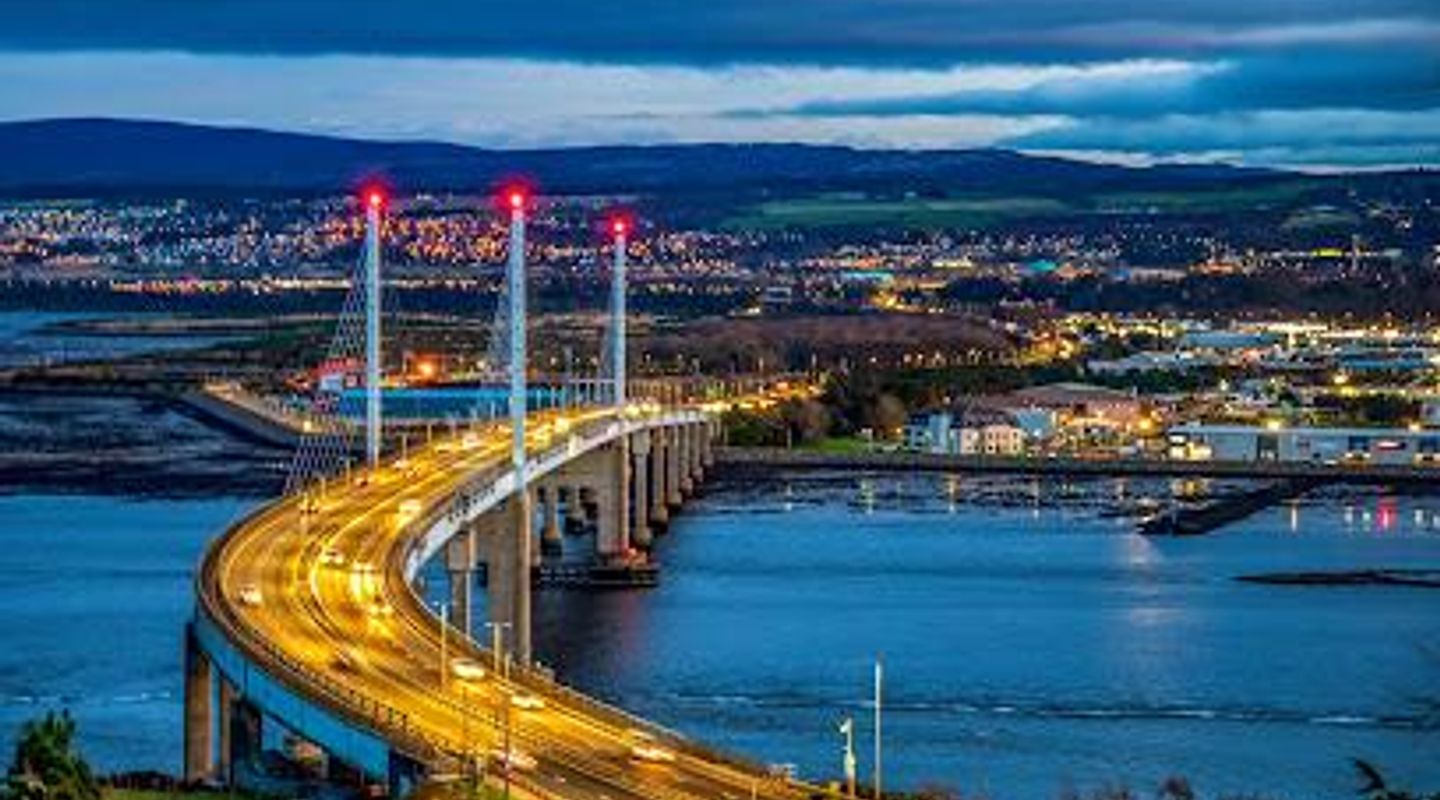
The Kessock Bridge is a striking cable-stayed structure spanning 1,056 metres across the Beauly Firth near Inverness, Scotland. Opened in 1982, it carries the A9 trunk road and connects Inverness to the Black Isle, dramatically reducing travel times to the northern Highlands. Renowned for its harp-like cables and four towering pylons, the bridge is a landmark of engineering innovation and regional development.
On-site amenities
 Information boards
 Seating areas
 Trash bins
Opening hours
- Every dayOpen 24 hours
Opening hours as listed on the venue’s Google Business Profile. Hours can change for services and special events, so check with the venue before you go.
- Address
- Kessock Brg
- Website
Getting there
Car
Bus
Walking
Discover more about Kessock Bridge
Engineering Marvel Bridging the Beauly Firth
The Kessock Bridge, completed in 1982, is a cable-stayed bridge stretching 1,056 metres (3,465 feet) across the Beauly Firth, an inlet of the Moray Firth near Inverness. Its central span measures 240 metres (787 feet), elevated high above the water to allow ships to access Inverness docks. The design features four towering steel pylons, each approximately 45 metres tall, from which 64 steel cables fan down like harp strings to support the road deck. The bridge’s reinforced concrete piers and steel superstructure combine strength and elegance, making it the first multi-cable-stayed bridge in the UK and the largest of its type in Europe at the time of completion. Special seismic buffers were incorporated to mitigate movements from the nearby Great Glen Fault, showcasing advanced engineering foresight.
Transforming Transport and Regional Growth
Before the bridge’s construction, crossing the Beauly Firth meant either a lengthy 20-mile detour or reliance on the Kessock Ferry, which was limited in capacity. The bridge’s opening revolutionized travel by linking Inverness directly to the Black Isle and beyond via the A9 trunk road. This connection significantly shortened journey distances and times to northern Highland destinations such as Wick, fostering economic growth and enabling Inverness to expand as a regional hub. The bridge is the southernmost of the “Three Firths” crossings, followed by the Cromarty and Dornoch Firth bridges, collectively transforming Highland road transport.
Architectural and Cultural Significance
Designed by German engineer Hellmut Homberg and built by Cleveland Bridge, the Kessock Bridge is celebrated for its aesthetic appeal and technical innovation. Its harp-like cable arrangement and illuminated pylons create a distinctive silhouette on the Inverness skyline, especially at night. In 2019, Historic Environment Scotland granted the bridge Category B listed status, recognizing its importance as a 20th-century engineering landmark. The bridge also won the Saltire Society’s civil engineering award in 1983, affirming its status as a pioneering structure.
Ongoing Maintenance and Legacy
Since its opening, the bridge has undergone maintenance programs to ensure its longevity, including resurfacing projects completed in the 2010s using advanced waterproofing and surfacing materials. Managed by BEAR Scotland on behalf of Transport Scotland, the bridge continues to serve as a vital transport artery with millions of vehicles crossing annually. Future investments are planned to maintain its structural integrity and operational efficiency.
Surrounding Environment and Views
The bridge offers panoramic views over the Beauly Firth and towards Inverness city. On the southern side lies the Caledonian Stadium, home to Inverness Caledonian Thistle Football Club. Travelers crossing the bridge experience sweeping vistas of the Black Isle to the north and the Highland landscape beyond. The location is a popular spot for photography and sightseeing, combining functional infrastructure with natural beauty.
Historical Context and Construction Challenges
Planning for the bridge began in the early 1970s, with construction starting in 1976 after a competitive tendering process. The project faced challenges including inflation, technical complexity, and competition for skilled labor from nearby oil platform yards. Despite these hurdles, the bridge was completed in 1982 at a cost equivalent to over £100 million today. Its successful completion marked the end of centuries of ferry service and symbolized a new era of connectivity for the Highlands.
Evendo Review Centre
 Google
Guest reviews
Best time to go
Quietest: Jan, Feb & Dec · before 5am
Busy times are Evendo estimates for a typical year, to help you plan. Actual crowds vary with events, school holidays and the weather.
Explore Kessock Bridge on the map
A handpicked selection of must-see spots near Kessock Bridge, mapped for you.
Get your free copy of our complete guide to Kessock Bridge, delivered straight to you.
Everything on this page, from opening hours and how to get there to Eve’s tips and the best time to go, in one PDF you can read offline, print or share.
Already have an account? Sign in
Your Kessock Bridge guide is ready.
We'll send it to · Not you? Sign out

Getting your guide ready…
We are putting together a fresh copy of the Kessock Bridge guide. This can take up to a minute.
This can take a few moments. If your browser asks, choose Allow so the download can start. You'll find the guide in your Downloads folder.
Nothing happened? Download it again
Sorry, the guide is taking longer than usual. Please try again in a minute, or get it by email instead.
Unlock the best of Kessock Bridge
Skip-the-line tickets, guided tours with entry, and walking tours of the area, booked in a few clicks.

Other nearby places you may find interesting
The closest places of the same kind, if this one is not quite what you had in mind.
-
-
-
-
-


Swipe for more places
More to explore near Kessock Bridge

 Best experiences near Kessock Bridge
 Best hotels near Kessock Bridge
 Best landmarks near Kessock Bridge
 Best attractions near Kessock Bridge
 Best shops near Kessock Bridge
 Best restaurants near Kessock Bridge
 Best bars near Kessock Bridge
Do you manage this location?
Take control to get all the benefits, like improved information, better appearance, and stronger visibility across AI-powered discovery.
Explore more

Explore more of Inverness
Discover Inverness, the picturesque gateway to Scotland's Highlands, where history, culture, and natural beauty blend seamlessly in a vibrant city setting.
Explore Inverness
Explore more of United Kingdom
Discover the United Kingdom: A blend of rich history, stunning landscapes, and vibrant cities, offering a unique travel experience for every visitor.
Explore United Kingdom