Barbican Centre, London Travel Guide
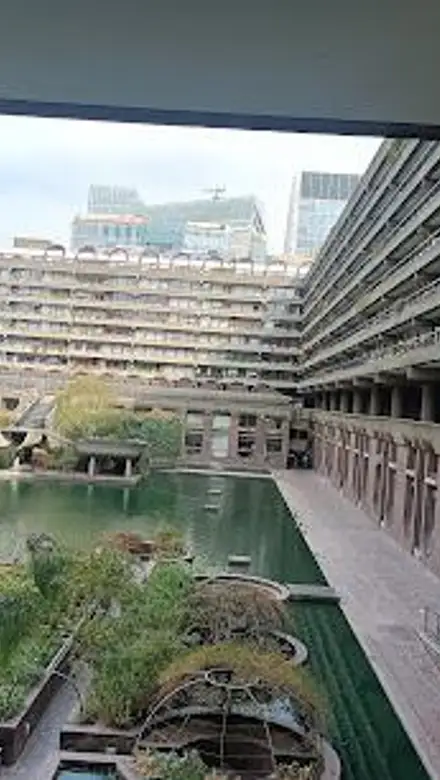
A major Brutalist arts complex in the City of London, where theatres, galleries, terraces, and the conservatory sit inside a layered postwar landmark.
The Barbican Centre is a vast arts complex in the City of London, combining theatres, galleries, a cinema, concert halls, a library, restaurants, and public terraces. Its concrete walkways, water features, and layered foyers make it as much an architectural visit as a cultural one. Come for a performance or exhibition, then linger in the public spaces, where the scale and geometry of the postwar design are part of the experience.
A brief summary to Barbican Centre
- Silk St, London, Barbican, EC2Y 8DS, GB
- Click to display
- Click to display
- Duration: 0.75 to 4.5 hours
- Mid ranged
-
 Mixed
Mixed
- Mobile reception: 4 out of 5

Know before you go
Hi, I'm Eve. Here are a few practical things to know before exploring Barbican Centre.
- Allow extra time to orient yourself; the multi-level layout and highwalks can be confusing on a first visit.
- If you are attending a performance, arrive early enough to use the foyers, bars, and terraces before the audience rush.
- Public transport is the simplest way in; driving is possible but parking is controlled and can be expensive.
Do you manage this location?
Take control to get all the benefits, like improved information, better appearance, and stronger visibility across AI-powered discovery. Learn more about listing your business on Evendo
Activate your presenceOther nearby places you may find interesting
The closest places of the same kind, if this one is not quite what you had in mind.

Explore Barbican Centre on the Map
A handpicked selection of must-see spots near Barbican Centre, mapped for you.
Unlock the Best of Barbican Centre
Buy tickets
-
No tickets available
Book tours with entry


Getting There
-
Tube
Barbican station is the closest stop, with several other central London stations within a short walk.
-
Bus
Local bus routes serve Silk Street and the Barbican area, making it practical if you are already in central London.
-
Walking
Walking from nearby City of London districts is realistic, but from the main West End sights it is a longer urban walk.
-
Taxi or drop-off
Useful for evening events or visitors with mobility needs, especially when you want a direct arrival at the complex.
For the on-the-go comforts that matter to you
-
 Restrooms
-
 Drink Options
-
 Food Options
-
 Seating Areas
-
 Sheltered Areas
-
 Information Boards
-
 Visitor Center
Discover more about Barbican Centre
What it is
The Barbican Centre is one of London’s largest cultural complexes, set on Silk Street in the Barbican area of the City. It is not a single attraction but a multi-venue site with theatres, concert halls, cinemas, galleries, a library, restaurants, and public foyers. Opened in 1982, it forms part of the wider Barbican Estate and is closely associated with postwar civic planning and Brutalist architecture. For many visitors, the appeal lies as much in the building itself as in the programme inside it.How it feels on arrival
The first impression is of scale. The centre is layered, concrete-heavy, and slightly labyrinthine, with highwalks, terraces, internal passages, and open plazas that can take a moment to orient yourself. It feels urban and substantial rather than polished or decorative. In quieter hours, the public spaces can be almost meditative; later in the day, especially around performances, the foyers and bars fill with a steady flow of ticket holders, diners, and people crossing the estate. The mood shifts between architectural contemplation and event-night bustle.What to do there
Most visits are built around a specific purpose: a concert, play, film screening, exhibition, or conference. But the Barbican also works well as a slower architectural stop. You can move through the foyers, look out across the terraces, and spend time in the conservatory and landscaped pockets that soften the concrete setting. The experience is strongest if you combine more than one activity, such as a gallery visit followed by coffee or dinner, or an evening performance with time to explore the public realm beforehand. It is a place where the journey between venues is part of the visit.Context and character
The Barbican Estate was built on land heavily damaged in the Second World War, and the wider site also connects to the older history of Roman Londinium and the surviving London Wall. That layering of eras gives the complex unusual depth: it is both a working cultural venue and a piece of postwar city-making. The architecture is divisive in the way Brutalism often is, but for travellers interested in design, urban history, and large-scale civic ambition, it is one of London’s most distinctive places. It suits visitors who are happy to spend time looking, walking, and pausing rather than rushing from one highlight to the next.Practical expectations
The Barbican is easy to reach by public transport, with several Tube stations within walking distance. The layout can be confusing on a first visit, so allow extra time if you are attending a timed event. The site is largely indoors but not entirely weatherproof in feel, since much of the appeal comes from moving between interior and exterior spaces. A short architecture-focused visit may take under an hour, while a performance, exhibition, and meal can easily fill half a day or more. It is best approached as a flexible cultural complex rather than a quick photo stop.












Your all‑in‑one travel companion app
Explore expert travel guides, compare and book tours, experiences, hotels, and more—all from the palm of your hand. Download now for seamless trip planning wherever your wanderlust takes you.


Explore More of London
Looking beyond Barbican Centre? Discover London for broader travel guides, local hot-spots, and regional highlights.
Explore London
A masterpiece by Sir Christopher Wren, St Lawrence Jewry stands as the City of London’s historic guild church, rich in heritage and architectural splendor.
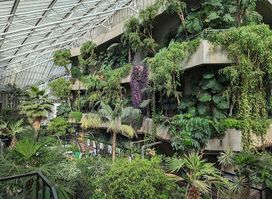
A ticketed indoor garden inside the Barbican Centre, where tropical planting meets raw concrete and the visit stays short, quiet, and highly visual.